To Press Release … or not to press release
The Saturday postcards are normally a review of the previous weeks news, and gets sent out to a variety of people as an email. It is a purely personal take on the news, as seen from my perspective as: an Englishman living here in Kyrgyzstan for over 16 years; an former teacher (of Religious Studies, mathematics, statistics and Computing); a former trade union official turned businessman; a member of the bopard of the International Business Council, (IBC) working in tourism and President of the Kyrgyz Association of Tour Operators, (KATO); interested in history, geography, current affairs, social issues, literature, super heroes, … and so on.
In last Saturday’s postcard I referred to an protest meeting which had an unusual twist:
In what must have been the oddest story of the week, journalists went to a protest meeting outside the White House and attempted to talk to the thirty or so protestors to ask what they were demanding. It seems that they refused to say. They refused to say anything at all. Very odd. I thought that the whole point of holding a public demonstration was to draw attention to your cause – but they seemed to be shunning it. Perhaps, I thought to myself, they are another example of “rent-a-mob” and had turned up without having been given their instructions – or payment.
One of my friends wrote to me about this …
The silent protesters. I suspect that they represent a caucus of people who don’t trust the media any more than the politicians. They won’t speak to the media because they know that anything they say will be re-said in at least six ways …
In reply I had to admit that,
… I hadn’t thought of the possibility that the silent protesters simply did not trust the press … which is odd because I always try to be so careful when talking with reporters – for preceisely that reason!
The trouble is, it seems to me, that once you have said something to the press you lose control. They take what you have said and present it as they see it, according to their “agenda”, which isn’t always the same as yours.
Well, during the last week I have been pondering over whether or not release a press release about the announcement from the newly appointed Minister in the newly created Ministry of Culture and Tourism, that he wanted to follow the Turkish example and introduce licensing for tourist companies. Immediately after the news broke I fielded some calls from journalists who wanted to know what tour operators thought of the proposed measure and I tried to answer their questions as best I could, frankly and openly.
It was clear from one or two of the conversations that they weren’t interested in the main story – whether there is a need, or even the desirability, for the introduction of licensing, but mainly in the possibility that the very suggestion would drive a wedge between business and the government officials who had dared to make such a suggestion. ”Hey, he’s the Minister,” I said in answer to one of the questions, “of course we have to listen to what he says and take him seriously, to work with him … even if we have different – and even opposing points of view.”
The question got a fair amount of coverage and I even got a whole (albeit small) article dedicated to my comments – and it was very fairly treated … accurately reported without any form of selection or emphasis in order to dramatize or sensationalize.
Although events moved on a little with interventions from a number of other people, (including a Vice Prime Minister and even a statement from the Ministry which “seemed” to be backtracking a little bit … but I have some doubts about that), there hasn’t really been anything that actually merited a statement. There was even a suggestion that we organize a “Round Table” to debate the issue … but my concern was, “what do we debate?”, all that we had was press reports about a statement made by a government official; there were no details and no concrete proposals.
The members of KATO, of course, wanted to see their President actively taking part in the debate … which is understandable, and they had done so, at least in the immediate aftermath of the original stories appearing in the media. As things developed, however, what should he say? I had already said all that there was to say, to those who were ready to listen, when the original announcement was made. In addition, I had prepared a draft statement for the press, (in English but had also had it translated into Russian), but held off releasing it until there was a suitable moment that warranted a response; reviewing it as each new event occurred.
To be fair to the members, some of them were getting a little hot under the collar, impatient to see something more. So I showed the draft statement to some people and sought their advice. In the end, we decided to release the statement … even though I had some misgivings. Here’s what it said:
On his recent trip to Turkey, Ibragim Zhunusov, (the newly appointed Minister for Culture and Tourism), apparently told reporters that Kyrgyzstan will follow the Turkish example and reintroduce licenses for tourism companies. He is reported to have noted that tour operators are likely to be opposed to the measure.
Thus the minister noted the possible negative reaction from tour agencies. “Tour agencies will be against.”
He was correct, according to the Kyrgyz Association of Tour Operators, (KATO).
That might not be surprising. After all, tour operators have a vested interest and from the very beginning when KATO was established in 1997 the simplification of procedures and the removal of barriers to the development of the industry was one of the central aims of the Association.
In the past, whenever the question of licensing has been discussed, tour firms have been resolutely and almost unanimously opposed. This time is no different. Amongst the views of members expressed to the leadership of KATO, have been:
- Licensing will interfere with growth of tourism and deliver a superfluous bureaucratic burden;
- It will not raise the level of development of tourism in the country, but will create an opportunity for corruption and increase the number of travel companies working in the shadow economy;
- Licensing will only create obstacles for the development of tourism in our country;
- Why should Kyrgyzstan suddenly lean against tourism in Turkey. In the world there are a lot of other examples of developed tourism, for example in Europe, the USA and other places, where there are not licenses and also no government structures administering Tourism. In some cases associations are engaged in this;
- Kyrgyzstan has not reached the level of Turkey;
- It is interesting to note, however, that concern about the suggestion is expressed by not only tour operators but also many others; business, politicians, journalists and analysts.
“As the Ministry has accepted, any introduction of licensing requires justification and must pass through the proper procedures as laid down in legislation. It should be justified, be subject to period of consultation and pass an economic analysis of the effect it will produce. It should also reflect general government policy, which is currently to remove many examples of unnecessary licensing. None of which has happened,“ said Ian Claytor, the President of the Association.
.
Notes for editors:
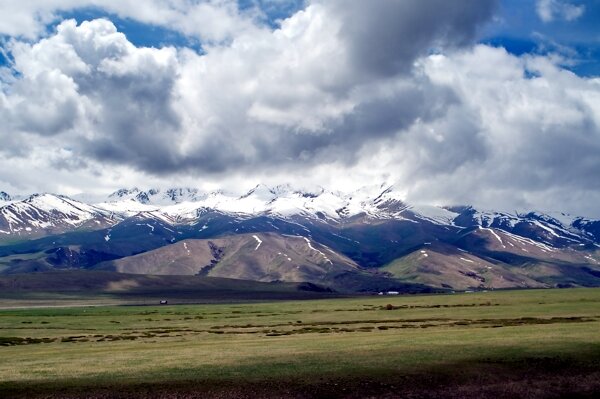
- Kyrgyzstan is a small, landlocked country in Central Asia. One of the former Soviet Republics it declared its independence in 1991. It is predominantly mountainous with over 90% of the country above 1500m, and the backbone of the landscape is formed by the Tien Shan Mountains. Lake Issyk Kul is the world’s second largest mountain lake and its beaches and resorts, (hotels, sanatoria), have long been a popular holiday destination for citizens of the former Soviet Union. The Kyrgyz are traditional a nomadic people, who take their horses and sheep into the high mountain meadows (jailoo) to graze on the lush pastures for the summer. It formed an important link on the Great Silk Road, between the orient (China) and the ancient cities of Uzbekistan.
- Tourism is a major part of the Kyrgyz economy, representing about 4% of the GDP.
- Amongst the different aspects of tourism in Kyrgyzstan are Inbound Tourism: (Recreational Tourism, based mainly on Issyk Kul and attracting visitors from former countries of the Soviet Union as well as citizens of Kyrgyzstan; Travel along the Great Silk Road, Adventure Tourism – including mountaineering, trekking, horse riding, cycling, rafting and other types of activity, Historical and Cultural tourism concentrating on the history and traditions represented in the country); Outbound Tourism, which involves providing services for Kyrgyz citizens travelling abroad and Domestic Tourism where residents of Kyrgyzstan travel within the country.
- Amongst the services offered by those in the tourism industry are arranging or providing transport, (including tickets); accommodation; meals; guides and other support services; information (for example, museums) and entertainment, (for example, concerts) and the sale of souvenirs.
- According to official statistics from the Border authorities, in 2010 there were 891000 people who crossed the state border and in 2010 – 2317600.
- Согласно официальным цифрам зарегистрировано 2697 Тур Операторов и Тур Агенств работающих в стране в 2010. Также было около 6000 предприятий работающих в индустрии (отели, рестораны, проживание в семьях (ночлег и завтрак), транспортные компании и т.д.).
- The Kyrgyz Association of Tour Operators is the largest body representing Tour Operators and Institutes of Higher Education in the Republic. It was formerly established and registered as a non-commercial organization in 1997, having existed as an ad hoc, unofficial, body for several years before that. It is a growing organization – there are currently 35 members and include some of the longest established and largest tour companies in the country, as well as ones which have been established more recently.
- Although members of KATO work in all area of tourism in the country, the majority are engaged mainly in Inbound Tourism, that is the reception of foreign visitors to the country.
- The President of the Association is currently Ian Claytor – a British citizen who has lived and worked in the Kyrgyz Republic since 1995.
For further information contact:
Altyinai Musabaeva: Executive Director KATO
Ian Claytor: President KATO





 Bishkek