Time lag …
Open Central Asia
A short while ago, I was having lunch with the publisher of Open Central Asia, (a quarterly magazine, published in the UK, which aims to connect and highlight the links between Europe and Central Asia), and he was asked if I would write an article for the magazine about the Presidential election here in Kyrgyzstan. I was reminded of my experiences as a teacher of Information Technology, so many years ago.
It had been made crystal clear to me that in my lessons I was supposed to cover “the use of computers, not the study of computers and computing.”
At the time, computers were a fairly new addition to the classroom and many teachers were excited about the possibilities they opened up, whilst at the same time anxious about exposing their own uncertainties and lack of familiarity with the technology.
For the record: The latter was to be restricted to the examination classes in Computer Studies and Computer Science, although I was allowed a shorter taster course so that the pupils would have an idea of the difference between “Information Technology”, (which everyone had to take), and “Computer Studies”, (which only some pupils elected to follow), in order to make an informed decision.
The first topic we covered was the use of the computer as a word processor – typing text. We used a simple WYSIWYG programme, and the first exercise was to correct a prepared text which had lots of mistakes in it. This was followed by typing exercises and then some layout exercises covering things like underlining, bold text, changing font size and so on.
For the record: just in case you haven’t come across it before, WYSIWYG is an acronym for What You See Is What You Get … nowadays, virtually all the systems are like this, displaying the text on the screen exactly as it appears when printed … but, believe it or not, this wasn’t always the case.
Anyway, a popular task was to create an article for a class “newspaper”. Later on, we repeated the same sort of exercise several times, tying in with work being done (in other subjects, English or History, for example), and when introducing a simple DTP package, (DTP – Desktop Publishing).
One of the biggest problems we always had was reminding the class that there was a time lag between their entering the text and when the newspaper would be printed and “published”.
If the class was working on a “newspaper project” reporting, for example, the events and characters involved in the Gunpowder Plot of 1605, or the vendetta between the Montagues and the Capulets in Shakespeare’s Romeo and Juliet, then this wasn’t a big problem. If, on the other hand, the class newspaper was about school life, then a match report about the fist football game of the season which wasn’t printed and published until half-term, (say, eight weeks later), lost it’s immediacy and value.
I have a similar problem when talking to journalists working for a number of newspapers and magazines, especially if they are weekly or monthly periodicals, but insist on featuring “topical”, “Hold the Front Page” stories – especially on the front page. By the time the newspaper is published, the story is already “old hat” and out of date. Sometimes the time lag between the events being described, the story being written and, (perhaps more importantly), being seen and read, can be quite significant.
Whereas a daily paper can and should run stories of this type, it seems to me that weekly and monthly papers or magazines need to concentrate on in-depth analysis and background stories.
A short while ago, I was asked to write an article for a magazine about the Presidential election here in Kyrgyzstan. At that point we were still in the campaign and voting was still well in the future. Now, I take my hat off to the editorial team for planning ahead but, all the same, the request gave me several grounds for concern which I put to the publisher:
- Firstly, why me?, why should my opinion be of any interest to readers?, I don’t consider that I am a good writer, so surely they could find someone better to write the piece.
- Then again, it was about politics – and, as a general rule, “I don’t do politics”;
- The timescale worried me … it wouldn’t be “news” because there would have been some time between polling day and the deadline for the story, yet alone publication and/or people reading it;
- As it happens, the deadline for the article was after polling day but before any second round of voting if that had proved necessary – so I faced a distinct possibility that I would be writing about something where the “end of the story” was still unknown;
- Despite that, whether or not we got a result in the first round of voting, it didn’t give me much time for reflection on the issues involved;
Well, he had an answer to all my objections. The article would be, for example, from the viewpoint of an eye witness who happened to be living here as a British ex-pat. I wasn’t going to be billed as an “expert”, (oh, how I hate that word), but someone who lived here and could compare the campaign with what happens elsewhere. My observations would be just as valid as anyone else’s who was here at the time.
In the end, I relented, and agreed. The election came and went, and this is what I wrote:
.
When I was asked to write a piece about Kyrgyzstan’s presidential election, “through the eyes of an expat”, I was both flattered and concerned. “Flattered” because I am just an ordinary person who happened, by chance, to be in the “right place” at the “right time”; why should my opinion be any more valid than the next persons?, especially those journalists and International Observers who can bring considerable training and experience to their assessments. “Concerned” because, as an ex-pat, I “don’t do politics”; I am a “visitor”, albeit one who has been here for sixteen years and with the status of a “resident”.
Also, I was concerned about squeezing the mass of events into a limited word count, (which isn’t easy for someone who is naturally verbose, like me) and the fact that the deadline for the piece fell into what might have been a period of uncertainty as we awaited a second round of voting.
As it happens, the result of the first round of voting, on Sunday 3oth October, was sufficiently conclusive in that we now have a winner, a president elect, who will take the oath of office in the New Year and assume the power and responsibilities that go with it. It wasn’t, however, a foregone conclusion.
Given the history of elections in the countries of the former Soviet Union, and those in Central Asia in particular, since the demise of the Soviet Union this one was still “an open book”. Even if Almazbek Atambaev was a front runner, with most people expecting his victory, it wasn’t at all clear if he would be able to amass the votes necessary to avoid a second round of voting which could have been damaging pitting a Northerner against a Southerner.
There was no way it was going to be an election by acclamation, with over 80 candidates being nominated, (even if most of those dropped out, either withdrawing their nomination of failing to meet the requirements to get their names onto the final ballot paper).
The campaign was quite lively, at least here in Bishkek, with lots of posters and a few canvassers. There were articles in the papers and the television and radio coverage was extensive with many political adverts. Some candidates choosing to show the same clips over and over, whilst others showed a variety of different broadcasts. In most cases the election materials concentrated on the candidate themselves whilst others featured the candidate’s supporters but, (at least, so it seemed to me), very little seemed to refer to specific policies.
It all cost a bomb, not only did the candidates spend over three million dollars between them, (apparently ranging from just over two thousand to almost a million), but there was also the cost of organizing the election itself, which must have been considerable. As it happens, the government received a lot of support from international agencies and in bilateral aid, so that should have reduced the cost to the budget. Even so, there was a lot of comment about the wastefulness involved and the better ways in which this money could have been used.
Not all the campaigning cost money – social media was a new weapon in the armoury available to candidates, and some of them used it extensively, even if it was in order to spread “black PR” about their opponents, and some of it apparently through proxies, (supporters).
The televised Electoral Presidential Debates were watched attentively, although only a few candidates appeared in each one and the by the luck of the draw, (ballots were drawn to decide who would debate with whom, none of the leading contenders came face to face in front of the cameras.
Indeed, the election was a hot topic of conversation wherever you went. Most of the comments I heard, however, were expressions of confusion, (“Who should we vote for?”, and I lost count of the number of times I was asked who I would vote for, if I had been able to vote), or of election apathy, (“It’ll make no difference who we vote for” or “I’m not sure who I am going to vote for”). There was even a lively discussion in the social media about whether to vote for the final option, “Against All”, or not. Almost ten thousand people did chose this option, and there were many spoilt papers..
Despite the concerns that had been voiced beforehand, the day itself went smoothly, well, by that I mean there were outrages or disorder. In another way, however, all was not well. Many voters could not find them themselves on the list of voters, and so were unable to vote. Others found themselves on, for some unaccountable reason, on the lists for different polling stations, far from where they lived.
As the polls closed the news coverage was full of violations and irregularities: the unfair use of “administrative resources” by one candidate or another; stuffing ballot boxes; multiple voting with people being bussed from polling station to polling station; the ink being used to mark the thumbs of voters to prevent this being washed off even though it was supposed to last for ten days; bribes being offered to voters, officials or observers; and so on … I finally went to bed a little depressed wondering what the morning would bring.
As it happened, I needn’t have worried. Although there were cries of “foul!”, (“this was the dirtiest election ever”), and candidates lining up to denounce and disown the result, in the end almost everyone accepted the reality and the congratulations started rolling in to Atambaev’s office.
In the end, I would have to concur with the views expressed by the observers in the interim report; it was like the curate’s egg, “good … in parts.” Despite some problems, the preparations were adequate; there was ample choice available to voters; the campaign was lively and active with ample coverage in the media, but the events and procedures on the day itself left a lot to be desired.
It’s arguable whether the various problems experienced would have materially affected the final outcome, but my gut feeling is that they probably didn’t. Despite the attention given to the debates and the choice, it struck me that most people were more interested in going about their daily lives, and saw the election as just one of things that in life that is necessary but the sooner the question is decided and they could return to a safe and stable environment, the better.
There are, however, a whole host of issues facing the president elect: the shape of the future government; the presence of the American Manas Transit Center; whether or not to join the Customs Union; improving the economy and, of course, trying to unite the country.
The election seems a long time ago now, and so does the exercise of writing the piece. It’s like a snapshot. It represented my opinion at the time, seen from my perspective. Time passes, and with the passage of time, perspectives change as more information becomes available and we see the result of history unfolding on subsequent events. Perhaps in a few years time with the benefit of hindsight I would chose to write something different, but I’m not sure if I would write something different if I was to pen the article today.


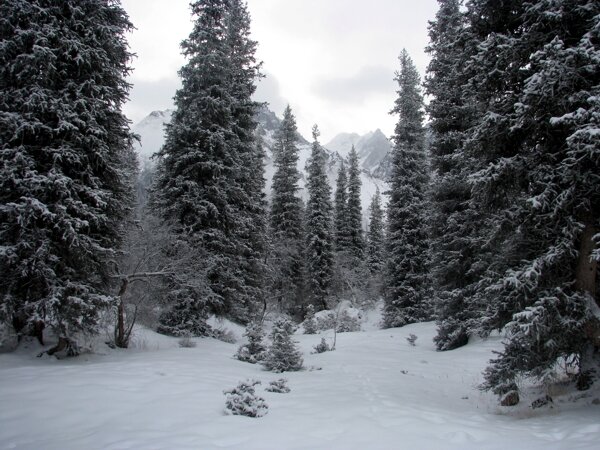


 Bishkek