Igor Savitsky, Artist, Collector and Museum Founder
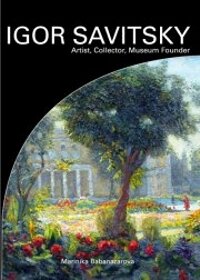
The Savitsky biography
Igor Savitsky was a painter, archeologist and art collector who is remembered for the collection which bears his name and is housed in a museum in Nukus in Karakalpakstan.
Karakalpakstan ?! … Land of the black kalpak?
It is a region in Uzbekistan – the largest region occupying a third of the country. In the south of the region, near the Amu Darya river and the border with Turkmenistan is the city of Nukus. Once a small settlement it grew into a major city during the Soviet period, but because of its chemical research plants it was “closed city”, inaccessible to foreign visitors. It is now home to about quarter of a million people.
But, Karakalpakstan is at the far West of the country, as far away from Kyrgyzstan as you can get and still be in Uzbekistan. So, why on earth would I be interested in writing a Postcard from Bishkek about someone who lived there and, as far as I can tell, never visited Kyrgyzstan?
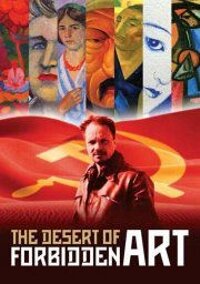
Poster for the film
Today, at six o’clock, in the Hyatt there will be a showing of a documentary film, “The Desert of Forbidden Art”, about the Savitsky Art Collection which is housed in the Nukus Museum of Art, (or more properly, “The State Art Museum of the Republic of Karakalpakstan, named after I.V. Savitsky”).
To be honest, I had never heard of Satvisky until about a year ago when I was asked about placing an advert on a Savitsky calendar which was about to be published. I turned the suggestion down, but intrigued I did a little research and the story of Savitsky and his collection is quite interesting.
I was planning to go and see it even before I received this message from the States, attached to a copy of the notice about the screening:
” If you haven’t seen this film, I highly recommend it! “
Igor Savitsky was born in Kiev in 1915. He visited Central Asia as a student during World War II, when the Institute in which he was studying was evacuated to Samarkand. In 1950 he came to Karakalpak as the artist on the Khorezm Archeological and Ethnographic Expedition, and, basically, fascinated by the culture and people of the steppe, he stayed on after the expedition finished in 1957 – a bit like me here in Bishkek.
He took the opportunity to explore the region and started collecting Karakalpak carpets, costumes, jewelry, and other works of art and artifacts. In the 1960’s he persuaded the authorities that they needed a museum to store and exhibit them and in 1966 he became its curator.
He also collected drawings and paintings of artists linked to Central Asia and, deciding that he could not simply stand by and watch an entire generation of Russian culture disappear, he began collecting thousands of works from all over the USSR by avant-garde artists, (many of whom had gained recognition in the West but were actually banned in the Soviet Union).
Our impressions of Soviet Art are often coloured by its official use as a propaganda tool, promoting ideas of an ideal society, decorations for celebrations and political campaigns. The “socialist realism” style became de rigueur, (there was even a government decree on what forms of art were acceptable), whilst other styles were dismissed as “formalism”, with works of art not only banned but often destroyed, with the artists suffering repression and even persecution. .
Ironically, he used public funds in order to make his purchases, even though many of them were officially banned. As a result, the museum in Nukus became the home of the second largest collection, (after the Russian Museum in St. Petersburg), of the Soviet avant-garde art.
It’s possible that he was only able to do this simply because Nukus was so remote, far from the eyes of the watchful KGB. The authorities knew it existed and over the course of time, following Stalin’s death, the reputation of Stavisky and his collection grew. In the 1960’s there was even an exhibition organized which toured the Soviet Union.
Igor Stavisky died in hospital, in Moscow, in 1984. He left behind as his legacy a massive collection which is now recognized as one of the world’s leading depositories of modern art. Apparently the museum, and its famous collection, are far from secure, facing economic hardship and strict surveillance from Uzbek authorities, who have sharply reduced the collection’s exhibition space by closing one of two museum buildings. Apparently, it is under threat of closure and dispersal. According to one of the filmakers behind “The Desert of Forbidden Art”, it is hoped that the film will “function as an advocacy tool and a catalyst to protect this unique 20th-century cultural institution.”
The connection with Bishkek, (the film showing), is somewhat tenuous … it’s basically a marketing ploy, a showcase for the calendar and the recently published biography of Savitsky by Marinika Babanazarova, (his successor as Director of the Museum since his death in 1984) … but the film, (with the likes of Ben Kingsley, Sally Field and Ed Asner provide the voice-overs quoting the diaries and letters of Savitsky and the artists, intercut with recollections from the artists’ children and rare archival footage), has got good reviews and it looks like being an interesting evening.
Here’s the trailer:
What’s more, I thought that the story was worth telling. It reminded me of the story of Klavdia Antipina, another Russian who came and settled in Central Asia and made a valuable contribution to our knowledge of cultural history.
You can find out more about Savitsky and the museum on their website.
Also, here’s an inspiring post form the Lonely Planet Thorn Tree about the museum.
Incidentally, if anyone is in London on Wednesday 9th November, there will be a book launch and signing by the author at Pushkin House, (5A Blooksbury Square, London, WC1A 2TA).
All sales proceeds go directly to the Museum to support the maintenance and preservation of the Savitsky Collection.


 Bishkek
For the record: I went and it proved to be an interesting and well attended event. The sound was not good, but the file was certainly provocative and the story unfolded with lots of fascinating details and anecdotes.
It was interesting how many people afterwards said that it had aroused an interest in visiting the museum.
I would certainly recommend it if it comes your way.