“Naked ducks”

Global Handwashing Day logo
Believe it or not, today is Global Handwashing Day. Where on earth all these special commemorative days come from is anyone’s guess. Some are obviously commercial marketing ploys, like Blue Monday, (either the third or the last Monday in January) and Sweetest Day, (the third Saturday in October – more about that later this month), and there is even a phrase to describe such days: “Hallmark Days”.
This is not a Hallmark Day, however, even if its backers include such soap and detergent manufacturers as Unilever and Proctor & Gamble. The Public and Private Partnership for Handwashing with Soap, which initiated the day back in 2008 as part of the United Nations designated “International Year of Sanitation”, also includes a number of important and influential governmental bodies such as the Centre for Disease Control, (CDC), and USAID as well as educational and health care institutions, Associations and other NGO’s. Although the day, itself, however, doesn’t appear to have been sanctioned by the United Nations, UNICEF is one of its founders and its agencies, many of its agencies support activities on the day, around the world.
The day is part of an international campaign to motivate and mobilize millions around the world to wash their hands with soap and to raising awareness of handwashing with soap as a key approach to disease prevention. It takes place on October 15 of each year.
As far as I am aware, Kyrgyzstan doesn’t mark the day in any special way. Most of the activities to commemorate the day seem to based in what we used to call “developing countries”, (Kyrgyzstan is usually described as a “transition country”, one making the transition from a communist/socialist central command economic system to a “free market” one), there are events planned in several “developed” countries including the UK, Germany and the US. On the other hand, (no pun intended), the people here tend to be very diligent about washing their hands, especially before meals.
I have one friend, for example, who will always excuse himself from the table when we go to a café or restaurant and go in search of the washroom, (toilet, but in this case I think that the Americanism is appropriate), in order to wash his hands. He even apologizes for this apparently compulsive behavior and says that it is because he was seriously ill a few years ago because he omitted to do it on one occasion. It’s not uncommon when attending a traditional function, to be greeted by two young people, one of whom holds a jug of water and a bowl, and the other a towel. You allow the first to pour the water over your hands into the bowl and then the other will give you the towel to dry them. It may be appear to be a symbolic token to tradition but sometimes, (although, to be honest, not always), there is also a bar of soap on hand, (again, no pun intended).
Perhaps the most famous “handwashing” of all time is that recorded in the gospels, where we are told that the Roman Governor, Pilate, declared his unwillingness to take responsibility for or share complicity in the decision, gave in to the demands of the mob and reluctantly sent Jesus to be whipped and then crucified and releasing the “notorious prisoner” and bandit, Barrabbas. The image is also found elsewhere in literature such as in Shakespeare’s Macbeth.
It will be interesting to see how much “hand washing” there will be here in Kyrgyzstan during and after the election. There is certainly a fair amount of “wringing of hands” already, especially in the press.
In fact, the media have actually come under fire for “sloppy” reporting which must have caused a fair amount of hand wringing. An account alleging that an airline served vinegar instead of water went “viral”, being picked up in almost 50 different places, but apparently no-one thought to check the source of the story or seek verification. It’s been denied by the airline, of course, who branded it as a “natural duck”, (which it seems is a Russian term denoting a piece of journalism or anything else that seeks to sensationalize simply in order to sell copy). This seems to be borne out in comments in the IREX Media Sustainability Index, (MSI), report for 2011 which classifies Kyrgyzstan as an “Unstable Mixed System” where the “Country minimally meets objectives, with segments of the legal system and government opposed to a free media system. Evident progress in free-press advocacy, increased professionalism, and new media businesses may be too recent to judge sustainability.”
I presume that the reports are accurate, and have been verified, that with just two weeks to go before the election, three candidates of the twenty three whose names are printed on the ballot paper have now withdrawn from the race, (and one more has announced that he intends to do so). (For the record, candidates can do this at any moment up until 3 days before the election, one of the officials will cross their names out, with a straight line using a ballpoint pen, by on polling day.)
One of the interesting developments during the week is that Atambaev went to Russia for talks with Vladimir Putin, even though, (technically, at least), he’s not Prime Minister at the moment, having handed over the reins to his deputy, Omurbek Babanov, whilst he contests the election. It’s not even as if he can get campaign exposure out of the visit, at least officially, as photos of candidates with foreign statesmen are banned and Russian press coverage will be blocked.
This probably won’t be too much of a problem for him, because he seems to be dominating the press coverage of the election anyway, although a number of other candidates have also got extensive coverage, but mainly through election broadcasts and announcements.
One of the problems of being the front runner and getting all that press attention is that not all of it will be positive or welcome. Although, according to one analysis, by far the majority of the coverage he is receiving is positive, there is some critical coverage too. One piece of “unwelcome” coverage must be the mudslinging campaign which seems to be directed against him and his associates, alleging links with the local mafia, casinos, drug barons and even with Maxim Bakiev seems to be hotting up. Some of the themes in the various tweets and blog posts have been picked up by the press around the world although the claim that the Russian media is turning on Atambaev seems a little far fetched and is perhaps an example of wishful thinking – or maybe it’s just another naked duck. There has, however, been a suggestion mooted that it might lead to a delay of the election.
Incidentally, one tweet in this continuing alternative campaign went so far as to report a “new fact”, but as far as I could see it was just another allegation.
Talking of “unsavoury connections”, there was an interesting moment when we thought that Kamchy Kolbayev might be returning to Kyrgyzstan. He is reputed to a local mafia boss; has served a prison sentence here in Kyrgyzstan from he was mysteriously released early leading to a massive investigation which seems to have got bogged down in the mire; been listed by Barrak Obama as one of the world’s global drug barons; is wanted by Interpol for crimes involving weapons and explosives; was recently arrested in the United Arab Emirates and surprised everyone by being released from custody once more … and is supposedly in league with some high officials in the country. Anyway, his return to Kyrgyzstan was announced and plans were set in motion to arrest him on his arrival. For some reason he changed his plans even, apparently, as some of his relatives were waiting at the airport to greet him.
In another challenge, an article criticizing the government, (by that I suppose we can read Prime Minister, Presidential candidate and front runner, Almazbek Atambaev), as one of “unfulfilled expectations”, contained a list of “broken promises”. Some of them seem a little contentious to me, after all “Building a rail ring inside the country” is not something that can be delivered within one and a half years. Even if it were possible to construct such a massive project within that timescale, it would be difficult to do so when the country is strapped for funds and investors hard to find. Furthermore, I am not sure that comments of officials, even the Prime Minister, on that topic constituted a “promise”. It should be also be noted that discussions on the new Railroad from China through Kyrgyzstan to Uzbekistan and the West continue … but any resulting project will require millions to implement and take years to be realized.
Another of these “broken promises” was to “cancel visa requirements for 57 countries around the world”. Again, I am not sure it was actually ever a promise, although several statements which were sympathetic to the idea have been forthcoming from a variety of official figures. There has been much discussion on this topic and we thought that a decision on such a proposal put forward by the Ministry would be forthcoming this month – but apparently it has been shelved for the time being according to the Ministry of Foreign Affairs, because of the election.
If these “broken promises” can be seen as attempts to entice the electorate to support one candidate or another, then election observers have been making comments about other more immediate and basic ones. Some of them have reported “serious violations of pre-election campaign rules” including distributing food to the elderly and serving free lunches by some candidates as an attempt to “bribe” voters.
Although this is just one example of comments from people wanting to criticize and express their disappointment in the government and the whole election process, there are others – from the leader of the communist party, for example. These articles and commentaries may be seen as electioneering and attempts to circulate what is called here “black PR”, but there is a question of how much they actually represent an underlying dissatisfaction.
Money, especially election funds, seems to be becoming an issue. Last week saw the release of information about how candidates had spent their election funds in the opening days of the campaign. Interestingly, I saw a campaign poster for it, Atambaev pledging the support of another party and I wondered who was paying for it – Atambaev’s campaign or the other party. There are other examples of “indirect campaigning”, (for example, interviews with politicians or political scientists, in which they praise a particular candidate). In another story, one of the candidates, who has now retired from the race, made a pointed allegation that candidate, (this time not Atambaev), had recweived funds from the Baiev’s.
Even so, according to the official figures, they all seem to be well short of the 50 million som that they are allowed to spend.
Incidentally, it was also revealed that one of the political parties received something like half a million dollars to support its parliamentary campaign last year from Russia. That was quite odd because it was not a party that was supposed to be particularly close to Russia, and the some compromising video of the party leader was shown on Russian TV – which is one of the reasons we have a ban on live foreign TV reports. It gets curiouser and curiouser, because there are now claims that the video was shot surreptitiously in a Bishkek hotel, (needless to say, not the Silk Road Lodge), which is now being linked to Maxim Bakiev and Atambaev, the front runner.
Another potentially embarrassment for the Prime Minister is the news that some websites that contain criticism of him are being blocked – but, it’s not clear by whom, although the obvious implication is by some state body. Indeed, there are suggestions that the old habit of using “administrative resources” to influence the election, (for example, drumming up support for a particular candidate), is in evidence, although in the early interim reports by observers it was said that this wasn’t so.
A couple of events have emphasized once again the question of possible security concerns during the election period. In a couple of incidents one person was killed, eleven detained on terrorist charges and eight more placed on the wanted list.
.
That’s a lot about the election, but I hope that you will understand that it is dominating the news here. Indeed, one blogger commented that “any talk in any company is dominated by a discussion of the Presidential elections …” Other things, however, are happening in Kyrgyzstan and elsewhere in the news:
There have been further developments in the mining industry – one of the wings of the Kyrgyz economy. Although there seems to be more and more interest in developing and exploiting the mineral resources of the country, (including the allocation of prospective plots of land to Chinese companies in exchange for building the China-Kyrgyzstan-Uzbekistan railway), controversy abounds. Apart from yet more calls for the various existing licenses to be reviewed, there is a draft law, which has already passed its first reading in the parliament, requiring mining companies to make “non tax payments” to the local communities in which they are based. There is already a well established, existing custom and practice of this – Kumtor, for example, has such a provision in their agreement with the government and I understand that other companies have also agreed to similar arrangements, at least in principle. At the moment, however, the figure quoted in the draft law in is 2% of their turnover. Or is it 2% of profit? – there some confusion about that especially in the press reports, because the wording in the draft law says “receipts” – but as far as I am aware, it means “turnover, which is quite a hefty sum. This was the subject of quite a heated meeting held by the International Business Council, (IBC). Well. I wasn’t there … but, although the minutes of the meeting circulated by IBC were fairly measured, the press report I read seemed to suggest that it got quite heated.
As if that wasn’t enough, in what one commentator has called “ another self-inflicted wound on the economy”, a gold mine in the Talas region was attacked by a group of men on horseback one night, armed with sticks and petrol bombs, injuring one of the security guards and burning down the camp – for the second time in a matter of months. It’s not clear whether the cause of the attack was concern over environmental issues, (which are often cited by critics of the industry); the need for financing local communities, (for example, as in that draft law); a wake up call for foreign investors, (as one report put it: “Unless you can pay off the right people for protection (and good luck getting them all to agree), your money is better spent elsewhere”), or what … however, it does seem to have attracted quite a lot attention both here and abroad and although there are reports that the company are suspending their operations in the country, representatives of the company have apparently said that they still intend to mine the deposit, but they’ll probably have to rethink some of their plans.
The controversy over whether or not the Hijab has been banned in Kyrgyzstan’s schools continues to rumble on. Although there has been little reported on it in the local press this week, and the Muftiat seem to think that the matter is resolved after the Ministry of Education made an announcement that there was no ban, it seems to have fuelled the debate about the role of Islam in the state. Kyrgyzstan is, according to the constitution, a secular state but there are some people who want to see this changed.
Still on the subject of religion, it’s been announced that the next Public Holiday, (Kurman Ait – the Muslim festival of Eid al-Adha, or the Feast of Sacrifice, which marks the conclusion of the Hajj) will be on Monday, November 7th – which, incidentally, happens to be the Anniversary of the Great October Socialist Revolution in 1917, which is also a public holiday here. This will be the second time this year that the Islamic festival will fall on a day which is already a Public Holiday … so it looks as if one of the holidays will be “moved” and we will have another three day working week. At the moment, according to the announcement, this is a preliminary date and in what looks like an attempt to avoid the same sort of confusion that occurred earlier over the holiday of Orman Ait, the Muftiat has announced that a definite decision will be announced 10 days beforehand – that is, just before the election. Hmmmm.
Kyrgyzstan has suspended the import of “low alcoholic drinks”, so called “alcopops” whilst research can be undertaken into the potential harm that they can cause. Apparently there have numerous complaints, especially from parents of teenagers about the uncontrolled sale of such drinks to minors. The average consumer of these drinks is said to be between 12 and 16 years old. Although manufacturers are required to print on the packaging that consumption should be limited to one can a day, (and recommendations about consumption by people on medication and pregnant women), it’s claimed that on average young people drink two or three cans, and if they go to a disco then this figure could be as much as eight to ten. As always, the statistics raised a lot of questions in my mind such as: what was their source of their data?, what would be the comparable statistic for the UK?, and so on … but what struck me most was the justification in the comment ,“it is possible that not all teenagers are able to read”.
One of the criticisms of the measure is that without these alcopops, young men will migrate automatically onto drinking vodka … which led someone else to note that the government hasn’t asked the Ministry of Health to research the possible harm caused by strong drinks, such as vodka. (!)
There were two interesting stories during the week that were related, at least by the fact that they both concerned retirement and pensions. One report said that Parliament had passed amendments to the various laws setting a retirement age for those working in public service. Now when a civil servant reaches 65 this may serve as a basis for ending their contracts, (notice the use of “may”). I’m not sure if this will affect judges who already had a requirement to step down at 70. As in most CIS countries the official retirement age is 60 for men and 55 for women, (and those in “high mountainous areas – which is fair amount of the country – can retire earlier), as compared with, say, the United Kingdom where the retirement age for men is also 65, although for women it is 60. Here, however, the Russian phrase for retirement means “to go on a pension” and not necessarily to stop working. Many people of “retirement age” both receive a pension and continue working. Indeed, it’s hard to see how some public institutions such as schools could continue without their retired workers.
The second story featured an announcement that the average pension has reached the “minimum subsistence level for pensioners.” It also included the news that over the last two years the average pension has risen by 180%, whilst salaries have increased have increased by 132% and the “minimum subsistence level by just 131%. There was, however, a little bit of a fudge because this was achieved by the recent increase in pensions, (by an average of 500 som, but some rose as much as 1880 som), and a fall in prices for “selected food products”, (for example, flour, sugar, bread, rice and vegetables), but the main thing that struck me was the use of the words “average” and “minimum”. That means that whilst some pensions are above this “minimum subsistence level” others are below it.
I was intrigued to see that Healthprom, a British based company working throughout the region on a variety of Health related projects, reported that in Kyrgyzstan there are just 15 specialist centers for 22.000 children with Special Needs. As always, the statistic raised a lot of questions in my mind such as: what was their source of their data?, how did they define “special needs”?, what would be the comparable statistic for the UK?. Even so, it struck me as a particular poignant couple of figures.
Once again, even though I have only summarized the items of news that I have mentioned, I have exceeded my planned word limit, and that means there is still lots of material that I have been forced to omit. I hope, however, that it’s not full of naked ducks and contains nothing that I will later want to wash my hands of.
For the record: You can find out more about Global Handwashing Day on their website.
Postcard from Bishkek: the weekly postcard that I send out as an email also gets posted on the website, www.iank.kg each week and there are other postcards which don’t get sent out. This week for example there were posts about: the acronym WTKTGCITW, what on earth could it mean?; Capital Punishment here in Kyrgyzstan (Monday was the World Day Against the Death Penalty); a proposed new law on Hunting that would tighten the regulations on hunting but also “turn endangered species into fair game”; Dom Druzhba, (or Friendship House), on the main Ala Too Square here in Bishkek ; the need for travelers to take out travel insurance and a preview of the Autumn Jazz Festival which took place in Bishkek yesterday and continues in Karakol on Monday. I have also posted some photographs from last month’s regular trip to Naryn.
If you decide that you don’t want to receive these postcards in your email anymore, please drop me a line to and I will take you off the distribution list. Alternatively, if you know someone who might be interested in being added to the mailing list, then get them to drop me a line and I’ll be happy to do so.


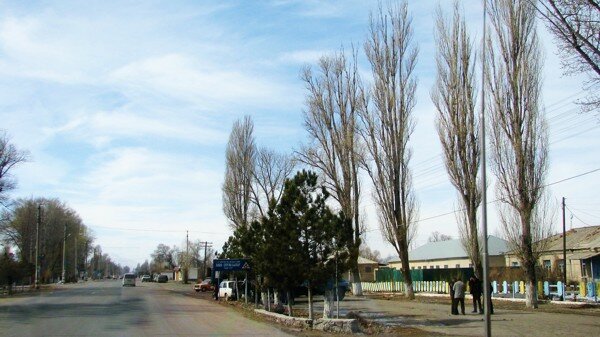


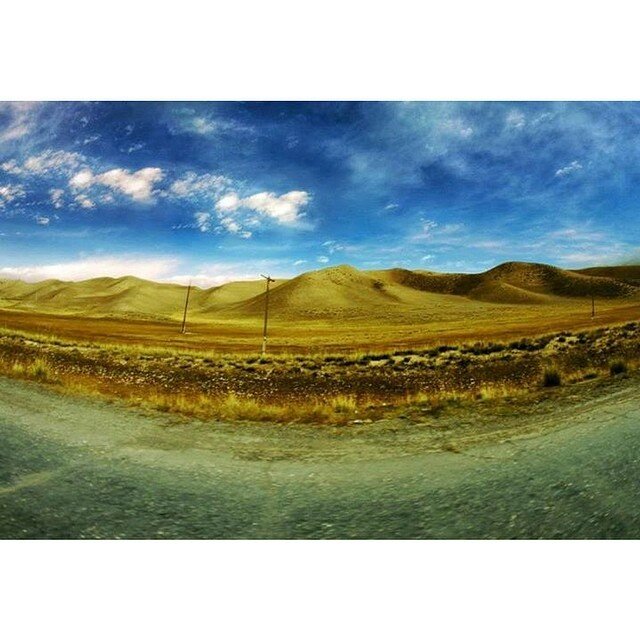

 Bishkek
Small note – UK retirement age is creeping up, women were increased to 65 last year, and the trend is upward – as there will not be otherwise be enough money in the pot to pay the pensions. People are now living much longer than was originally foreseen. http://www.direct.gov.uk/en/Pensionsandretirementplanning/StatePension/DG_4017919
Thanks for update … shows how out of touch I am becoming!