Inspirational Characters
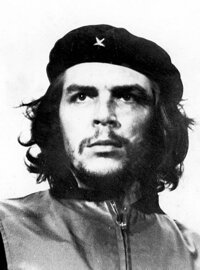
Ernesto "Che" Guevara
One of the iconic images of the twentieth century is a photograph by Alberto Korda of Ernesto “Che” Guevara, an Argentine Marxist revolutionary and a major figure of the Cuban Revolution. In my youth it was to be seen on posters, t-shirts, book covers … almost everywhere becoming a ubiquitous symbol counterculture and rebellion.
Che Guevara was not just a revolutionary figure, however, he was also a physician, an author, diplomat and military theorist. He was captured in the Bolivian jungle on October 8th, 1967 and executed the next day. He is both a revered and also a reviled historical figure, named by Time magazine as one of the 100 most influential people of the 20th century.
Lists of this sort are quite commonplace, I am not sure what criteria they use. Despite being aware of Che’s pervasive image during my youth, I am not sure where I would have put him if I was to compose my own personal list of the most influential people of the twentieth century. Then again, mjy list would probably reflect my background and upbringing and be predominantly biased towards British, European and American history.

Steve Jobs
This week we lost another of the most “influential” people of the twentieth century – and of this century, of course. I am not sure where I would have put Steve Jobs in my list, either – even with my background in computing and Information Technology. Reading some of the obituaries and commemorative memorial article, I have been surprised to see some of the details about his work and interests. What surprised me even more was the extent to which his death has been felt here amongst certain sectors of society. There were a number of tweets and Facebook posts paying tribute to him, not just from all over the world but specifically from here in Kyrgyzstan. Even one of the Presidential candidates tweeted about his shock at the news – and I don’t think it was an attempt to curry favour with the voters! (Most of his likely supporters probably wouldn’t have even heard of Steve Jobs).
Today we are expecting a number of influential people in town; not world famous statesmen or people who fit the Che Guevara mould, but people who are probably closer to Steve Jobs in outlook and experience. Today sees the TEDxBishkek conference.
TED stands for “Technology, Entertainment, Design“, which the organizers consider to be three subject areas that help to shape our future. Although in the early days the subjects covered showed a distinctly technological bias, as time has passed the topics have become increasing more diverse and cover a wide range of aspects of research and practice in science and culture.
The first conference was a four day event held in California in 1984 and it’s now an annual event which is run by a non-profit organization which is dedicated to the dissemination of “Ideas worth spreading”. They are usually given by people with a unique story or an unusual point of view and the ability to dynamically present it and they are given a maximum of 18 minutes to present their ideas in the most innovative and engaging ways they can.
In addition, the organization that runs the conference also license the distinctive TED format under the TEDx brand, and this is how the Bishkek event has come about. The organizing committee applied for a “one-off” license, which they were granted. The Bishkek event will have the overall theme: “Ideas that change us”. The list of speakers looks quite impressive including a brash entrepreneur who built up the fastest growing company in the territory of Eurasia over three years with turnover of USD55 million from a small company with a budget of just USD20 000; a film director and composer, who will talk about his life experiences, about how he made his first film, as well as “how to get the Grand Prix at the festival, when you do not even have money to send the film to the film in the competition”; a young entrepreneur and “popular blogger” will tell about the “touch screen generation” and how the development of new technologies brought together several conflicting generations; a freelance programmer who will tell the audience about how to get rid of the yoke of the office; amongst others.
One of the conditions for these events is that the audience is limited to just 100 invited guests. Even knowing this, I put in an application for a place but, to be honest, I didn’t really expect to be successful, However, I was and I feel very honoured to be included in the list of participants. So, today, I am going to be sitting in a hall listening to what I hope and expect to be a variety of inspiring talks on a range of topics – even though it means missing out on the Ireland v Wales and England v France matches in the Rugby World Cup.
TEDxBISHKEK is an event which shows a positive and constructive aspect of Kyrgyzstan. We are in need of that because, unfortunately, there are an awful lot of protests which concentrate on the other side of life. It emerged that there were over a thousand protests meetings in the first nine months of the year. There was yet another one during the week which blocked the doors of the parliament and led to the Speaker speculating that the parliament needs its own security force, (hmmm), and one of the deputies making a highly critical speech about the work of his colleagues which resulted in the microphone being turned off whilst he was in full flow.
There certainly seems to be some problems in the work of the parliament. It seems that the equipment for recording votes is malfunctioning and a commission has been set up to investigate.
There was also a heated exchange where one deputy accused the parliament of meddling in affairs which were out its jurisdiction, such as in the work of the court system and of the Central Election Committee.
The Central Elections Committee is coming under considerable pressure and criticism; especially as a result of being forced to reverse its decision to refuse the registration of some of some of the candidates. Several of the candidates have asked the Prosecutors’ Office to launch a criminal case against the committee and it has been said that their actions could bring the whole election process into disrepute and even invalidate the result. Indeed, in some quarters it is being said that this is all part of a plot in order to be able to challenge the results should they appear to go the “the wrong way” and one commentator even went so far as to say that it is “the main source of instability in the country”.
Last week there was even a report on the TV suggesting that a lot of people weren’t going to bother to vote. Indeed, I have heard several people saying that they are not sure who to vote for and may not vote at all.
I suppose that this can be taken as another sign of voter apathy, after all, this will be the third plebiscite we’ve had in the space of 18 months; first there was the referendum last June to approve the new constitution and approve the transitional arrangements that appointed the presidency of Roza Otunbaeva; then there were the parliamentary elections last autumn. Democracy may be a good thing, but “election fatigue” may have settled in, especially when people consider the amounts spent on the exercise, and the impression that little seems to have changed, for better or worse.
In the first seven days of the campaign, for example, the candidates have each spent between USD1600 and USD360,000 on their campaigns. Two front runners are, of course, amongst the largest spenders, and this seems to represent something like 65% of their election fund. That’s understandable because there are lots of things that had to be paid for up front, so they probably still have plenty of funds available for the remaining four weeks of the campaign. (Take the billboard for example. Apparently there are some 2000 of them around the country, at a cost of between 500 and 1000 dollars each for the month. After all that expense, what must be especially galling to the candidates concerned is that a number of poster and billboards have been illegally defaced or taken down, some apparently being burned.)
The candidates are also, however, entitled to some free exposure. They have been allocated free time in the government media, (television channels and newspaper), for the publication of manifestos, giving electoral addresses and taking part in live televised debates. The allocation was made by “drawing lots” which struck me as a little ironic given the recent ban imposed on casinos and gambling. (Incidentally, the ban on casinos seems to have raised a lot of comment worldwide and there are still a few comments here, especially bemoaning the loss of tax revenues. Mind you, those tweeters and bloggers who are “anti” have also been very active.)
On the other hand the inclination not to vote could be a sign of the disdain which people feel towards politicians all over the world.
One deputy has called for the resignation of Rosa Otunbaeva saying that she ignores the law and that there are examples of infringements, (fraud, even), involving members of her administration. There was even a rumbling dispute over whether the Speaker called on one of the television channels to “vilify” the President. It may, however, boil down to a misunderstanding. In the course of a Press Conference about a bill nationalizing one of the TV channels, he may well have made a comment using the words “vilify” and “President” but according to one account he wasn’t calling for this to happen, just saying that if the bill isn’t signed into law then the station would be free to do so. This “misunderstanding” is a sign of how feelings are running high.
To what extent all these evolving disputes and controversies can be laid at the door of individuals and groups positioning for the election is an open question. Certainly some of the comments being made are pointed and heated, but are they all part of the cut and thrust of electoral debate? If so, it seems to me that they run the risk of alienating the electorate even further than it already is.
During last year’s parliamentary elections we saw plenty of the disdain, but less of the apathy.
Anyway, as it happens, there could be problem with a low turnout. Not only might it undermine any result, but there is a question of thresholds. In last year’s parliamentary elections, parties had to pass two particular thresholds in order to gain seats in the parliament; they had to get a percentage of the overall electorate across the country, and certain percentage in each of the oblasts, to vote for them in order to be granted any places in the legislative chamber. One party came close to the threshold, but just missed out, and feelings were running high because the size of the electorate kept “changing” as amendments were made to the voter lists. This time round, it’s hoped to avoid the pitfalls that were exposed in that last election by changing the rules – now, no amendments will be allowed to the voter lists after the set deadline and the thresholds refer to percentages of votes cast rather than the of the electorate.
It might be thought that this time there was only one threshold figure that counted; the 50%+1 figure that the successful candidate has to get in order to win and get themselves elected. However, for some of the field it could be important because if they don’t pass that threshold, (and, mathematically, not all of them can), then they will have to forego their deposits.
In the meantime, there are more and more revelations arising from the investigations into the murder of former head of Bakiev’s presidential administration. Perhaps we’ve already had the most dramatic revelations, (I did say perhaps), but the striking feature at the moment is how far widespread the net stretches amongst influential characters. It has been suggested that it is part of a to discredit certain individuals before the election but it has also been pointed out that the effect might be highlight or even aggravate the North-South which some politicians don’t seem to want to acknowledge.
They might want to play down the possible rift between different groups of people but the results of monitoring the media has revealed an increase in the number of articles in Kyrgyz language newspapers containing elements that could incite “inter-ethnic hatred”, (aomwthing like 40 articles), and editors have been warned to be careful and to refrain from publiching material which could foment potential tensions.
The issue seems to be playing a role in creating alliances between candidates. Two leading politicians have already announced their support for rival candidates and more seem likely to follow.
If the Central Elections Committee is in trouble with the courts, then it is not alone. The State Commission for Religious Affairs has also been taken to court, this time for refusing registration to Jehovah’s Witnesses in three of Kyrgyzstan’s oblasts. I don’t know the reason for refusing the registration , but the church took the case to court and won a partial victory, obtaining a judgment obliging the commission to “remove the violations of rights, freedoms and lawful interests” of the church members. Apparently the Commission appealed the decision and it was overturned.
The question of religious education policy has also been raised. Apparently there are some 15 schools run by Christian organizations and over 70 madrasahs, (Muslim schools), in the country. One of the parliamentarians is concerned that these schools are not taught the national, (secular), curriculum and so don’t end up with a school leaving certificate.
Apparently, the Mayor in Osh has also caused controversy by saying once again that education in schools should be conducted in Kyrgyz, even in Uzbek schools, Part of his argument seems to be that Uzbek now uses the Latin alphabet, but Kyrgyz still retains the use of the Cyrillic alphabet, which is used throughout the country.
It’s been a busy week for me, personally, in terms of education. I attended a session in the American University of Central Asia, (AUCA), where students in the Business Administration course were giving presentations in order to develop their skills in public speaking, was guest speaker for students in the Tourism Department at the University of Management and Design, (UMD), and attended the Advisory Board of the new European School which has been set up here in Bishkek.
In other news, the government has approved a policy and strategy for protecting intellectual property rights, arrangements at the border crossings with Kazakhstan are still under causing problems and Saudi Arabia have opened an embassy here in Bishkek.
The mining industry still seems to be in trouble with one of the parliamentarians suggesting that all the licenses for gold mining in the country should be withdrawn and reconsidered and a commission from the responsible Ministry has gone to Chatkal, in the extreme West of the Djalalabad oblast, to investigate certain issues connected with the licenses. The deputy is unhappy that a kilogram of gold on the world market fetches some 57,000 dollars, but Kyrgyzstan receives just 3000 and he considers this unfair. Mind you Canterra Gold, who operate the Kumtor gold mine, are planning to invest another two hundred million in the operation in addition to making contributions in support of schools and other good causes. (Incidentally, they are not alone, there was news of a number of donations of computers and so forth to schools and hospitals during the week.)
There seems to be a better rate of return on the Manas Air base. As well as the sixty million dollars paid in rent , the base also purchases goods and services locally and Roza Otunbaeva estimates that the receipts total about a hundred million dollars a year. In theory, the base should close when the US drawdown in Afghanistan takes effect, in 2014, and Atambaev has place to turn it into a transit hub. A couple of reports, however, (one out of Washington and the other from the BBC), say that the US and NAYO are far from the goals and may remain in Afghanistan for a long time yet, so maybe they will want to keep the base even longer. In the meantime the Finance Minister has asked the US ambassador if the US government can provide “budget support”.
One way of raising funds for the budget which we have learned from the West is selling “personalized license plates” for vehicles. Actually, they are not really personalized because the system of lettering doesn’t allow for it, being tied to the place of registration, but the numbers can be bought. So, a price list of available numbers has been published with values running from a few thousand som each up to seventy thousand for one of the prized 0001’s.
Raising money for the budget is one thing but it’s another where it is spent. With the issue of teacher’s salaries, (Wednesday was Teachers’ Day), and pension increases being in the news this week, there was also a news item about the money that Kyrgyzstan owes as subscriptions for various international bodies. It comes to over three million dollars – the bulk being owed to bodies of the Commonwealth of Independent States, (CIS), established after the demise of the Soviet Union. Out of professional interest I looked down the list to see how much we owed the World Tourism Organization, (UNWTO), but couldn’t find it; so, either we’ve paid our dues and the backlog that had built up, or the list in incomplete. I do hope it’s the former.
On Monday, here in Bishkek we experienced a strange phenomenon – a strong windstorm in which gusts reached speeds as much as 20 meters per second, (it only needs to be 5 meters a second to be considered as Storm Force). The winds actually blew down trees, one of which crushed a car that had been parked under it. One strange thing was that the storm seemed to be very localized and affected only Kyrgyzstan, and not neighbouring countries.
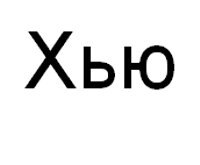
Hugh in Cyrillic
I got a bit of bad news when I got back from Naryn last weekend. There was an email from Jean Coulter to tell me that her husband, Hugh, had died in the early hours of Sunday morning. Hugh had been a consultant here for many years and had become part of the scenery here in Kyrgyzstan. He was a good hearted, cheerful chap with an infectious smile and laugh from Northern Ireland. He called himself Xb10, for example, because of the way Hugh is written in Russian.
While he was in Karakol he was approached by the director of a local orphanage who was looking for sponsorship. He was not the sort of person to simply donate something and then put the matter out of his mind – so, he went to see them and was impressed with what he saw. So impressed, in fact, that he and Jean set up a fund raising scheme to provide on-going, continuous support for them.
Hugh would be one of the people I would consider for a personal list of inspiring people that I have met. Oh, to be honest, he didn’t have the significance or influence on the scale of Steve Jobs or Che Guevara, but then he wouldn’t have wanted to. His motto was “A little goes a long way” and he was convinced that we all can make a difference on our own scale of things. As well as the orphanage, he and Jean also got involved in setting up a couple of micro-finance organizations and these schemes went a long to showing how this was true. He leaves a lot of friends around the world that will remember him with affection and sorely miss him – especially in Ireland, (of course), in Africa where they lived and worked for many years, and also here in Kyrgyzstan.
He would have liked the idea of TEDxBISHKEK.


 Bishkek