The Safest place on Earth?
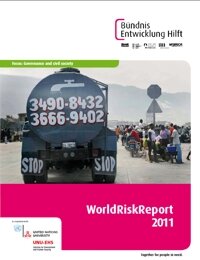
The report
A new report landed on my desk at the end of last week: The World Risk Report 2011, by a team of researchers from the United Nations University.
It came to my attention in a newsletter that I receive several times a week which carried the headline: Malta – the safest place on Earth? Now, I don’t normally go looking for things to do with Malta, but I have a friend who lives there and the headline did its job and intrigued me, (as it was supposed to do), enough, that is, to persuade me to click on the link. Having read the short article I clicked on another link to get a copy of the report. I also sent a copy of the link to my friend in Malta because I thought he might be interested to see it.
My first thought having read the report, about 70 pages, was that perhaps it was given the wrong name – a misleading name.
It opens with reference to natural disasters which were experienced in the early part of 2011: the earthquake in New Zealand, flooding in Australia, the earthquake and Tsunami in Japan and a surprising statement that “the frequency and intensity of such extreme events have increased alarmingly in recent years.” I’m not sure that is actually true. (I have seen, for example, some discussion that suggests that rather than experiencing apocalyptic disasters we are simply much more aware of the disasters that do happen thanks to the immediate and instantaneous access to information available not just from the traditional print media, but also television, on-line media and even social networks; much of which is far more immediate and graphic than was available in the past.) To be fair, neither are the authors sure … for they go on to ask “did the disaster risk also increase?”
Perhaps it’s just me, but the name, and that of the Index which the authors have created – the World Risk Index, suggest that it is about risk, but in fact it goes beyond that. As the article that originally caught my attention said, “The report’s focal point is “Governance and Civil Society”. The report is not just about exposure to the risk of natural hazards and the potential natural disasters … but how well equipped communities, (nation states), are to deal with such situations when they do arise as well.
As they say in the opening paragraph of the chapter on Conclusions and Perspectives, (note: NOT “recommendations” – although they do make some “recommendations and requests”): “Extreme natural events do not necessarily turn into disasters. The WorldRiskReport shows that the disaster risk is always made up of two components: exposure to natural hazards and climate change, and social vulnerability. Thus, the report makes it clear that disasters are not solely due to meteorological or geological phenomena, but are also caused by social structures and processes within a society. The Netherlands, Greece and Hungary for example, are relatively high exposed to extreme natural events, but as a result of their social, economic and environmental situation, they are comparatively well-ranked in the list of the WorldRiskReport.”
It’s not that the authors didn’t explain themselves, but because the way that the results were almost bound to be quoted. Take, for example, that headline. Is Malta really the safest place on Earth?
Even the authors don’t say that … they say that on the basis of their analysis, Qatar is(!) … or at least Qatar is the country on Earth with the least exposure to the Risk of being unable to cope with a natural disaster, should one occur, which is not particular likely as the country is not particular exposed to the sort of natural disasters that they were considering whilst having a good capacity to be able to cope with the event and also to adapt to new circumstances.
For the record: Malta came in second place, behind Qatar.
So what were they considering? Their analysis focused on four aspects:
- Exposure to natural hazard of climatic stimulus – the sort of events they considered were Earthquakes, storms, floods, droughts and rises in sea level. The first four are natural hazards that have occurred and resulted most human casualties and material damage in the period 1970 to 2005, and the rise in sea level is seen as a considerable potential threat in the near future.
- The Susceptibility of the country which was taken to be the factors which were likely to be affected by an event: public infrastructure, housing conditions, nutrition levels, poverty levels, and the economic capacity and income distribution amongst the population.
- The ability of the country to Cope with such an event occurring, minimizing any negative impacts that it might have. So they looked at the Government and Authorities, the existence of any early warning systems, the availability and level of medical services, social networks, (and by that I don’t think they meant just the likes of Facebook and Twitter – although they have been important factors in a number of “natural disasters”), and the necessary materials, and
- The adaptability of the community in order that would enable it to change in order to address the issues they are likely to face in order to deal with such an event and its aftermath, as indicated by education and research, Gender equality, environmental status and systems for ecological protection, the presence of strategies that would facilitate adaptation and investments
Each of these factors were examined in order to obtain a useful numerical statistic which could then be combined to provide an overall value for each aspect, which could then, in turn, be combined to provide an index.
I am not going to worry about the mathematical or statistical validity of the methodology they used, (how they went about actually constructing the Index), because I wanted to stress something else: How the research is used.
And … I was struck by that headline.
In the worst case scenario, I suppose, the report will simply be noted, filed, give copy to some reporters in the media and then sit on some bookshelves gathering dust. Hopefully, however, that won’t happen and instead people will take it and consider the issues it raises
Of course, some people may want to question the validity of the report, the methodology used and its conclusions. That’s understandable … and even reasonable. After all, one of my favourite sayings is that “Statistics raise more questions than they answer”. That is true in this case as much as in any other. Who has conducted the research, what information they used and how they collected it, what they actually did with the raw data in their analysis, how they present their results and the conclusions they draw from their work – these are all important questions.
On the other hand, even if we disagree with aspects the report, with some or all of its conclusions, but … it still seems to me that it raises many important questions and should be used to inform decision makers and strategic planners so that they can assess needs in order to prepare to meet the challenges that a natural disaster may bring about.
The authors are well aware of the opportunities offered by, and the limitations of, their work, the report is littered throughout with caveats, and, (as you might expect from a University), they publish a lot of supporting materials along with the report so anyone and everyone can become acquainted with their research in greater detail … but I still think that they could, (should?), have come up with a title that better described what it was they were attempting to address. They admit that the current survey is a snapshot in time and is limited in many other respects. The data they have used needs to be constantly updated and the techniques they have refined.
But … I was struck by that headline.
Now, I must be honest. The first thing I did when I downloaded the report was to look for Kyrgyzstan. Just like the headline writers, I was looking for a brief encapsulation of certain salient facts. For them, they needed a hook on which to hang the story whilst for me it was a case of “can this report tell me how things will affect me?”
As it happens, Kyrgyzstan only appears twice in the report itself – in two of the tables. In the first we are informed that the overall index for the country is 8.48% which puts it in 54th place out of the 173 countries which are considered.
To put that figure into some form of context, Vanuatu, the country with the highest “risk” scores 32% and at the other end of the scale, Qatar scores 0.02%. The United Kingdom came in 138th place with a sore of 3.61%, the United States in 133rd place with a score of 3.72%, New Zealand ion 128th place with a score of 4.28 and Japan in 35th place with a score of 11.13%
Now, to be honest that 8.48% struck me as quite low, especially if we consider the individual factors itemized in the second table, which are considerably higher.
In terms of “exposure”, for example, Kyrgyzstan scored only 17.09%. I was a bit surprised at that, especially when I considered that the country is located in the heart of a seismically active zone and has experienced a number of quite sizeable earthquakes even in my time here. On the other hand, I suppose it is unlikely, given that we are a landlocked country in the middle of the continent many thousands of miles away from the coast, that we are likely to directly affected by a rise in sea level. (I am not so sure, however, how well we are going to be insulated from knock-on or indirect affects if large areas of the world’s coastlines are going to be inundated.) I suppose it is also true that floods here are fairly localized, and although we do occasionally, albeit rarely, experience extreme storm conditions, we are unlikely to meet hurricanes/typhoons or tornadoes. Then again, the weather conditions that we do experience can bring about landslides and avalanches which can be devastating in their own right – but the team didn’t consider these particular hazards. Although we haven’t recently experienced a serious drought, the experience of the ‘golod’, (hunger of famine), in the 1920’s and 30’s warns us that such a thing is possible … and given the various predictions of what global warming might mean for agriculture, health and so on, not to mention the possible loss of water from the disappearing mountain glaciers, then I think you will understand my surprise that this figure wasn’t higher.
In fact, in a way, I thought the choice was of natural hazards that they considered was a little arbitrary and seemed to be missing a few … apart from avalanches and landslides, (which we do experience here in Kyrgyzstan, and I have already mentioned), where were the volcanoes?, (which we don’t have in Kyrgyzstan). What about outbreaks of disease?
Still, the authors say that they want to refine the models they’ve and they have to start somewhere.
The other scores were indeed higher; in some cases, much higher. In terms of “vulnerability”, and “susceptibility”, for example, Kyrgyzstan ran in with scores of 49.63% 28.29%. When it came to the lack of capacity for “coping” with the effects of natural disasters then Kyrgyzstan scored a whopping 76.16% and the lack of “adaptive capacities” at 44.43
Here in Kyrgyzstan we do have a Ministry of Emergency Situations, (part of legacy of the Soviet Union), which is the front line agency when it comes to handling such incidents as a natural disaster. There has also been some attention given in recent times to the need for crisis management and planning and the need to prepare for potential disasters, with France offering both a model and support. Transport in the country can be difficult, (a feature of the mountainous terrain), and medical services may be underfunded and lacking somewhat when compared to their Western counterparts, but progress is being made. There are plans for training the population of what to do in the even of an earthquake. So, I can see that, in fact, Kyrgyzstan is making progress and over the course of time its performance on some of these other indexes should shoe signs of improvement.
I appreciate that all those figures are confusing, but in the report and the supporting materials, the authors do explain how they obtained and combined these figures and why there are such divergences. However, although the research raises questions, (and I think that is perfectly natural), it also raises many important issues and they are probably more important.
To be fair, the article that originally attracted my attention did give a reasonable account of the report’s findings, albeit a short account – just over 150 words and about half of that being Malta’s reaction. The report itself was summarized by three short paragraphs, the first outlining that it had issued and the last giving the link where readers could find out more and the middle paragraph: “The report’s focal topic is “governance and civil society”“. But, oh!, that headline! … what a travesty!
At least, I suppose, the headline did its job in that it attracted my attention, drew me to the article, it got me to read the article and to want to know more. It sent me off looking for more information and got me thinking.
It failed on another level, however … it did nothing to encourage me to consider Malta as a destination!





 Bishkek