The Blood Donor
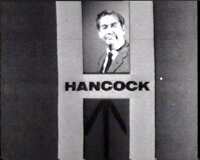
H-H-Hancock's Half Hour
One of my staff is approaching retirement age and is busy collecting the documentation in order to apply for a pension. He was a bit worried the other day because he couldn’t find his copy of his blood donor record. Apparently, in the Soviet Union blood donors were given a supplement in their pensions and the practice continues today. It shouldn’t be a big problem because there will be official records of this sort of thing, but if can’t find his record book, it might take him a while to track down and obtain a duplicate of the necessary documents.
When he told me, I was reminded of the classic episode, “The Blood Donor“, of the TV comedy series, “Hancock’s Half Hour“. ”H-H-Hancock’s Half Hour” was part of my youth, and I well remember the “Pom pom pa pom pom po-o-om” of the signature tune.
In this particular episode, Tony Hancock decides that he wants to do something for the country, his “patriotic duty”, and it was a choice between becoming a blood donor and joining the Young Conservatives. He doesn’t understand how much he has to give, leading to the classic line, “A pint? That’s very nearly an armful!”. He has second thoughts and refuses to go through with it until he is told that he has a very rare group. After he has given the blood looks for his free cup of tea and biscuits and we get the impression that, maybe, this was all he was interested in in the first place. He then becomes insistent on knowing where and to whom it has been given, repeatedly calling the doctor at the hospital to enquire. In the end he has an accident and, having lost a lot of blood, he is taken to hospital … where he is diagnosed as being in need of a blood transfusion … and as he belongs to a rare blood group, there is only one pint of the right group in the blood bank … and so he receives his own blood back again. ”It’s just like an ordinary bank,” he says, “you make a deposit when times are flush and withdrawal when you need it.”
It was the penultimate episode of the seventh and final series that Hancock recorded for the BBC and despite its age, (it was broadcast in 1961), and the fact that many people reckon that it was one of his worst performces, it has become one of the greatest and most recognisable of all British comedy programmes. I even have a copy. I brought a VHS cassette tape with me when I came out here, (containing three episodes: The Blood Donor”, “The Final Page” and “Twelve Angry Men” – of which, in my opinion, the Blood Donor is by far the best).
The writers, Simpson and Galton, were using the idea of donating blood as a vehicle to poke irreverent fun at British Society of that time and the sort of attitudes that were prevalent. Despite the humourous treatment that they gave to the subject, however, the topic is actually quite a serious one. As can be seen from the fact that the Soviet’s were prepared to put their money into rewarding people in their pensions, (whereas the British gave tea and biscuits as a reward).
The programme brought the Blood Donor programme to my attention and I felt strongly enough about it that when I became a student I gave blood on a number of occasions. Not enough to get a “badge”, as Tony Hancock wanted, nor enough to add considerably to my pension if I had been born in the Soviet Union, and later on in life the opportunity didn’t present itself, (although I suppose I could have gone looking for it).
As it happens, today, the last Sunday in September, is Blood Donor Day here in Kyrgyzstan; a sort of professional holiday to draw attention to the need for blood donors and commemorate their contribution. (World Blood Donor Day is usually marked on June 14th.)
Once again, it’s a serious issue here. At least twice in my time here in Kyrgyzstan I have seen stories in the press about how stocks in the country’s blood bank are falling perilously low – in early 2005 and after the revolution of 2010. Then there was the scandal where Children in the south of the country were given infected blood and contracted HIV as a result. HIV/AIDS is not the only issue, some blood samples are also contaminated with Hepatitis and Syphilis and in 2009, for example. 4141 litres of blood, (that’s almost 14% of the total amount of the donated blood), were rejected, mainly as a result of positive results in tests for Hepatitis B.
There is, however, a major project under way in the country to improve the screening of blood to prevent further infection from contaminated supplies from occurring. Amongst the issues that they seem to be addressing there are: the need to improve the infrastructure including obtaining up to date equipment, improving the training of staff and the testing procedures.
The Ministry of Health run the country’s Blood Transfusion Service, which includes the new, large, Republican Blood Centre, 5 regional blood centres, 39 local clinical transfusion departments and a “bus” for conducting blood drives.
According to the Republican Blood Centre, the country needs at least 45 tons of blood of year, but finds it difficult to raise more than about 15 tons from regular donors – and the figure is declining. According to one source, there were about 150,000 donors at the time of independence in 1991, but by 2006 the figure had dropped to about 30,000. Most people donate blood as and when needed for a sick relative – and I certainly know of at least one case where that has happened.
Although one report says that there has been insufficient promotion of voluntary non-remunerated blood donation and no public financing of safe donor recruitment programmes, there have been a wide variety of measures to help boost blood donations, promoted by the top management of the Ministry of Health and other departments, city and parliamentary officials, pop stars and the mass media. In 2008, the “bus” of the Blood Centre made over 70 visits to educational establishments, dentist clinics, police departments, centres of certification and military departments. At least one large company encourages it’s employees to donate blood.
According the director of one transfusion centre, normally speaking only about five people a day donate blood, although following the events last June, that number increased dramatically – at least for a time. On the first day of the revolution, for example, 500 people came forward to volunteer and over 700 on the second day and the staff at the centre worked day and night to process them all.
Even if, as some reports suggest, (I wouldn’t know, I wasn’t here at the time), the Soviet system was wasteful with large amounts of blood stocks stored in the service being written off for one reason or another, (for example, being older than the 21 days shelf-life), at least they had donors.






 Bishkek