Saint Irakliy – Kyrgyzstan’s own saint.
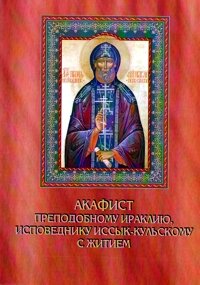
St Irakliy
Born in 1863, in the Chernigov province of Russian, into a Cossack family, Sergei Matyah was to grow up and become Kyrgyzstan’s first officially recognized Orthdox Saint; Saint Irakliy.
Apart from a few details, we know very little about him, especially his early life, even though he lived not long ago … he didn’t, for example, say much about himself. Fortunately, there were eyewitnesses who were less reluctant to tell us what they knew about him. Little, however, was written down and much was handed down over the years by word of mouth.
As he told people later in life, he was given to a monastery whilst still a child and did not remember his parents. When the time came, the novice accepted monastic life and took the name, Joseph.
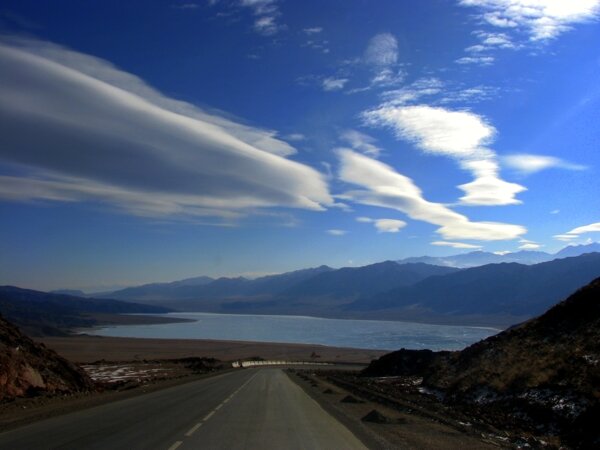
He eventually served in the Holy Trinity monastery at Svetly Mys on the northern shores of lake Issyk Kul, which had been established in 1882 by Bishop Alexander of Turkestan.
On March, 25th, 1905 Joseph was tonsured and given a new name, Irinei.
In the monastery, as well as serving as an assistant to the house-keeper, Irinei, together with his spiritual instructors and brothers, followed a life of virtue and humility, abstention and obedience, of work and prayer.
The main event in his life was to come during events of 1916, the Urkun, when the monastery attacked by participants in the revolt that had erupted as a response to decrees from the Tsar about the conduct of the First World War. Some of the monks, including Irinei, had made their escape in advance by boat on a nearby island, (although, interestingly, there islands nearby today). Some brothers, however, remained in the monastery and on August 11th, the rebels plundered the monastery and brutally killed almost all those who had remained.
After a while monk Irinei accepted the most severe monastic vows, (the Grand Schema), which is the highest and most stringent degree of Orthodox monasticism, – those who took these vows were called shimnics. He changed his name once more, this time to Irakliy. As a shimnic monk Irakliy’s life was devoted to praying for his colleagues and martyrs, repented that he had not “gone with them to this Golgotha”.
After that terrible event Irakliy appeared in in a monastery in the Aksaisky gorge in Kyzyl-Jar (red heat), near to the city of Verney, (nowadays called Almaty), in Kazakhstan. Here, under the peaks of the Zailijsky Ala Tau mountains and the extraordinary silence of the evergreen Tienshanskiy fir trees, together with a quartet of associates, priests Serafim, Feognost. Pakhomiy and Anatoly he led a prayerful life. In cell of one of the devotees they celebrated Divine Services. According to the reminiscences of one of the congregation who used to attend the services, they were far from usual; THE monks sang, instilling in those present “a reverential trembling and pleasure, as though there were they not on the earth, and in the sky.”
In the beginning of August, 1921, all five from the the Aksajsky monastery travelled to the the Holy Nikolsky church in the city for the Panteleimon holiday, dedicated to a martyr and healer. After the holiday ceremonies were over, three of the company returned to the Aksaisky monastery, but Pakhomiy and Irakliy remained in the city. In the evening of August 10th, three armed men arrived at the monastery on horseback. Father Serafim met them in one of the monastic cells and gave them tea with honey and a bed for the night. During the night, when Father Serafim was at prayer in the cell and Father Feognost had lain down following his turn at conducting prayers work, the three men killed the them; Feognosta was later found laying on the bed with a bullet wound in a chest and Serafim had been shot in the back and was still kneeling with his prayer beads in his hands. The third monk, Father Anatoly, hearing the shots and understanding that the others had been killed, made good his escape. (For the record: the church still commemorate the deaths Serafim and Feognost with services on the fateful day; August, 11th – July, 29th according to the Orthodox calendar.)
Thus, once again, Irakliy had escaped a martyr’s death.
After what happened in the Aksaisky monastery Irakliy , Pakhomiy and Anatoly left for the mountains and Irakliy travelled to village of Talgar where he served in a family church head. He refused to live in a house amd himself a simple cell in a garden. He would often go up into the mountains to pray for long periods of time. Then, sometime around 1928, he returned to the shores of Lake Issyk Kul, building himself another simple cell in the mountains, where he lived for some time in solitude – a hermit. Meanwhile, Dmitriev, (the priest at Talgar), and his family were arrested soon after Irakliy had left the village and they were sent into exile near the Aral sea.
At the beginning of winter of 1928, Miron Nikolaevich Dubinin, (one of the inhabitants of the village of Sazonovka – which is now called Ananyevo), was riding his horse in the mountains when he suddenly heard some groaning. He followed the sound and found the small monastic cell, and, in it, an aged man in decayed and wornout monastic clothes – Irakliy. The old man explained that he had a bad hand and the villager persuaded him to go to village. Dubinin gathered together Irakliy’s things, especially his books, put him on his horse and brought him to his home. That night his wife sewed the monk some new clothes from canvas, and the next morning brought a medical assistant to dress his wound.
After his recovery, Irakliy told his benefactors that he could not live in the house with them, so Dubinin helped him to convert one of his small sheds by the kitchen into a small monastic cell.
Living at the Dubinin’s, Irakliy continued his ascetic routine feats; daily reading prayers at the set hours. Almost all his time being spent in prayer. He slept little and in fits, not laying down in a bed but when he was exhausted, he would sit on a bench and fall asleep for a short while and then wake and once again would rise to pray.
A rumour quickly spread throughout the district that in Sasnovka there was an old man, a shimnik. People began to come to the old man to ask for suggestions and prayers. Everything, they brought to him he gave to Dubinin’s wife. He rarely left his cell, but would occasionally go to the local church and that of village, Semyenovka.
In 1929, a “purge” began in Sasnovka. Searches were conducted. The Bolsheviks have started to interrogate the Dubinins:
“Why does the old man live with you?”
“He is my uncle.”
But then the Bolsheviks learnt, that Dubinin had no uncle. Afraid of being arrested he sent the old man to his cousin, Andrei, who had a wooden izba, (a small house which is often found in Russian peasant homes), behind his own house, where he lodged the old man. All day long the Dubinin couple worked in the fields and left the old man in the charge of his nine children. He fed them when they were and once again returned to his routine of prayer.
He hadn’t been there long when his new hosts came under pressure for not having joined a collective farm, and soon Andrei found himself imprisoned for 10 years.
Irakliy moved to live with another family, the Bocharnikovs. They lived very poorly. Their log hut was a shabby with just one room and a furnace on which they slept. Bocharnikov wanted to build Irakliy a cell but instead the monk was lodged in the granary, which was a simple construction of boards hammered together, one of which board was removed to serve as a door.
Instead of a bed there was a long table, and for linen he had two hemp clothes – on one he slept and the other was used as a cover. There was no stove and in winter Bocharnikov’s wife Sergija brought him buckets of hot coals from the furnace in the log hut. That was all he had for heating. It was only later, in his last years, that it was possible to give him a stove in his cell.
Sometimes he broke his solitude and communicated with the Bocharnikovs, but only to discuss spiritual themes. On the other hand, people still arrived from nearby settlements, and the Bocharnikovs welcomed them all.
The wave of purges was also to be felt by this poor family as they, too, did not want to join a collective farm. The head of family was detained but then released in the evening. On the other hand, everything that could possibly be carried away, was confiscated and removed from the house have taken away. All that was left was naked boards.
When Irakliy saw that the family had been left nothing, and the family had gone to sleep, he brought from his cell the two hemp cloths and covered the children with them, saying: “Well here, little ones, lie down and sleep, and we will sit. And tomorrow – God will send, people to help.” He stayed with them until morning, praying with them and telling stories of the lives of the saints – about their patience, kindness and gentleness. Then, the next morning, Bocharnikov’s relatives and other villagers came and brought things to help them.
The old man received a revelation that he would die on the day of the Ascension. He asked his hosts to sew his shimnik vestments, and embroidered it himself with crosses, and explained how to bury him.
In 1937 shortly before Ascension Day, (June 10th, 1937, – May 28thh on the Orthodox calendar), the apple trees in the Bocharnikov orchard blossomed. By the evening, on the eve of a holiday, Irakliy left his cell and said to the children: “Well, little ones, come with me, we will take a walk”. Whilst the children played in the orchard, the old man lay down under an apple tree, and then could not rise. He was brought back home, and Sergei Feodotovich stayed with him, sitting on his bed. The old man was conscious up until the last minute and at the moment of death he called Sergei Feodotovich, crossed his hands across his chest, made last sigh and closed his eyes. So Bocharnikov saw to the funeral, (and subsequently was buried with him in one tomb).
At the funeral all the inhabitants of the neighbouring villages gathered. Although time was “terrible” with repressions, and there were no priests to officiate, the people sang the funeral service bore the coffin to the local cemetery.
.
In 1993, the shimnik Irakliy was listed in the list of sacred people of the Almaty diocese, and in August, 2000 he was declared a Saint.
On September 13th, (his Saint’s Day), in 2004 his remains were found in the Orthodox cemetery in Ananyevo, and removed to the Voskresensky Cathedral, Cathedral of the Resurrection, in Bishkek.



 Bishkek