Face up – we’re only human
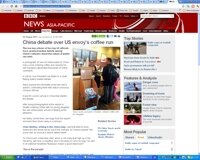
One of the BBC articles
Two items on the BBC new website this last week caught my attention, and highlight the growing importance of social media in the modern world.
The first reported how new words like “woot” and “retweet” have entered the lexicon, (although my spellchecker hasn’t yet caught up with this innovation and still insists that they are mistakes, underlining them in red), whilst others like “friend” and “follower” have been revised to include new meanings associated with social media. In itself, that is not surprising. Language is a dynamic tool which adapts with each new innovation in society and the article came up with several examples.
The second was a report from China about a massive on-line debate that was stimulated by photographs of the new American Ambassador to China standing in line to buy himself and his young daughter a cup of coffee at Seattle airport. This was further fuelled by the news that on arrival in Beijing, he and his family carried their own luggage and were taken to their residence in a “minivan” and the news that Vice President Joe Biden called in to a “fast food” restaurant, much as his boss, Barack Obama, did shortly after assuming office. To me, this article wasn’t so surprising, either, considering the fact that here in Asia maintaining “face” is all important.
.
However, I have to admit that sometimes I, too, have to remind myself of this fact. I am the General Director of a company, (actually, strictly speaking, two companies), and people are often surprised about my fairly relaxed approach. That role carries the responsibility of representing the company, being the face of the company before the authorities and other bodies. The trouble is that I tend to dress casually, for example, (although I admit that if I know that if I am attending a meeting where Rpsa Otunbaeva is going to be present, then I will dress up in a suit and make sure that I am clean shaven), my desk tends to be cluttered, and the cats tend to have free rein around the office.
Roma, one of my friends, (unfortunately now deceased), used to give me a lot of grief on this topic … to him, “image” was all important. It was important to be well dressed, (jeans really didn’t exist in his wardrobe – but if they were to make an appearance, then it would have to be a brand name like Levis), to have the latest gadgets, to create an aura of “presence”.
Now I understand that. As a schoolteacher it was important to create a similar atmosphere. In fact, it was almost a question of survival – if the class think that you don’t know what you are talking about, or that you weak and not worthy of respect, then they can quite unforgiving and act accordingly creating all sorts of problems.
I always used to answer Roma that I was interested in results – not appearances. It’s like going to a restaurant, (he was a restaurant manager by profession), the décor can be beautiful, but that counts for nothing if the food is not good. On the other hand, if the food is good, then clients will tend to overlook and forgive the rustic or rundown surroundings. In some cases, it might even add to the appeal of the establishment.
What’s more, as they say, “appearances can be deceiving”. Perhaps, the most upsetting example of this are those people can be pleasant to your face, but decry whatever you do when you are not present.
.
Sometimes I am surprised by the respect that people show me, just because I am the Director of the company. It seems to put me in a powerful position within the context of my office. On one occasion, for example I was talking with one of our employees, when I said something like “I can’t do that. I’m not God”. “Yes, you can,” she replied, “you’re the director.”
This blind faith in authority carries tremendous responsibility – more than simply representing the company. On another occasion, as another example, we had occasion to intervene in a street situation my driver was asked why he was “poking his nose in.” His response was, “because that’s what my boss told me to do.”
Stephen Milgram would be impressed. He was the psychologist who published the results of his research under the title, “Obedience to Authority”. His unwitting subjects were told to administer electric shocks of increasing severity to another participant in the experiment despite their pleas for the experiment to stop. They didn’t know that the “victim” was in fact an actor and the whole idea was to determine what their reaction would be. In a controversial experiment which would be difficult, if not impossible, to repeat today, Milgram’s results suggested that people were easily persuaded to continue applying stress and discomfort especially when they were under pressure and threats to do so.
People in authority can abuse their power and influence in all sorts of ways. One of the most basic mistakes is to be “full of themselves” and forget who they really are. Because they have a particular status, then they think and act as if they can do what they like.
The kids were amazed once when, after drinking iced tea at the hotel, I asked for and paid the bill. “Why are you paying?” I was asked, “you’re the director, why don’t you just sign for it?” I tried to explain that if it had been work, for example, if I had been meeting with clients, then I might well have “signed for it”, but as it wasn’t work but a personal occasion, I was just another client and so, of course, I should pay. “Why should the company pay for me, and them, to enjoy a nice refreshing iced tea on a hot summer afternoon?”
.
One of the problems that we have experienced here in Kyrgyzstan in recent years, is the way that people take their status so seriously that they forget who they really are … and I am not thinking of just former presidents. In fact, I don’t think that they were necessarily so bad in this respect. They were, after all the Head of State and as such, as well as representing the state, they were in many respects the personification of the state. They deserved respect for that purpose alone – but that should not necessarily be unconditional deference.
Whereas I respect Queen, Queen Elizabeth II, and other members of the British Royal family, I don’t count myself in any way as a Royalist. I respect them for the work they do as much as, if not more than, the position that they hold by virtue of an accident of birth. The position that they have inherited needs to be respected, but they also need to earn loyalty and respect as people. That’s the reason why some of them are so heavily denigrated when they appear to do something which is considered unacceptable, such as Prince Andrew discovered when some of his remarks at a lunch for businessmen here in Bishkek, became public knowledge.
The first time I saw Askar Akaev in person, he was congratulating a number of athletes on their performances in the Olympic Games. He struck me at the time like a doting grandfather, and I found that quite refreshing. There was nothing of the commandeering that Tsarist officials might exhibit, flicking their official insignias whilst ordering horses or vodka. (For the record: To this day, flicking your neck is universally understood here in Kyrgyzstan as a sign for “let’s have a drink.”)
I always felt much more uncomfortable whenever I saw Kurmanbek Bakiev. He was President of the country; he clearly knew it and acted accordingly. He struck me on the few occasions I saw him in meetings as one of those officials who liked to pontificate … he had all the answers … he acted as if his word was “law”. He once told officials not to turn up for work after he was in his office, if they did then they might as well clear their desk because they wouldn’t be sitting there any longer. On one occasion, I had to stand on a street pavement which had been blocked outside an official building, and had to wait for half an hour until he emerged from the building and drove away. He appeared much more “human” in his television appearances after the events of April 7th, 2011.
Rosa Otunbaeva, on the other hand, always reminds me of the old adage that, “if you want something done then ask a busy housewife to do it.” Used to multitasking and aware of her own human fallibility, she seems to see something that needs to be done and within her competence, she sets about trying to address the issue rather than just commanding others to do her will.
Of course, I admit that I could be wrong … but those are the impressions that I have received over the years.
.
As for the ambassador … well, there have been several occasions when we have served Ambassadors; either in one of the hotels or by providing tour services. Normally, we wouldn’t mention anything about their elevated status; they are just another client. Once, however, there was a problem over some detail of the trip and I had to come clean to the owner of a particular guesthouse who then went into a state approaching panic. Would everything be OK?; should she arrange for special sheets?; should she give the house a special “spring cream”? and so on. I instantly regretted having used the “A” word. I tried to calm her down, pointing out that although he had a particular lofty position, he wasn’t really “superior” to any of her other guests. Yes, it had to be admitted that there may well be special considerations to bear in mind but, basically … he was just another client.
Personally, I am happy when an ambassador or other dignitary doesn’t stand on ceremony and act as if something is infra dig, (below their dignity), but instead show their humanity and do ordinary, everyday things like ordering, (and paying), for a cup of coffee or being prepared to carry their luggage.


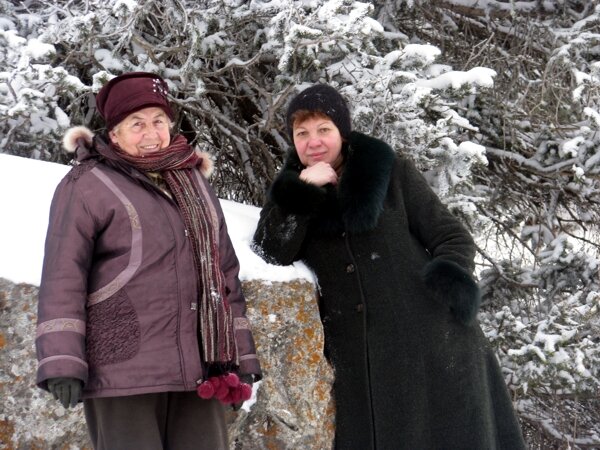


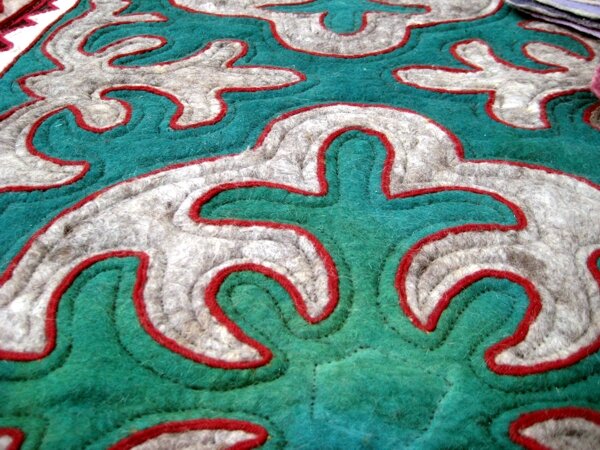

 Bishkek