Birds
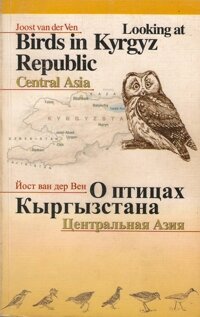
Joost van der Ven's book: "Looking at Birds in the Kyrgyz Republic"
I was takjen aboack the other day when I came across a book review in The Berkeley Daily Planet. It may not rank with the famous Daily Planet of Metropolis in the Superman sagas … but the masthead tells us that it is “The East Bay’s Independent Newspaper”.
The book concerned was, The Atlas of Birds: Diversity, Behavior, and Conservation by Mike Unwin, which according to the review is “a handsomely packaged compendium of information about birds, from their prehistoric origins to their mixed prospects in the modern world,” and represents “an impressive job of pulling together a great deal of information from disparate sources and structuring it in an accessible way.” It should be my sort of book because it “is a mother lode of avian trivia“, such as the birds that are mentioned in Shakespeare’s plays. (I love trivia!)
Now, I have not seen the book and so cannot comment, but I was surprised by the sentence that informed readers, “ The most speciose countries, it turns out, are Brazil, Colombia, Ecuador, Peru, and Indonesia, all in the 1500-1821 range. The most species-poor include Belarus, Western Sahara, and Kyrgyzstan, each with fewer than 250. ”
That sent me reaching for my copy of “Looking at Birds in the Kyrgyz Republic” by Joost van der Ven, which was published in 2002.
Joost was a Dutch consultant working in Kyrgyzstan for the the TACIS West Tien Shan Biodiversity Project … and an avid Twitcher, (which is the term used in Britain for Bird watchers). The book was prepared and published as a surprise 65th birthday present for a fellow twitcher, and a sort of “fixture” in the world of Kyrgyz ornithology, Emil Shukurov. As well as some general articles about birds and ornithology, it gives a list of over 400 species that have been recorded in Kyrgyzstan, along with brief descriptions and 100 black and white line drawings. The text is presented in both English and Russian.
(For the record: As well as the book on birds, there followed other volumes on the different Mammals and Fish to be found in the republic.)
So, I wondered, why the discrepancy?: one source saying that there were fewer than 250 species whilst another claims over 400. I don’t know the answer, but I suppose it might be because many of the species seen in Kyrgyzstan are not endemic to the country, but pass through on their migratory journeys, either North or South, at different types of the year, such as the Cranes that can found congregating aaround Son Kul and Chatyr Kul.
There are a number of the species which are, in fact, endangered. The Red Data Book of the Kyrgyz SSR, (colloquially known as the Krasnaya Kniga), listed some twenty species when it was first published in 1979. The list was revised in 2005, (when another 33 species were added), and again in 2009, (which saw an addition of another 6 species but, for some reason, two species were dropped from the list), so that it now contains some 57 entries.
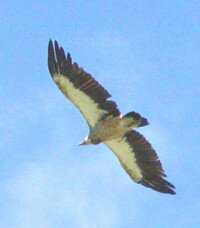
In flight
The original 1979 list included:
- White Stork: (Beyliy aist) a migratory bird which is found in the Ferghana region during the winter, and leaves during the early spring.
- Black Stork: (Chorniy aist) a migratory bird which visits the country in small numbers every year … it can be found in all regions of the country.
- Whooper Swan:a migratory bird which winters in Kyrgyzstan – although some individuals have been sighted in the summer around Lake Issyk Kul. It is encountered in mainly in the Issyk Kul region, although pairs are sometimes found around Lake Son Kul, and Chatyr Kul.
- Bar Headed Goose: (also knwon as the Mountain Goose). A rare migratory bird that is found around Lake Son Kul, (where there are about 10 nests), and Sator Kul. It used to be found in other areas such as Sary Djaz, Aral Bel and parts of the Upper Naryn River. It has been reintroduced in the Issyk Kul Natural Reserve Territory.
- Imperial Eagle: one of the 28 species of birds of prey found in the republic. Found in the Issyk Kul region, Kyrgyz Range, and the Talas valley. It used to be also found in the Ferghana valley, but it is no longer clear if it still breeds in the republic.
- Towny Eagle: (also known as the Steppe Eagle). A common migratory bird, although it is doubtful if it breeds in Kyrgyzstan – as it is registered during its migrations.
- Serpent Eagle: (variously known as the Short Toed Snake Eagle). It breeds in lowland areas in both forested and open areas, and is particularly known to build breeding nests on the Southern slopes of the Ferghana mountain range, in the walnut and apple forests of Mailuu Suu, Kirov and Kara Almin – in Talas and the Chatkal ranges and in Sary Chelek.
- Lammergeiger: although reducing in numbers, this bird is found countrywide.
- Golden Eagle: Found throughout the country in mountain regions.
- Himalayan Griffon: Found throughout the country, Kyrgyzstan marks the northern limit of the territories it is known to inhabit.
- White Tailed Sea Eagle: A migratory bird that sometimes winters in the Chu valley and Issyk Kul region.
- Saker Falcon: Breeds in small numbers throughout the country. According to one source, the protection of the bird is “hardly respected or enforced”. This may be because the authorities can grant permission for specimens to be kept for hunting purposes.
- Shaheen Falcon: (also known as the Barbary Falcon). Resident in the northern and the south-western parts of the Republic. Kyrgyzstan marks the north-eastern limit of the area inhabited by the species.
- Black Grouse: Found in the northeast of the country, especially Chon Kemin and the Terskey and Kungey Ala Too mountain ranges.
- Demoiselle Crane: One of two species of crane known to migrate throughout the territory of Kyrgyzstan. The Demoiselle Crane breeds in the Issyk Kul and Naryn oblasts.
- Great Bustard: Previously this species bred in many areas around the country, but it is now recorded mainly in Alpine regions, (such as the Arpa and Naryn valleys), and is rapidly declining in numbers.
- Ibisbill: An Oystercatcher, which inhabits the valleys of mountain rivers and streams, at altitudes of between 2000 and 3500m. a.s.l. It is encountered mainly in the central and eastern areas of the country, (Naryn, At Bashi, Ak Sai, Arpa, Sary Djaz, Kara Khudzher, Naryn, Kemin, Alai and Suusamyr).
- Snow Pigeon: Resident in the mountains on the Southern flank of the Ferhana valley (Turkestan, Alai and Chon Aai mountain ranges). Kyrgyzstan marks the North-Western limit of the territory known to be inhabited by the species.
- Pallas’s Sandgrouse: Found in the Issyk Kul and Naryn oblasts. In winter it can be encountered on the Western end of Lake Issyk Kul and in the Kochkor hollow.
- Asian Paradise Flycatcher: A rare and little studied bird species which has been observed in the south of the Republic. Despite being listed in the Red Data Book, it is not included by Joost van der Ven amongst the flycatchers in his “Looking at Birds in the Kyrgyz Republic”
.
In 2005 another 33 birds were added to the list, most of them are migratory birds and rare visitors to the country:
- The White Headed Duck: a migrant bird – rarely seen in Kyrgyzstan.
- The Peregrine Falcon: a migrant bird which occasionally winters in Kyrgyzstan.
- The Glossy Ibis: a rare migrant to the country, it normally breeds in the tributaries of the Aral Sea - removed from the list in 2009.
- The Eurasian Spoonbill: (also known as the Common Spoonbill). A rare migrant – usually it breeds to the North of the Kyrgyz Republic, but a pair is known to have wintered in the Issyk Kul region at least once.
- The Gyrfalcon: a bird that has been known to inhabit the north of the country.
- The Sociable Plover or Lapwing: A rare migrant which visits the northern part of the country.
- The Dalmatian Pelican:
- The Greater Flamingo:
- The Booted Eagle: breeds throughout the country.
- Pallas’s Sea Eagle: This bird used to breed in the neighbouring countries – and was observed mainly in the winter months, but there have been few recent sightings – the last was in 1997.
- The Shirka: a migrant bird of prey which breeds in the north of the country, but is also found in the Ferghana valley.
- The Stone Curlew: Despite being classified as a ”wader”, this bird prefers dry open habitats. It has black and yellow bills and large yellow eyes, prominent joints in its long, yellowish/green legs and striking black and white markings on the wings. A nocturnal bird with a loud, wailing, song. It eats mainly insects, but is known to take lizards.
- The Griffon Vulture or Eurasian Griffon: Although not usually considered a resident of Central Asia, this species has frequently been sighted, especially in the central regions of the republic – and breeding colonies have been found throughout the country.
- The Ferruginous Pochard: A migrant duck, known to breed in the north of Kyrgyzstan and some specimens spend the winter months in the Issyk region.
- The White Winged Woodpecker: One of four woodpeckers found in the Republic, inhabiting forested areas throughout the country – even relatively small wooded areas.
- The Great Spotted Woodpecker: An irregular visitor to Kyrgyzstan – it breeds in parts of Southern Kazakhstan and the occasional individual strays across the border into neighbouring regions of the Republic.
- The Pintailed Sandgrouse: a rare migrant which usually breeds on the Northern steppes of Kazakhstan.
- The Yellow Eyed Pigeon: A rare migrant bird that sometimes breeds in the steep valleys of the Talas, Chui and Ferghana.
- The Red Breasted Merganser: This duck breeds and winters in Issyk Kul.
- McQueen’s Bustard or Houbara Bustard: a rare migrant – it is thought to breed in the central regions of the country.
- The White Crowned Penduline Tit: This bird breeds throughout the country – in low-lying ares, in reeds and bushes found near water. It usually winters further south, in India – but has also been observed in this region. - removed from the list in 2009.
- The Great White Pelican: A rare migrant which has apparently been observed in winter months.
- The Tawny Owl: found mainly in forested areas of the Ferghana valley.
- The Osprey: A migrant bird which may possibly breed in small numbers in the Issyk Kul region.
- The Himalayan Griffin Vulture: Found throughout the country.
- The Lesser Kestrel: This falcon breeds in small colonies in open mountainous areas throughout the country.
- The Steppe Eagle: A migrant bird, but it is not clear if it breeds in the country.
- The Egyptian Vulture: Despite the name, it breeds throughout Kyrgyz Republic and is known to sometimes winter in the Ferghana Valley.
- The Little Bustard: One of three Bustards known to frequent the Republic. It used to breed in both the Talas and Chui valleys, and after an absence of several years, numbers seem to be recovering in the agricultural areas in the North of the country.
- The Eurasian Eagle Owl: This owl breeds throughout the country in open areas, (with trees) and in precipitous valleys.
- The Black Bellied Sandgrouse: A migrant bird which is known to breed throughout the country.
- Pallas’ Gull or the Great Black Headed Gull: An occasional winter visitor to the Republic.
- The European Black Vulture or Cinereous Vulture: Found throughout the country.
- The Black Throated Loon or Arctic Loon: The only Loon known in Kyrgyzstan, it used to breed in Issyk Kul – but is now thought to simply pass through the country.
- Bonelli’s Eagle: Breeds throughout the country.
.
In 2009 the following were added to the list:
- The Pygmy Cormorant: a migrant bird found in small numbers in the north of the country. It is not known if the bird breeds here.
- The Pallid Harrier: which breeds in open lowlands in the North of the country.
- The Greater Spotted Eagle: a rare migrant sometimes seen in the northern part of the country
- The Corn Crake: a rare migrant bird which breeds in meadowlands where there are long grasses, and can be found throughout the country
- The Black winged Pranticole: a rare migrant that sometimes appears in the north of the country
- The Slender billed Curlew: a rare migrant
.
It struck me that if Mike Unwin, (the author of the atlas that was the subject of the review), is correct and there are less than 250 species to be found in the country, then 57 endangered species is pretty high proportion. Come to think of it, even if Joost van der Ven is correct, then 57 out of 400 still seems a pretty high proportion!
.





 Bishkek