Marco Polo Sheep
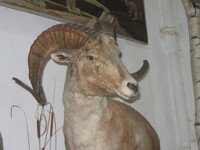
Marco Polo Sheep in the Zoological Museum
Last week, the results of a census of wild animals in the 76 hunting zones in the country, (which occupy about fourteen and a half million hectares of land), were announced and it was claimed that there 18,959 Marco Polo Sheep in these areas.
That surprised me a lot because it seemed to be a rather high figure. Marco Polo Sheep are quite a rare animal, (listed in the Red Data Book as an endangered species).
Marco Polo Sheep (Ovis ammon polii) are a variety of Argali. They are also known as Great Tibetan Sheep, Pamir Argali, and Great Pamir Sheep. They are mainly known for their characteristically large swirling horns.
Some scholars have doubted the accuracy of Marco Polo’s accounts of his journey to Cathay (China) – where he claimed to have spent some 17 years in the service of the Mongol emperor Khublai Khan. Others, however, feel that the details he quotes suggest that he not only visited the places he describes – but that he did indeed have a position of influence in the court of the emperor. Amongst the curiosities he describes, which were questioned at the time as flights of fancy, were the wild animals he saw, particularly the large wild sheep, having horns, “three, four and even six palms in length”. This, the largest of all wild sheep, remained an enigma in Europe for 600 years and is now named after him –“Marco Polo sheep”.
They have long, white coloured legs, and the bodies are usually are a brown colour, often with a red spot. The characteristic horns can be used as an indication of the age of an individual male. A one year old will have short horns, (similar to the female’s). A two or three year old will have horns that form a quarter of a circle – at four or five years old, the horns will form a semi-circle and between six to eight years old they will form a three-quarters circle. It is only the oldest specimens which will have fully developed circles – reaching almost half a meter in length.
It is thought that the animal does not have a very good sense of sight, but extremely well developed senses of hearing and smell – it presents a very difficult quarry for the huntsman.
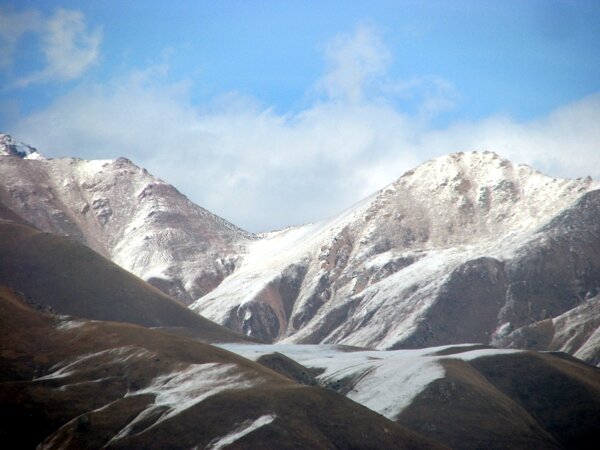
These sheep are found from 5,000 m to 7,500m a.s.l. They are found particularly in the Pamir range of mountains, and specimens are found as far as afield as Afghanistan and Pakistan.
In 1991, it was estimated that there were less than 200 specimens left in the wild and they are considered to be “endangered” – i.e. in risk of extinction. The authorities still allow hunting, however, although a large price is put on the limited number of licenses (about 70) granted each year.
In 2004 a special programme for the preservation of the species was announced. Research will be carried out into the populations, habitats, migration routes and other information about the animals aimed at developing a system of management, monitoring and protecting natural resources. Although it would concentrate on Marco Polo sheep, it will also effect proposals which will affect a range of other species as well.
.
For the record: here are the results of the census:
- Marco Polo Sheep – 18,959
- Ibex - 51,847
- Boar – 1906
- Deer – 5141
- Birds – 60,169 There were no details about what species, but the following statistics were also included:-
- Pheasants – 20,957
- Partridges – 28,4872
- Ular, Snowcock – 37,196
- Squirrels – 8345
- Wolves – 3565
- Jackals – 2932
- Foxes – 11,697
- Stoats – 11,191
- Weasels – 1,7115
- Muskrat – 13,148
- Groundhog – 358,100 which included:
- Red Marmots – 271,100
- Grey Marmots – 85,900
- Menzbira Marmots – 40,000
Another news item on the same day reported that The State Agency of Environment and Forestry had approved the quotas for licenses available for foreign hunters, (along with the dates of “hunting season” for each species), for the season 2011/2012:
- Marco Polo Sheep – 70, (60 for commercial purposes and 10 for “research”)
- Ibex – 400, (370 for commercial purposes and 30 for “research”)
- Deer – 20
- Wild Boad – 5
- Pheasant – 500
It also added that, during hunting tours which took place in January and February, (the last two months of last hunting season), foreign hunters shot 17 Marco Polo Sheep and 22 Ibex.
.
As an aside: A report the next day told us that some 888,000 som had been allocated as bounty for the skins of wolves and jackals that are handed over to the authorities. These animals pose a threat to Kyrgyzstan’s livestock and in the first half of 2011 teams of hunters shot some 276 wolves and 609 jackals.



 Bishkek