The Popular Poplar
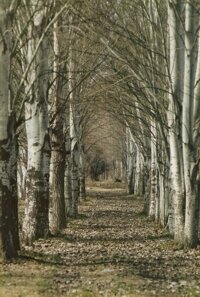
A.E. Houseman may have written in “A Shropshire Lad” about how the Cherry Tree wears “white for Eastertide”, “hung with bloom along the bow”, and how he would wander through the woodlands to see “the Cherry hung with snow”.
There’s a Russian pop song with a similar theme: “Poplar Fluff“, by Ivanushki International. The tree that they enthuse about is the Poplar … and the unseasonal “snow” is not the blossom, as in A Shropshire Lad, but the “fluff”, tufts of long, soft, white hairs which surround the light brown seeds and which aid their dispersal in the wind.
This “fluff” is seen as a symbol of summer along with hot weather, sultry storms, carefree birds flying high, and clear, warm, starry nights. Like the stormy weather, however, it is not always welcome as a sign of summer, as it also coincides with, (and is often associated with), allergies and attacks of hay fever.
Poplar trees, (also known as Aspen and Cottonwood,) are native to much of the Northern Hemisphere, but are cultivated throughout the world, prized for its ease of cultivation, rapid growth and various uses.
There are several different species which form the Populus genus, each with different attributes and qualities. Almost all of them will take root from cutting, which could simply be a broken branch which fallen to the floor, then grow to a height of 15 or 20 meters with a trunk of up to two and a half meters in diameter. Usually tall and cylindrical in form, their root systems can stretch extensively, up to 40 meters from the base of the tree trunk. The bark usually takes a light colour. The broad leaves vary in size and shape, depending upon the species, turning yellow during autumn before they fall. The flowers form long catkins, usually before the leaves have even formed in the spring. There are separate male and female trees, and pollination is achieved by dispersal of pollen in the wind, and the seeds and also windborne.
In many parts of the world, Poplar trees are grown in plantations for pulp, for use in the manufacture of paper. Their wood is also used as a form of inexpensive hardwood timber in the manufacture of pallets and plywood, matches and boxes, such as those in camembert cheese is packed. It’s also particularly prized in the production of snowboards and musical instruments. In the past, the wood was used for paneling and several famous paintings, such as the Mona Lisa, are on Poplar panels. Logs of Poplar wood are used for growing mushrooms, and the bark is used in tanning leather.
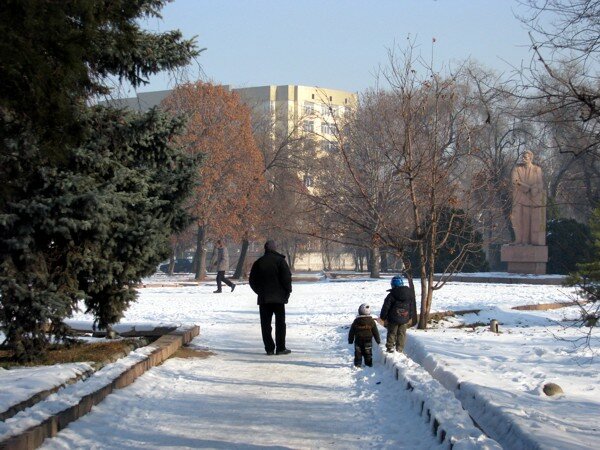
Where they are not coppiced in plantations, then Poplars are often used for windbreaks and for landscaping. This is, mostly, how they feature in Kyrgyzstan, where they may serve useful purposes, surrounding an industrial plant, lining roads or river banks, as well as adding interest to the landscape.



 Bishkek
a beautiful shot, where is it taken?
The photo was taken on the bank of the river Chu … along the new road which bypasses Tokmok …