Last bell … but for whom does it toll?
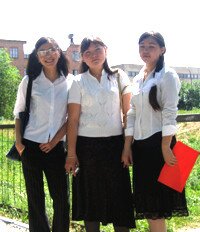
School ends today … well, sort of. Lessons come to an end … but there are still exams to be sat.
The kids have been busy studying in their way, but the disruptions over the last two years, (numerous closures because of a revolution or other disturbances, closures due to heating problems, classes cancelled because of a teacher’s illness – made worse because of a shortage of teachers, threats of a teachers strike over pay levels … not to mention a crazy timetable that I still can’t get my head around), means that their attitude towards is less than I would have hoped for.
That’s not to say that they aren’t studying. They are. And I do see signs of progress. It’s just that I think study habits are not being inculcated as I, (a former teacher), would have wished if they had been in one of my classes.
But then, education appears, (to me at least), to be in a state of flux, a difficult state, if not actually in a state of crisis.
The teacher shortage is exaggerated by the lack of young recruits to the profession, meaning that many teachers standing before classes are older, approaching retirement if they are not already past retirement age. The poor level of remuneration is not likely to encourage many new recruits to enter the profession. I appreciate that salaries are due to rise, and officials are threatened with the sack if they don’t pay the increases … but there are still doubts as to where the government is going to find the financial resources to fund them. Even then, it is not certain that the sums available will be sufficiently attractive to encourage people to enter the profession.
The lack of resources, such as textbooks and other teaching materials, means that a lot of lessons have to be of the chalk and talk variety, assuming there is an ample supply of chalk. A plan to introduce a laptop per pupil scheme sounds good, but I am not sure where the money is coming from … OK, I know there is a donor behind it, but to be really effective it needs to be sustainable and not just a one-off exercise. I know from my own experience, having been responsible for Information Technology in a large secondary school. Computers age very quickly, they become out of date and need upgrading or replacing, they can go wrong and need repair, (especially if our experience with even simple things like mp3 players is anything to go by) … and all this represents an on-going financial commitment.
Then there are questions of training – simply introducing the equipment is useless on it’s own if the teachers don’t have the knowledge, skills and experience to use the new technology. Then, what about the electricity supply, which can be unreliable even in the main centres, yet alone in remote rural districts. To be really effective in this modern age, a computer without the facility of logging onto the internet will limit the usefulness of the computers, and that raises more questions … and expenses.
There are other problems as well. Recently some parliamentarians have been criticizing the local authorities, especially here in Bishkek, for using schools as a source of income. It’s, supposedly, well known that many parents pupils and students are expected to make payments. Some of these are to school funds to pay for such things as repair and decoration of the fabric of the school, perhaps for materials such as textbooks: “If you don’t want to pay, then go and buy your own textbooks … if you can find them”. The kids asked me, for example, about a contribution for the exam. I thought it was like an entrance fee for the exam, but it turns out that it’s to pay for tea … and cakes … for when the examination commission comes to see and assess the candidates’ performances.
It is said that some of these payments are “unofficial” – that is, they go into someone’s pocket, not into the general fund.
Every now and again, there is a report in the press about a teacher caught in the act of taking a bribe.
There have also been criticisms about a scheme to sell tickets for a concert by a Russian group visiting Bishkek. Some people, however, say that they have been “pressured” into buying tickets – even “forced” to buy them. Now school trips are one thing, and I can see that some educational trips may have a cost associated with them, but a trip to a concert, the circus or some other entertainment should be voluntary – especially if they are not in school time. Several people have tried doing “back of the envelope” calculations and, having seen the sums of money apparently involved, have started asking awkward questions. It’s now been announced that that any teacher or other official pressuring pupils to purchase a ticket will be sacked, and the Financial Police have taken an interest in the case. It sounds like a case of “Watch this space …”
And, it’s not just teachers and officials who are apparently extracting payments. There are often reports in the press about gangs of youths who demand “tribute” or “protection money”. Of course, this form of bullying is not unique or peculiar to Kyrgyzstan, it happens all over the world, but the suggestion is that here it is more formal and even organized. I am pleased to say that the kids tell me that they have had no problem with this sort of racket.
.
Another story has broken this week, which brought back many memories for me.
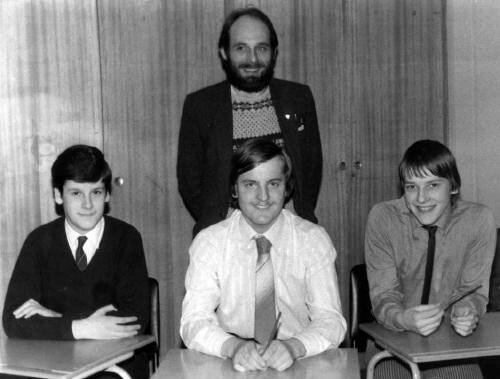
There are plans to introduce compulsory school uniforms as from the new academic year. The decision was actually taken some years ago but not been implemented. In fact, some schools already have a uniform policy, but it seems that is a more general decision. The arguments sound so familiar: the need to inculcate a sense of identity and pride in the institution; the divisive nature of fashion and parents being “forced” to purchase expensive styles in order to try and “keep up with the Jones’”; how “rich kids” are often able dress better the teacher; the economic difficulties that some families will face having to buy an additional set of clothing, when they have trouble finding the money to “kit out” their children anyway; the commercial advantage of having the monopoly as a school’s outfitter and the risk of “price fixing”; … and so on.
I wonder if whoever thought of this idea has considered some of the other problems, such as the fact that society is no longer as “controlled” as once it might have been, which means that attempts to impose an identity are likely to lead to resentment and even rebellion. Kids are undoubtedly going to try and stretch the rules to see what they can get away with. OK, there’s nothing new in that … it happens all over the world, but I wonder how they would cope with a Chris Whitehead, the 12 year old schoolboy who was so upset by his school’s rules that forbade him wearing shorts even in the hottest weather, that he took to wearing his sister’s skirt, because that was not actually forbidden.
.




 Bishkek