Zhook!
Sunday, May 22nd, is World Biodiversity Day. A few years ago I wrote an article where I was trying to illustrate the vast biodiversity that exists here in Kyrgyzstan. The wildlife found in Kyrgyzstan is, indeed, rich and diverse. Over the territory of Kyrgyzstan it is possible to find life typical of deserts and forests, valleys and mountains, steppes and meadows.
I then went on to give some statistics and the next paragraph announced:
“There are about 500 different species of vertebrates and over 3000 species of insects which have been catalogued, including 60 species of dragon-fly, 86 species of butterfly, 86 species of ants, 33 species of bees, and 250 species of cicadas.”
It was only after I saw the article in print that I thought to myself: “Whoops, perhaps that wasn’t the right place to start …”. There was nothing wrong with the statistics, (at least they came from the Encyclopaedia Kyrgyzstana, the local equivalent of the Encyclopaedia Britannica, so I presume that they are correct), but I thought that it might have been better to place this particular paragraph later in the article.
Most people are not keen on insects, “bugs” or “creepy crawlies” – “zhook” in Russian, it’s the word for beetle. Entomologists might be sent into fits of ecstasy by such statistics, (indeed, a few years ago there were press reports about a tour company – not us – which had organized a specialist tour for a group of entomologists and they had actually succeeded in discovering specimens of a new species!), but an awful lot of people, (even if they don’t actually suffer from Entomophobia, – the fear of insects), feel uncomfortable at the sight, and even the thought, of insects – especially when they appear en mass.
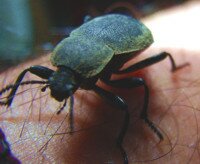
The other day I was shown an example of a massive “bug” which one of our staff had found in his home. I have to admit that it made me feel uneasy.
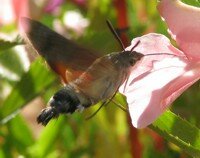
On the other hand, one of my most memorable experiences here in Kyrgyzstan came on a trip to Issyk Kul for a weekend conference. Because I was coming from Naryn, and not Bishkek, I arrived to the resort where it was being held earlier than everyone else. I checked in, unpacked and decided to kill some time whilst I was waiting by going for a walk in the grounds. It was a bright spring day and I walked along the side of the flower beds taking in the colours and smells, and watching the bees and butterflies flitter from flower to flower, bloom to bloom. Suddenly, I stopped short … I couldn’t believe my eyes. Normally the butterflies landed on a flower and opened their wings and seemed to bask in the sunshine, the bees landed on the blooms, hustling and bustling, this way and that, collecting pollen for their hives, with never a still moment.
There in front of me, however, was a tiny insect, (well, not that tiny, about two or three centimeters long), but it wasn’t its size that attracted my attention – it was what it was doing. It didn’t land on the plants, but hovered in front of them, and projected a proboscis into first one bloom and then another. It looked like the action of a humming bird. Now I know that some humming birds are very small … but this seemed to be far too small – so I took another, closer, look and confirmed that it really was an insect.
I had never seen anything like this before, although I have subsequently learned it is not exactly a rare species. As I said, I did have my camera with me … but not in my hands, so I ran back to my room to get it … when I returned, the insect was no longer to be seen … I hunted up and down the flower bed … and then, yes, there it was … I raise the camera and took a photo … or tried to … whhrrr, whhrrr … was all I could hear, there was no click of the shutter. The batteries were dead. Yes, I did have a spare set … back in the room. I ran back and got them. Once again the pesky insect had flown on to another sport and I was left to search up and down the flowerbeds once more … Yes, there it was. I snapped a picture … it was out of focus. I took another … got it .. but it was too blurred … the wings were moving too fast, Eventually, several shots later I got a clear copy … and then some more.
When I got back to Bishkek I searched the internet and found similar photos … and a description. As I said, its not a particularly rare species, but I felt really pleased that I had seen it … an insect that acted like a bird.
.
There are, however, several rare insects. Apart from the new species which I mentioned above, (about which, unfortunately, I have no details), there are several recorded in the Red Data Book, which lists endangered species that can be found in Kyrgyzstan.
For the record:
There were five species of insects in the original (1985) Red Data Book of the Kyrgyz SSR:
- Calosoma Sycophanta: A species of Ground Beetle. A large bright metalic green beetle, Valosoma Sycophanta which is found throughout the territory of the Kyrgyz Republic. The lava eats day and night and can consume up to 50 catepillars during its two week development stage, and an adult will consume several hundred in its two to four year life span. (For this reason, the introduction of ground beetles has sometimes used as a form of pest control in agriculture).
- Common Swallowtail: A large yellow butterfly – an example of one of the 550 species in the family of swallowtail butterflies. Although the majority of Swalowtails are tropical, examples are found on all the continents except Antartica and the family includes the largest butterflies in the world. The wingspan of the Common Swallowtail can measure between 60 and 95mm. Swallowtails get their name because of the long “tail” at the extremities of their wings, but the main feature which marks them out is a unique organ behind the head on the catepillars – which in times of danger can exude smelly secretions as a form of defence. This particular species, Papilio Machaon Linnaeus, is widely distributed throughout the former Soviet Union, but it prefers open habitats in forest, steppe and mountain landscapes. It has been observed on the slopes of the Kyrgyz, Chatkal, Suusamyr, Talas and both the Terskey and Kungei Ala Too mountain ranges.
- Amphicoma Regeli: Sometimes known as Regel’s Chafer. A beetle found on the slopes of the Kyrgyz and Turkestan mountain ranges and which can reach 10-15mm in length. It is becomes active in April and May at about the time that tulips bloom. Considered to be under threat as the number of tulips declines.
- Netocia Prototricha: A large, bottle green beetle which can reach 20-24mm long which is found on the slopes of the Kyrgyz, Talas and Chatkal mountain ranges between May and August. Considered to be under threat because of the reduction in its native woodland habitat.
- Trichius Fasciatus: A beetle (sometimes called a Bee Beetle) whose body is covered with yellow hairs, except for the wing cases which have black and yellow stripes. A typical specimen would measure between 12 and 15mm. Usually encountered between the middle of June and August, when it is active during the daytime, it’s natural habitat is in the walnut forests of the Chatkal Mountains and the Sary Chelek reserve
In 2005 this list was revised. All of the above were removed and the following were added:
- Cordulegaster insignis Schneider, 1845 ssp. coronatus Morton, 1916: A dragonfly with a large brown or black body with yellow markings which is found along small woodland streams, often flying slowly 30 to 70 cm above the water. When disturbed, however, they can fly very rapidly.
- Saga pedo (Pallas, 1771): A grasshopper, sometimes known as The Predatory Bush Cricket – which are found throughout Europe, North America and Northern Asia. It is considered to be one of the biggest insects in Europe, (if not the biggest at 12cm in length), and one of the rarest. It is carnivorous, and gets is vernacular name from the fact that it ambushes other insects, especially crickets and other hoppers, amongst grass and bushes of the few dry scrublands where it lives. It seems very lethargic until the very last moment, when the prey come close and is suddenly seized by the deadly hug of the first two pairs of legs adorned with strong thorns. Interestingly, the Saga pedo is parthenogenetic, and therefore able to produce offspring without any form of sexual intercourse and, according to one source, only one male was found so far, (in 2006 in Switzerland). It breeds in late summer by planting its eggs deep in the soil using a long, sabre-like, ovopositor.
- Cephalota galathea (Thieme, 1881): A beetle.
- Carabus (Pseudotribax) 1933: A carniverous ground beetle – one of 20000 species in the Carabidae family.
- Carabus (Pseudotribax) validus Kraatz, 1884: A Beetle
- Prionus (Pogonartron) tschitscherini (Semenov, 1889): A Longhorn Beetle – which can be quite large, (25-70 mm) and are usually brown or black. The males sport large pincers which are most likely used in fights with other (often larger) creatures. They are nocturnal and are attracted to light. A boring beetle, the larvae feed on rotting wood or roots. They have twelve or more antennomere on their large antennae.
- Kirgisobia bohnei Danilevsky, 1992: The Capricorn Beetle – known in the UK as the Longhorn Beetle
- Colias christophi Grum-Grshimailo, 1885:The Clouded Yellow Butterfly – found in the Alai mountains. It frequents stony slopes and mountain moraines and is usually seen flying in June and July.
- Parnassius (Kailasius) loxias Pungeler, 1901 ssp. tashkorensis Kreuzberg, 1984: A cream coloured butterfly with a couple of orange spots on the wings which is found only in the Central Tien Shan and Western China. It prefers steep slopes with clay or rock soil and flies in June and July.
- Parnassius (s.str.) apollo (Linnaeus, 1758) ssp. Merzbacheri Fruhstorfer, 1906: A white butterfly with red spots found throughout Europe and the Middle East and across Asia as far as Mongolia – although widely distributed, individual local populations tend to be small and feature considerable variations from each other, and tend to be specific in the ecological requirements for their habitat. As a result they are very susceptible to changes in their local environments introduced by human activity. They tend to be found on plain landscapes and high mountain meadows – jailoos. They can be seen in flight throughout the summer months, June through August.
- Papilio (s.str.) alexanor Esper, 1799 ssp. judeus Staudinger, 1893: A yellow and brown “striped” butterfly found throughout Southern Europe and streching across the Middle East to Central Asia. They prefer stony mountain slopes and fly between May and August.
- Satanas gigas (Eversmann, 1854): A large “Robber Fly”, found in semi-arid and arid regions. They have stout, spiny legs, a dense moustache of bristles on the face (which help protect the head and face when the fly encounters prey – other flies, beetles, butterflies and moths, various bees, dragon and damselflies, wasps, grasshoppers, and some spiders), and 3 simple eyes in a characteristic depression between their two large compound eyes. It has short, segmented, antennae and a short, strong proboscis that is used to stab and inject victims with saliva containing enzymes which paralyze and digest the insides; the fly then sucks the liquefied meal through the proboscis.
- Urocerus sah (Mocsary, 1881): A boring Wasp – specimens have found their way into the United States as stowaways on wood products
- Megalodontes (Rhipidioceros) kuznetzovi Dovnar-Zapolskij, 1930: A Sawfly – The Megalodontesidae are a small family containing some 40 species which are found in the temperate regions of Eurasia. They are distinguished from the closely-related species by their serrated antennae. The vernacular name comes from the appearance of the ovipositor which resembles a saw blade. Females use this ovipositor to cut into plants where they lay their eggs. The caterpillar like larvae feed on herbaceous plants.
- Polochrum pamirepandum Kurzenko, 1986: A wasp. The female deposits her eggs into the nests of solitary bees and the developing larvae consume both the host larvae and the supply of food provided for them.
- Masaris longicornis (N.Kuznetzov, 1923) (=M. tianshanicus Panfilov, 1968): A pollen wasp – so named because it carries pollen in a crop and regurgitates it along with nectar when provisioning the cells of their nests, which are usually found in concealed places, such as under rocks or in crevices. They lay their eggs in the soupy mass before sealing the cell. The nests are often constructed out of mud and water, or burrows in the ground, and these can have one to multiple individual cells.
- Rossomyrmex proformicarum K.Arnoldi, 1928: An ant of the formicinae family – so named because although they have a small sting, they have a large venom reservoir and a gland which is specialized for the production of formic acid.
- Tricholathys relicta Ovchinnikov, 2001: A spider which builds irregular webs close to or directly on the ground. Typically they create a tangle of silken fibres among several branches or stems of one plant.
Apparently, the list has been revised again this year, but it’s yet to be published and I haven’t seen the new version.
.
There may be all sorts of reasons why we feel uncomfortable about insects: there size, the way their legs move frantically back and forth, the itching, tingling, tickling sensation that we feel when they appear on our bodies scrambling and scurrying over our skin.
The whirring buzzing sound of mosquitoes can be really unnerving, especially when we recall that they can carry disease: for example, Malaria and Tick Borne Encephalitis. Unfortunately, although neither presents a major problem, they are both found in Kyrgyzstan.
For the record:
Malaria is a serious disease that is transmitted to humans by the bite of an infected female mosquito which usually bites sometime between dusk and dawn. In fact, Malaria used to be prevalent in Kyrgyzstan but was eradicated from the country in the late 1950s. Since 1980, however, there have been sporadic “imported” cases in the country, brought here by travellers who had been infected abroad. In the early 1990s, the number of such cases started to increase gradually and in 2002, a major outbreak witnessed the return of malaria. In 2004, there were reports of over 30 hospitalized cases in the region near to Osh – apparently, among the patients were people suffering from anemia and those, who had been infected in the past (and possibly not fully recovered). In 2009, according to the Ministry of Health, there were 196 cases of malaria registered in Kyrgyzstan. The Centre for Disease Control in Atlanta, on the page of their website giving advice about Malaria in the CIS countries advises that there is a risk in Southern and Western regions, (Batken, Osh and Djalal Abad oblasts) – especially the border areas with Uzbekistan and Tajikistan. Fortunately, Malaria can be prevented by using anti-malarial drugs and by using personal protection measures to prevent mosquito bites.
Then, there is tick borne Encephalitis, (TBE), a viral infectious disease which attacks the central nervous system – encephalitis is an acute inflammation of the brain. There is no specific drug therapy for TBE although anti-inflammatory drugs are often prescribed. Prevention is best achieved by using insect repellents and wearing suitable protective clothing. Apparently there is also a vaccine, but I am not aware that it is available here … it seems that it’s not available in the US, either.
.



 Bishkek