Changing place names
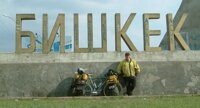
One confusing feature in Kyrgyzstan is that since independence there has been a tendency to change place names, especially from the older Russian version to new Kyrgyz names. In many cases the new name is a form of an even older Kyrgyz name – but not always. In a way, this is isn’t altogether surprising. The young nation wants to assert its identity.
Of course, as new towns, suburbs and streets are built then they acquire new names – it is the same all over the world. The trend here, however, is for names of existing towns, villages and streets to be changed. Indeed a recent proposal to rename some villages by replacing their Russian names with Kyrgyz ones has proved to be extremely controversial.
The name of the country itself has gone through several forms – The Khirgiz Soviet Socialist Republic, Khirgizia, the Kyrgyz Republic (the official name) – but it is commonly known as Kyrgyzstan. The name Kyrgyzstan, however, has a number of drawbacks. First of all, it is often confused by Westerners with Kurdistan (an area straddling the borders of Turkey, Iran and Iraq). Also, the ending ‘stan’, has some has unfortunate connotations and many Westerners are confused by the mass of stans … Afghanistan, Hindustan, Pakistan, Kazakhstan, Kurdistan, Kyrgyzstan, Turkmenistan, Uzbekistan …
Individual settlements have also borne different names over the years.
The settlement on the site of Bishkek has had several names over the course of time … Jul (6th-12th century); Pishpek (1825-1926); Frunze (1926-1991); Bishkek (1991 to the present).
Some towns and villages have reverted to former names: for example, Karakol (called Prezhervalsk by the Russians). Perhaps the most confusing is Balykchi, which was renamed from the Russian Rybachi (after the fishing that took place on the lake) as Issyk Kul – but this caused some confusion, the town, lake, rayon and oblast all called Issyk Kul – and so the name of the town was changed once again, this time to a Kyrgyz version of the Russian name – Balykchi.
Other names have simply been made more Kyrgyz by changing the spelling – such as Tokmok (which was Tokmak) and Ozgen (which was Uzgen), Jalaabat (Djalal Abad).
“Old habits die hard” and some people, especially the older generation, still cling to the old names. To make matters worse, sometimes the same person can switch between former and present names in the middle of the same conversation.
To add to the confusion, several names are found in several different places. We need to remember, of course, that in the United States, there are settlements called, for example, Paris, London and St. Petersburg … so perhaps it is not surprising that in the Kyrgyz Republic there is, for example, one called Moscow (in Batken), another called Boston (in Djalal Abad) and one called Bagdad (in Batken).
The regional centre of Djalal Abad shares its name with a town in Afghanistan, which has recently been in the news. There is a city called Osh in France.
Within Kyrgyzstan itself, there are at least four settlements called Kara Suu – two of them located in the Osh oblast, and at least five villages called Aral – two of them only twenty kilometres apart. In the Talas oblast, as well as the regional centre – Talas – there is another settlement sharing the same name.
The Soviet era has also had an influence on place names. No less than three villages bear the name Komsomol. There are also villages named Bolshevik, Commune, Communism – and each of these has become a proper name for two or three other populated areas as well. For patriotic reasons, probably, villages and farms were named Kyrgyzstan, Kyzyl (red) Kyrgyzstan, Kyzyl (red) October and Kenesh.
There are villages with holiday names such March 8th (in Naryn oblast), May 1st (in Djalal Abad oblast).
It is not only towns and villages that contribute to the confusion. Streets have also been renamed – especially in Bishkek, (where there is an official list that records almost 100 changes in the fifteen years following Independence). Once again this isn’t altogether surprising … but it can lead to some confusion. The name of Prospect Mir (= “Peace Avenue” in Russian) was changed, but when it was suggested that maybe this implied that the Kyrgyz weren’t interested in peace it was swiftly changed back. In some cases the old names are still in use – in others the new names are used but with the epithet “vishe … followed by the old name, (= “formerly …”, for example: Isanova vishe sorok liyet = Isanova formely Sorok Let).
In Bishkek:
- the main street is now known as Prospect Chui, before that it was Leninsky, prior to that Stalinsky, earlier still …
- the road now known as Jibek Jolu (= “Silk Road” in Kyrgyz) used to be “Fifty Years of the Khirghiz SSR”, before that “Leningradsky” (which is confusing because the next major road running parallel to it to the North is now also called Leningradsky), and prior to that Tashkentsky – as it was the main road to Tashkent. We still encountered people who referred to it as Leningradsky as late as 1999.
Here is a list of some of the name changes:
| Old name | New name |
| Almatinskaya – (South of Prospect Chui) | Shabdan Baatyr |
| Almatinskaya – (North from Prospect Chui) | Kurmanjan Datka |
| Belinskaya | Prospect Manas |
| Dzershinsky | Erkindik |
| Karl Marx | Unusalieva |
| Kirova | Abdumomunova |
| Krasnaya Oktabrskaya | Tynystanova |
| Communisticheskaya | Mederova |
| Lenin Prospect | Prospect Chui |
| Pervomaiskaya | Razzakova |
| Pravda | Ibraimova - (S. Ibraimova) |
| Sovietskaya – (South of the Railway line) | Baitik Baatyr |
| Sovietskaya – (between the railway line to the Bolshoy Chui Canal) | Djsup Abdrachmanov |
| Sovietskaya – (North of the Bolshoy Chui Canal) | Bakinskaya |
| 40 years October | Isanova |
| 50 years Kyrgyz SSR | Jibek Jolu |
| 50 years October | Achunbaeva |
.
Let me illustrate with two stories:
A couple of years after arriving here, I had to go and buy a spare part for the car. I was told that there was a garage which normally stocked the part I was looking for and given an address for it, something-something Tashkentskaya. Now, I didn’t know where Tashkentaksaya was and so I asked for directions. I was told: “It’s down there, a main road two or three streets down, then turn left and the garage is two blocks to the left … it’ll take you about 10 minutes.”
So off I went, in the direction that had been indicated, two streets, three streets, across Jibek Jolu and further. At each crossroads I looked for the road sign giving the name of the street. Each time it said something different so I crossed the road and carried on my way. The 10 minutes were well and truly up, but maybe the person who said that was guessing, or was just mistaken, but eventually I decided to ask somebody else. As is usual in this sort of situation, no one wanted to stop and answer questions. When I found someone who would, they looked at me with a dumbfounded look across their face. At first I put that down to my poor Russian, or maybe my accent, but the experience kept repeating itself.
Eventually, I found someone who told me: “You’ve come too far, you need to go back up there two streets. That’s Tashkentskaya.” ”But,” I replied, “that’s Jibek Jolu.” ”Yes,” I was assured, “Tashkientskaya was the old name.” ”But,” I continued, “the old name was Fifty Years of the Kyrgyz SSR.” (I knew that because the old signposts hadn’t all been replaced, even though the street had been renamed something like five years previously.) However, as I was told, “Yes, but it was Tashkentskaya before that.”
Old habits die hard. The was established in 1926, so the fiftieth anniversary of the Soviet Socialist Republic, (when the street was renamed and was last known by the name Tashkentskaya), fell in 1976 … some thirty years before this incident occurred, and the street was still be referred to by it’s old name.
A few years later I happened to be at the corner of Kievskaya and Sovietskaya in downtown Bishkek. Sovietskaya is one of the main streets with a variety of apartment blocks, shopping centres, and so on. Although it was on a much smaller scale, I used to joke that it was Bishkek’s equivalent of London’d Oxford Street. Times have changed, however, and there are many more shopping centres in town so it no longer possesses the dominance that it once had. I looked up and saw that the city authorities had installed some new street name signs that proudly bore the inscription, “Sovietskaya”. I thought to myself, that this was a sign that they weren’t going to rename the street.
I was wrong, as a few months later the city council passed a decree doing just that and so the postal addresses of some of Bishkek’s major attractions, (such as the Fine Arts Museum, the Opera and Ballet Theatre and not forgetting the Hyatt), are no longer Sovietskaya, but Abdrakhmanov Street. Still, as I said, old habits die hard and in everyday conversation, practically everyone still refers to it as Sovietskaya.
.
Incidentally – it is not just in Bishkek that street names have changed. Our Guesthouse in Naryn is on the street that used to be known as Moskovskaya – but after independence was renamed Razzakova. The whole suburb was, and still is, called Moskovskaya. The official address is now Razzakova 42, but most locals will still understand Moskovskaya 42.




 Bishkek