A week of anniversaries
This last week has been a week of special days and anniversaries. Although they were not holidays, (they come next week), some of them helped to focus my attention on a number of issues.
The week began with White Day on Monday. March 14th is known as White Day in Japan, although I suspect that it went unmarked this year. A month earlier, St. Valentine’s Day is when men give presents as tokens of affection to their girlfriends and White Day is the ladies opportunity to reciprocate, giving similar tokens to their beaus. This year, of course, what with a massive earthquake, a devastating tsunami, worries about a potential nuclear meltdown and freezing temperatures hampering search and rescue attempts, I doubt if there were many people who marked the occasion even in the less affected areas.
The situation in Japan has received extensive coverage here, although it hasn’t been the wall-to-wall coverage which CNN and the BBC have devoted to events. However, the newswires have devoted considerable coverage to developments, far more than they normally do to foreign stories. A number of Kyrgyz citizens, students and so forth, who were in Japan have been repatriated and replaced by a team sent out to help with the search and rescue efforts. An appeal has been launched and a number of prominent people, including deputies, have offered to house some displaced people in their homes.
During the week the number and frequency of email alerts from the USGS, (United States Geological Survey), of earthquakes greater than magnitude 4 remained quite high, about 50 a day. On Friday we experienced one of our own, measuring 4.5, about 21 kilometers North of Bishkek on the border with Kazakhstan. Oddly enough, a lot of people didn’t notice it, although I was in a Meeting at the Hyatt at the time and felt it. The chandeliers shook but that was the main signal that something was happening. They felt it back in the office and sensibly headed out of doors until it was over. Judging from his reaction, I think that it must have been the first time that Maxim has experienced one. Fortunately there doesn’t appear to have been any damage here in the city and as far as I am aware, no one was hurt.
Monday was also Pi Day. As every schoolboy knows, pi is the ratio of the circumference of a circle to its diameter and is equally to 22/7, or 3.1415962… The real value of pi is “irrational” which means that we can’t express it exactly as either a vulgar fraction or as a decimal, but these two are pretty close. Close enough, that is, for most purposes. There is a website that lists the value of pi to one million decimal places, but no matter how many digits we choose, we can only ever a get closer approximation to the value, but never actually determine it. Back in 1989 some mathematicians in America decided to name March 14th as pi day because in the American system of writing short dates this is 3/14, or 3.14. I suppose that March 14th, 2015 will be singled out as a particularly big occasion for American Mathematicians in this sort of trivia as it will be 3/14/15.
The irrational nature of pi raises made me think of how numbers dominate our thinking and how we bandy numbers around, misunderstand them, and abuse them. Take the situation over the mobile telephone company which runs the most successful; network here in Kyrgyzstan, Megacom. Because it was owned by Maxim Bakiev and members of his entourage, after the revolution the company was taken into public ownership, or at least 49% of it. The other 51% of the shares were placed under a restraining order whilst their ownership was investigated. Now, that 51% is being claimed by several companies, including companies from Kazakhstan, Georgia and the Ukraine. Then there are the original investors from Russia who, apparently, have a court order saying that although they sold the company, they still own all the equipment. There are even statements being made to the effect that the government should have nationalized 100% of the company. Like pi, it’s not exactly clear, (in fact it is “as clear as mud”), but unlike pi it doesn’t seem as if it can be resolved by further analysis.
Even though they only nationalized 49% of the shares, the government dismissed the Executive Director and installed their own. He’s now in trouble and claiming that millions of dollars have been siphoned out of the company. The original management have won a court case and say that they are back in control, but the government have now appointed yet another replacement and with different law enforcement agencies apparently supporting different sides in the dispute, the waters are just getting muddier and muddier.
When it comes to Pi Day I, personally, prefer to commemorate it on July 22nd, but that’s probably because I am British and we write dates with the day followed by the month and so this date would be written as 22/7. The American mathematicians, aware of this practice, decided to name July 22nd as Approximate Pi Day, but that strikes me as pretty disingenuous because pi is irrational, which means that 3.14 is also an “approximation”. The Japanese, of course, use a system of writing dates in a way that strikes me as being much more logical, (especially when compared to representing numbers or it comes to having to sort dates on a computer). As with numbers, they begin with the most significant digits, representing the largest values, so instead of using DD/MM/YY, as the Brits do, or MM/DD/YY, as the Americans do, they start with the year followed by the month, followed by the day, (YY/MM/DD).
Let’s hope that the cool logic of the Japanese helps them face their current difficulties. I can’t help thinking that we could do with some of it here.
The next day was the Ides of March, the fateful day when Julius Caesar was assassinated on his way into a meeting of the Senate in the Theater of Pompei in Rome, in 44BC. On his way the theater, he was supposed to have encountered a seer who had warned him that harm would befall him not later than the Ides of March and this incident was immortalized by William Shakespeare, in his play named after the Roman oligarch, when the seer intones: “Beware the ides of March”. This line has since passed into popular culture and is used to express a sense of foreboding, of some impending calamity, doom and destruction and it is even quoted by the likes of Lisa Simpson in order to admonish “Homer the Great”, as well as serving as the title for a Postcard from Bishkek. According to Plutarch, on the historic day in 44BC, Caesar heads off to a meeting of the Senate in the Theater of Pompeii and encountering the seer responds jokingly with: “Well, the Ides of March have come”, to which the seer in turn replied “Ay, they have come, but they are not gone.” Julius continues on his way and arriving at the senate is stabbed to death, (23 times), by a band of some 60-odd conspirators.
Well, this year the day has come and gone. Although we have had lots of seers predicting mayhem and disorder for us this spring, (spring being, as some commentators put it, the “traditional” time for the people Kyrgyzstan to rise up in protest). Some of these predictions have named dates when things were supposed to happen but, fortunately, they have proved to be groundless rumour and speculation. Nothing was actually forecast for this particular momentous day and nothing calamitous occurred other than a drastic drop in the temperature and yet another fall of snow.
It was, however, a momentous day in some respects.
One of the Coalition partners, for example, issued a list of changes they wanted to see introduced. If they are not met, then they are threatening to withdraw from the coalition. One of the opposition parties seems to think that this marks the end as they think it will be difficult for the Prime Minister to agree to them as it seems to water down his position. Roza Otunbaeva has urged, however, out that we need to do all we can to keep the coalition as we are not really in a position to organize new elections and the break-up of the coalition could lead to further unrest on the streets. She’s been saying similar things for some time now and when challenged she pointed to what she said was the delicate position in Osh and Uzgen, highlighting the issue of land distribution, (which happened to be the critical issue which sparked the devastating riots in Osh in 1990).
On a more positive note, the Prime Minister of Pakistan paid a visit to Kyrgyzstan. That meant, of course, a heavy police presence and road closures with resulting traffic jams as most of Bishkek’s 143,000 vehicles stood idle waiting for his motorcade to pass. There were the usual round of high level talks and statements about the need to have a regional approach to tackling terrorism and drug trafficking, developing and protecting investments and the export of electricity from Kyrgyzstan to Pakistan, (which seems to be a controversial issue, at least as far as some of our neighbours are concerned). One interesting point which may have introduced a sour note was a comment about visas. It seems that Pakistan has relaxed the visa requirements and procedures for Kyrgyz citizens and were looking for reciprocal steps from their hosts as well as the possibility of reintroducing flights between Bishkek and Islamabad.
Incidentally, on the subject of Bishkek traffic, one tweet this week remarked how in seven days in Berlin the twitter hadn’t heard a single car horn, but in half an hour’s driving back in Bishkek … “guess how many times”. Shortly after reading this I had to go the Hyatt for a meeting. It’s a short distance, about two kilometers. On the way there, I didn’t hear a single horn, but on the return journey I heard eight.
March 15th was also World Consumer Day. It went unnoticed here. That didn’t really surprise me. We do have a law on Consumer Rights Protection, but I sometimes wonder how effective it is. This week, for example, I phoned a company with a complaint and asked for their address and to whom I should write about it. To my astonishment I was told, “we don’t enter into correspondence”. So much for “Customer Care”.
Had Julius Caesar survived the assassination attempt, then the next day would have been XVII Kalends Aprilis: the First day of Bacchanalia, the wild festival in honour of the Roman god Bacchus, (or his Greek equivalent, Dionysius). Apparently, the festivities were so wild that the word has come to mean any form of drunken revelry. Knowing how people here enjoy exploiting any excuse for a celebration, it occurred to the cynic in me that this might seem an appropriate holiday for Kyrgyzstan to adopt. However, the Roman historian Livy tells us that in 186BC the Senate acted to prohibit the celebrations as they had become the center of a wide range of crimes and political intrigue, and we could probably do without that.
Thursday was St Patrick’s Day. Irishmen all around the world joined in parades and other celebrations. All the Irishmen that I have known in Bishkek seem to have gone, so there were no notable celebrations, although some of the bars seemed to seize the opportunity to stage a “special event”. As I said, people here like to take any opportunity to celebrate. A couple of tweeters commented on how they had partaken of Ballentines and/or Bailey’s and one of the bars actually had the black stuff, Guiness, on offer. In Chicago, the river was once again dyed green. In Moscow, however, the parade was cancelled, ostensibly because of traffic congestion. Given the congestion that is caused It stuck me as odd bearing in mind the tendency to close off streets whenever someone important drives by, just as we did when Pakistan’s Prime Minister visited.
In fact, following that visit, we had some more traffic chaos on Thursday when Bishkek saw another demonstration, which set people worrying about potential consequences. It involved about 200 market traders from the city’s main bazaar, Osh Bazaar. The city authorities are in the process of redeveloping and reconstructing the site. Around the bazaar there are a large number of kiosks. The traders are supposed to sign an agreement renting a particular plot for their kiosk. Recently the authorities have removed a number of kiosks which were set up illegally, (without concluding an agreement), and now they want to end the contracts of some of the others who do have rental contracts and are saying that they won’t renew the agreements. Instead they are suggesting that they are relocated to another bazaar in another part of town. The traders think that there will be less business for them there and are obviously upset at the potential loss of their livelihood and organized a protest. The protestors gathered near the bazaar and marched, shouting and whistling, along the main street, Prospect Chui, to the White House where they rocked the gates, (the same gates where protestors were shot and killed on April 7th last year), eventually breaking the locks. They were prevented from gaining access to the grounds however, by a police cordon which outnumbered them by 2-to-1. They demanded that the Mayor meet them and, at first, refused to meet, discuss or negotiate with anyone else, although they later met with the staff of the Speaker who promised to pass on their grievances. Most of them then marched off to the town hall before finally dispersing.
Although people expressed the hope the hope that wasn’t going to be the start of a third revolution, I don’t think there was much risk of that. It was a small protest on a specific and limited issue that got a bit heated, a bit out of hand. There was no sign of a widespread conspiracy. The right to protest a grievance is a normal part of “democracy” and we have them in the West all the time. Sometimes they get a little heated, a little out of hand, and sometimes they turn violent with places like the Houses of Parliament being stormed or paint being sprayed over the Prime Minister. That doesn’t mean that there is a conspiracy and revolution will follow. On the other hand, I am sure that the protest will be cited as yet another example that all is not well, a signal that there is “trouble at’ mill”, and as a portent of more trouble in store.
As it happens, it’s not only the lock of the White House gates that was broken on Thursday. We have a fence enclosing the yard outside our building and on Thursday we found the combination lock from one of the gates lying on the floor. It was a totally unconnected event which had nothing to do with the protest which didn’t even go past our gates, but was probably related to just a bout of hooliganism.
Friday was the anniversary of the death of Ivan the Terrible in 1584, one of Russia’s greatest and most misunderstood rulers. Ivan IV earned this unattractive title, (a translation from the Russian, “Ivan Grozniy”, which at that time probably meant something closer to Ivan the Great), partly due to his renowned fits of rage, (in one of which he killed his son and heir). Apparently, however, he was a much more complicated character who led his people of the relatively small Rus nation in the conquest of many lands, uniting great swathes into a vast multi ethnic, multi cultural, multi-religious state. He was extremely devout and a firm believer in the Divine Right of Kings and even wrote admonishing letters to Elizabeth I of England.
I suspect that, had he stretched his rule to this part Central Asia, the nomadic Kyrgyz would have had a hard time just as they did under his successors when the Tsarist Empire did extend into the region. Over their long history, however, the Kyrgyz have shown that they don’t take kindly to rulers who believe in that sort of thing. There have been numerous attempts to unite the Kyrgyz under a Grand Khan, but when they have succeeded, it has only been for a short while and the two recent revolutions are just further examples of how they resist centralized power unless they can see direct benefits to be gained.
.
On a more personal note, my week has been busy and to continue the theme of anniversaries, for example, there were four birthdays that had to be marked. It’s been busy in other ways too.
There was the regular monthly open meeting of the IBC, (International Business Council), and which was supposed to be attended by the Prime Minister to discuss the current Business Environment. Unfortunately, however, he couldn’t make it as there was an important meeting of the ruling coalition which obviously took priority, which meant that even though the meeting was arranged at the suggestion of his office and the date and time chosen with their agreement, he wasn’t able to attend. Despite that we went ahead and it was actually quite a good meeting, although several people felt that it was rather depressing because it concentrated on the problems that businesses are facing at the moment. On the other hand, it is the nature of such meetings about how to improve the business environment to concentrate on problems and I felt that there were plenty of concrete positive suggestions about what needed to be done. Any schoolteacher could tell you that. Even an excellent piece of work can be improved, and can be covered with red ink giving suggestions.
Talking of education, Maxim, (one of the kids), has found himself enlisted by an international organization to help with one of their projects. They have recruited him to a team of teenagers to deliver presentations on a variety of themes to schools, children’s homes and the like. They give the group some training, who then have research the topics, prepare the presentations encompassing a variety of different activities, (talks, games, role plays and that sort of thing), which they then deliver, finally writing a report accompanied by comments from the “audience” and photographs. The themes he has had to cover include topics like: Healthy Eating; Handling conflict situations; Assessing information; How to listen; Respecting others; Narcotics; Keeping yourself well when others are sick; and Understanding others. In my days as a teacher it was part of the school curriculum and called PSHE, (Personal, Social and Health Education). He seems to have enjoyed it, although when I asked him if that was so, his reply was, “Yes, when they listen to me.” I then asked him if the experience had made him think of becoming a teacher to which he responded, “No way!” However, since that conversation he seems to be mellowing to the idea, so we’ll see. He’s still quite young and has quite a way to go before he finishes school himself.
He’s too old to go to a new school that is opening in Bishkek next September. It’s being set up by a group of parents, mostly ex-pats but including some local people as well, with the idea of providing lessons primarily in English and leading to the International Baccalaureate. At the moment, their plans are just for primary school provision but they hope to expand to include provision for older pupils in the future. If anyone is interested, you can find out more on their website: www.europeanschool.kg.
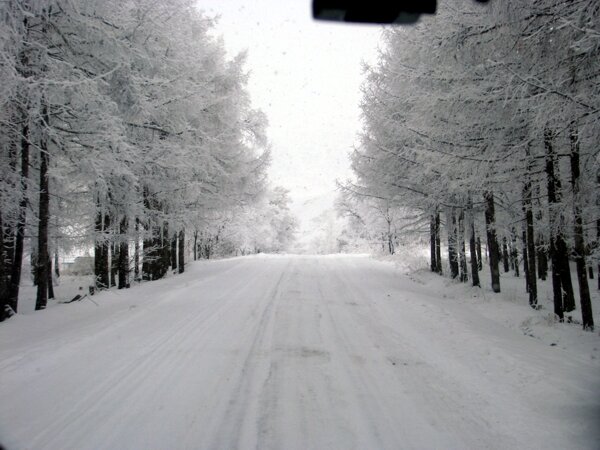
The weather has been mixed, decidedly mixed. One it has been decidedly warm, the next has been bitterly cold and seen snow. It looks as if we are in for a period of warm spring weather. Let’s hope it lasts.
If this week has been a week of anniversaries, next week sees two holidays. Sunday is the Zoroastrian festival of Norus, which is celebrated throughout Central Asia, and because it falls on Sunday this year Monday has been declared a Public Holiday. The other holiday is the Anniversary of the People’s Revolution on March 24th, commemorating the Tulip Revolution in 2005. So it will be a somewhat short week, just three working days broken up by holidays. Fortunately, the next holiday after that isn’t until the end of August.





 Bishkek
Have you forgotten May Day, Constitution Day, and Victory Day which are between now and the end of August?
Whoops!
But at least I now know that you read it!