Education in Kyrgyzstan
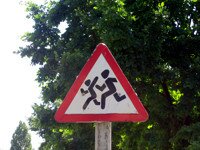
This is quite a long postcard but I hope that, (especially given my background), you’ll bear with me. I have been asked some questions about the educational system here in Kyrgyzstan … so, here are some notes and some thoughts on the subject:
.
The first thing to say is that “Education is a highly prized commodity in the Kyrgyz Republic.”
It is said that until 1917 the Kyrgyz were largely illiterate. The family played the central role in education and socialization of the young – and it was in the family circle the young generation would absorb the culture, crafts, poetry and traditions of their forefathers.
The schools that did exist were primarily religious schools – called “mekteb” – where, under the tutelage of a mullah, the boys, (girls didn’t go to school), would learn to recite portions of the Koran and other religious texts. In 1909 there were 14 such schools in Pishpek (Bishkek), 11 in the Prezhervalsk (Karakol) district of Issyk Kul and 169 in the southern districts where the influence of religion was much stronger.
When Kyrgyzstan became absorbed into the Russian empire at the end of the nineteenth century, a number of secular schools appeared – so called “native schools”. Although they were called “native” schools, this term referred simply to the local population and so they brought together pupils from many different cultures represented in the local population: Kyrgyz, Dungans, Tartars, and Uzbeks, as well as other nationalities. They brought to their pupils a knowledge of both the Russian language and of Russian culture, and by 1914 were found throughout the territory now known as Kyrgyzstan, (in Alexandrovka, At Bashi, Ketmen Tebe, Naryn, Osh, Pishpek (Bishkek), Pokrovka, Prezhervalsk (Karakol), Sazonovka, Sokuluk, Talas, Tokmak and Tynaevka). Some of the schools were boarding schools.
One thing, however, didn’t change– on the whole, they were still, mainly, just for boys. Two Russian “native” schools had been established in 1914 for the education of girls – one in Tokmak and the other in Prezhervalsk – with a total roll of just 42 girls.
The Soviet period, following the Bolshevik Revolution in 1917 was one of continual progress in terms of educational provision and the growth in the number of all forms of educational establishment, for example, continued right up to the end of the Soviet Union.
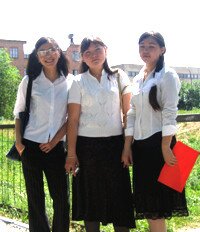
Also, during the Soviet period the position with regard to girls’ improved considerably. One of the early measures adopted by Lenin after the Revolution in 1917 was a decree which established a “Commission on Enlightenment in the Turkestan Republic”. The commission set about extending the school system – and the only condition imposed on joining classes was “the will to study”. The number of schools grew dramatically – and girls were able to receive an education. Indeed, in some areas the performance of women outstripped that of their male counterparts. In fact, at one point, in 1994-5, 60% of the students in institutes of higher education were female. The gender difference is nowadays more marked, possibly because the boys are often withdrawn to assist with farm work or in the bazaars, which means that girls tend to have a better attendance record.
Indeed, although attendance at schools is supposed to compulsory, both school enrollment and attendance have been falling. At the time of the collapse of the Soviet Union it was said that enrollment in the first form was 100%, but five years later it had apparently fallen to 97%, and only 79% of the entire school age population. What’s more, there is evidence to suggest that as they get older, there is a tendency for some children to drop out of school and start some, (unofficial), work in order to alleviate economic hardship within the family. The increasing truancy rate has led to stories appearing in the local press of “child labour”. It has been suggestion that another cause of the rise in truancy is due to the lack of suitable clothing, such as footwear.
Amongst the major results of the investment made by the Soviet Union in education was the high degree of literacy – variously reported as 97% or 100%, and a highly qualified population – 84% of the population having received a higher or “secondary” education.
The tendency during this period was for technical, vocational education. Students specialized in a particular area even whilst still at school – although there was (and still is) a standard programme of “general education” which forms the core of all courses of study. Although it was thought important for the development of socialism, Lenin’s dictum that it is important “to know a little about a lot” is still influential. As a result, a first year student of Tourism could well find themselves attending classes in Thermodynamics even though it bears little, (if any), relevance to their main studies.
Curriculum development is often quite a bureaucratic process. The Ministry of Labour has a series of job definitions laying down requirements for each profession. The Ministry of Education then transfers these into course descriptors which have to be followed by individual syllabi and institutions. In order to introduce any new course which is not covered by these documents has to be self-financing and there can be problems over recognition of the qualifications. Indeed, not all qualifications are internationally recognized and this can cause difficulties for students transferring from one institution to another – especially if their family has moved abroad. There has been a recent development for some institutions to offer courses leading to international qualifications and several institutions have established cooperation agreements with institutions abroad to help facilitate both the delivery and the recognition of courses.
.
Most of the instruction is in schools conducted in Kyrgyz – the state language, with about two thirds of the secondary schools conducting lessons in it. About a fifth of the schools are “bilingual” in that both Kyrgyz and Russian are used to deliver the curriculum and another tenth are known as Russian schools because all the teaching is conducted in that language. A small number of schools, especially in the rural regions of Southern Kyrgyzstan use either Uzbek or Tajik, reflecting the local community, in the classroom. Since independence, there has been a resurgence in the Kyrgyz language and greater emphasis placed on it and other topics of “Kyrgyz nationalism”, (history, culture – art, music and literature, etc.)
In higher education, however, Russian is the predominant language with two thirds of studying through this medium. This is partly due to the availability of textbooks, Kyrgyz language textbooks being far fewer. As a result this may change as and when more Kyrgyz language textbooks become more available. Indeed, it is said that the growing influence of “Kyrgyz nationalism” in education was one of the driving forces behind the establishment of the Slavonic University in 1993 to cater for the ethnic Slavic population in the country.
Some institutions also work in different languages – the Turkish schools and Manas University, for example also use Turkish, the American University and International School use English as an instructional language.
The question of language is important because most of the instruction relies on the technique of “lecturing”. This is partly a hangover from the Soviet tradition, partly due to the lack of availability of textbooks and partly due to the lack of “educational technology” which is considered commonplace in the West.
The lack of textbooks in Kyrgyz may not that surprising in that it can be expensive to produce them, (for a limited market), requires specialist authors who are not only suitably qualified experts in their field, but also talented at being able to convey the material to a diverse audience. The state budget for the purchase of textbooks is also limited, hence print runs tend to be small. Some Kyrgyz language texts are sponsored by donors, but even so, there are precious few of them. There is a wider choice when it comes to books written in Russian, but once again, budgets tend to restrict the number that can be purchased and made available to classes or in libraries. Many pupils have to purchase their own textbooks whilst some schools operate a “deposit” system, charging a small fee for the loan of textbooks for the semester, or duration of the class.
There is also a considerable deficiency in terms of the available “educational technology”. Very few schools, for example, have computers, although there are plans to try and introduce more. Some of the institutes of Higher Education and some specialist schools do have computer labs, but there is still a considerable deficit in the main, state run, sector. Where computer facilities do exist, it is likely that the equipment is old and dated rather than “state of the art”. The idea of “a laptop for every student” is a long way from realization. This might be surprising given the fact that at the start of 2011 it was reported that there were over two million active users of the internet, out of a population of just over five million, many of whom live in remote rural districts. But, it is not just computers that are lacking. There is a deficiency in the provision of audio-visual aids, (models, posters, photographs, film and video), as well.
As an aside – this week the news broke that the The State Registration Service of Kyrgyzstan is considering the implementation of the “One Laptop Per Child Project”, (OLPC), in Kyrgyzstan. Now, issues concerning issues relating to education in schools are beyond the remit of the service, but “informatization” of the country does fall within it. ”This project is a good chance to contribute to the human development of our country,” the Vice Chairman said.
The OLPC project is run by a U.S. non-profit organization aiming “to create educational opportunities for the world’s poorest children by providing each child with a rugged, low-cost, low-power, connected laptop with content and software designed for collaborative, joyful, self-empowered learning. Its current focus is on the development, construction and deployment of the XO-1 laptop and its successors. The XO-1, manufactured in Taiwan and previously known as the “$100 Laptop” or “Children’s Machine”, is an inexpensive laptop computer specially designed to be distributed, to children in developing countries around the world, in order to provide them with access to knowledge, and opportunities to “explore, experiment and express themselves”. It is rugged; has low-power consumption; uses flash memory instead of a hard drive; runs a special, (Fedora-based), operating system and user interface, (called “Sugar”); has provision for mobile, ad-hoc, networking which allows students to collaborate on activities and to share Internet access from one connection; and has also been designed to be lower cost and much longer-lived than typical laptops.
It will be interesting to see the reaction of the teaching force to this proposed initiative – give the considerable investment that will be required compared to their low salaries, (see below). I hope and trust that the project will include computers for the teachers themselves and suitable training.
.
The year 1996 was declared as “The Year of Education”, and consequently much attention was focused on the sector. Education has been promoted as a major tool in order to help integrate Kyrgyzstan into the world economy and facilitate development and the improvement of living standards for the population.
Recently, however, it has been argued, there has been a tendency for the access to education to decrease. This is partly because there has been a reduction of support from the state – hard pressed for cash, itself – and many schools are in a bad physical condition, not having been renovated for many years. In some cases, the teachers spend their holidays decorating the classrooms and corridors. There is insufficient funding to buy new textbooks, or other basic materials, or to retrain teachers. Many schools are now introducing a system of requesting subscriptions from parents to help the shortfall in funding.
The lack of funding has created a crisis over the question of the shortage of teachers and in particular, teachers’ salaries. There are many schools without the full complement of teaching staff and most young entrants to the profession do not stay long, because of the low salaries it is claimed. As a result the teaching is aging – in Bishkek, for example, a significant proportion of the teaching force have already past the official retirement age. (For the record, the majority of teachers are also female.)
Salaries are low. To make matters worse, many of the social benefits which they enjoyed under the Soviet system have disappeared since Independence and not been replaced with any form of recompense. As a result, at the end of 2010, teachers throughout the country started protests and even threatened strike action in pursuit of a pay claim. The figures vary according the source but everyone, including politicians and officials agree that they are too low to attract, reward and retain staff, and that “something must be done”. The starting salary in the Talas oblast, it was claimed, was just 1500 som a month, (the union’s figures for a new entrant to the profession were even worse – just 1177 som), rising to 1900 som for an “experienced teacher – that’s about USD33, (or EUR23, or GBP17) to USD42, (or EUR29, or GBP27) – not enough to buy a sack of flour, yet alone pay for electricity, gas or other amenities. The union’s figures suggested that the average teacher’s salary was higher, (4026 soms a month), but there may be reasons for the discrepancy, (for example, it may include Bishkek and some other places where the salary is higher because it is subsidized by the city). Even so, it was still only USD87, (or EUR62 or GBP57), which is below nominal average wage for the country, (based on actual salaries reported to the tax authorities – which might well be, in itself, an underestimate), of 6744 som and the “minimum subsistence basket” for the country which is 3,827som, or USD83, (or EUR59, or GBP55). So, according to these figures, it seems that teachers as a whole are paid about 40% less than other workers in the country – and below the minimum subsistence level. The union asked that teachers be paid at least on a par with the rest of the workforce – basically, for a 40% pay raise. Some of the rank and file, however, were not so modest in their claims which seem to range from demands for 10,000 to 15,000 som for the basic salary and the return of a number of other benefits which have been eroded over the years.
There is general agreement that teachers are particularly poorly paid given their qualifications and experience – and also their position and role in society. Indeed the authorities didn’t dispute the merits of the case. They did point out, however, that it is an issue that affects all government employees and not just teachers and that the main problem was that there just wasn’t the money in the budget, (which was already in deficit, and would be in even worse condition if the interim government hadn’t received budget support from grants from international donors following the April revolution and the other events that occurred during the summer). Proposals were discussed which would abandon the current system of uniform pay scales in order to create a new one with various components – a basic salary plus different allowances, including one which is performance related. This, of course raises additional, crucial questions, such as: conversion from one scale or system to another can create anomalies, so how can it be ensured that no-one will be worse off?; what is the quid pro quo?, (what will be the requirements demanded in return for “performance related” component? – improvements in the PISA ratings for Kyrgyzstan? – a more compact workforce, redundancies?), and, of course, if there is going to be an increase in salaries for individual teachers that will require additional funds, so where is the money to come from?
If at the start of the nineteenth century the majority of education was provided by the religious schools, (madrassas), then it should be noted that there a tendency is a return to the past. For a while, most religious teaching took place with students leaving the country and studying in institutions abroad, in Saudia Arabia and Turkey for example. There are now, however, a number of religious schools being established. Some religious groups, for example, have established Sunday Schools and the Russian Orthodox Church in Bishkek has started a small school. Several mosques also operate small schools, where the curriculum is, apparently, heavily dependent on learning the Koran.
.
The educational system: All Educational institutions in Kyrgyzstan have to be licensed.
There are three basic levels of schooling:
- Pre-school: in special infant schools (which take children from 1.5 to 3 years old) or kindergartens (which take children from 3 to seven years old). These can be run by the state, or be private. The provision for pre-school education has decreased since Independence. The number of schools, kindergartens etc. now number about only a quarter of those at the time of independence. Many were closed and either “sold” or converted to offices for use by some government body – for example as a tax office or a police station. In December 2010, there was considerable controversy caused when the Bishkek municipal authorities sought to recover a Kindergarten which had been leased, rent free, for use as an orphanage, in order they said to reinstate it as a much needed kindergarten.
- Higher Education: Once they reach 18 years of age, a child can elect to continue their further education within the university system.
-
School: This usually starts at the age of 6 – the First Form – and can continue up to 17 years of age – the Eleventh Form. It is divided into three stages:
- Primary Education – in forms 1-4, that is until 10 years old, designed to develop basic skills and prepare the pupil for the next stage of their education.
- Secondary (or Basic Secondary) Education – in forms 5-9, that is until 15 years old.
- High School (or Complete Secondary) Education - in forms 10 and 11, that is until 17 years old. This can take place in a number of different types of institution, (an “upper secondary school, a specialized secondary school or a technical/vocational school), and is designed to create a foundation for further study.
In addition there are a number of other organizations established to meet specific needs – such as specialist Music Schools and schools that cater for pupils specially gifted in, say, Mathematics or languages.
Since Independence, a large number of private schools have been established. All of them operate on a fee paying basis, although many have outside sources of funding as well – for example there is a network of Turkish funded establishments. They are classified as gymnasiums, lyceums, “innovation schools” (targeting “gifted children” or just “private schools”.
The school timetable: Usually the school year begins on 1st September – even if it happens to fall at the weekend. The first day of the year usually has the children dressed in their best clothes and they bring flowers to the classroom. In Soviet times September 1st was known as “Day of Knowledge” – to mark the start of the educational year, and also as “Day of Peace”. The lessons on this day were all dedicated to the theme of “Peace” and the tradition has continued although now, it is also known as the Day of the Kyrgyz State. There are proposals to move the start of the school year a couple of weeks later so that families can exploit the relatively mild weather and take a late holiday – or help with the harvest.
Teacher’s Day is marked on the first Sunday of October – one of a series of professional “holidays” designated to commemorate particular groups of workers.
“Last Bell” – May 25th is known as “Posledniye zvonok” – or “Last Bell”. It is the last day of classes in the school year for those in their final year. All that remains are the summer examinations. As elsewhere in the world – the day is usually marked with “high jinks” by those affected. That’s not the end of the year, however, as examinations will take place in the subsequent weeks, and lower classes may continue until June 22nd, when Attestats, (the formal record of results – graduation transcripts), are issued. These “attestats” are not the formal certificates, or diplomas, which are usually issued after the summer holidays.
Many schools operate a “shift” system with two separate groups of students attending classes either in the morning or the afternoon session.
Grading Systems: In Kyrgyzstan, coursework and examinations are usually marked on a scale of 1-5. 5 is equal to “Excellent”, 4 to “Good”, 3 is “Satisfactory”, and 2 is “Unsatisfactory”. To receive a “2” is considered a distinct shame … 1 is rarely ever given – and appears to be reserved as a particular severe comment or punishment.
Although there are written examinations, most are oral. Students may have been given a list of questions beforehand and prepare answers. During the examination they may draw the question they will be asked by lots – then supplementary questions may be put to them by the examiners.
If they receive an unsatisfactory mark grade in either coursework or the examination, then they are usually given a chance to retake the particular assignment.
Marks for coursework are entered into an official record book, known as a Zachotka, as well as in the teacher’s official markbook. Students completing their final year may take their zachotka and show it to prospective employers. Unfortunately this can lead to the practice of “selling” grades, at any level of the system. It seems to be common practice in Kyrgyzstan, and apparently throughout the republics of the former Soviet Union, for teachers to accept payment for inflate a student’s grades. This tendency is often attributed to the low wages received by educators. Also, it not unknown for institutions to change a student’s grades in order to help them find suitable employment that will reflect favourably on the institution. In recent years there have been a number of highly publicuised cases where teachers have been arrested having been caught “red handed” accepting a bribe. That’s not to say that all grades are “bought and sold”, just that it is generally accepted that the practice exists.
Another aspect of corruption is seen as a particular problem takes the form of “selling” places on courses for Higher Education, (which is more difficult to control now than it used to be, as each institution has control over their own admissions policy). There have been several attempts, (in 1993 2001 and 2003), to introduce a national testing system and/or a system of University entrance based on merit, measured by examination results, but with varying degrees of success.
Although a system of objective assessment might considered an essential for an effective educational system, there are drawbacks. For example, Kyrgyz school students have apparently performed badly in the Program for International Student Assessment, (PISA) – a worldwide evaluation of scholastic performance organized by the Organization of Economic Cooperation and Development, (OECD). The scheme assesses pupils in a variety of fields including Mathematics, Reading, Comprehension and Science. Kyrgyzstan students came in last place in 2010 – well somebody has to but, all the same, it was the cause of considerable comment and anguish in the media. The assessment is carried out once every three years and the previous time the ratings were published, (in 2006), Kyrgyzstan also came bottom of the table – in 57th place. In 2010, however, there were 65 countries in the survey and so the results seem even worse. The Ministry of Education, however, tried to put a positive spin on the publication of the results saying that even though Kyrgyzstan Students are holding up the rest of the table, there are signs of improvement in some areas and there were an awful lot of countries that did not take part in the Assessment.
On completing a course of study a student receives a Diploma. If their marks are sufficiently good they receive a “Red” diploma – which is the equivalent of a 5, or “Honours”. Others receive a Blue diploma. The diploma usually comes with an attachment which enumerates the units studied – subjects, hours studied and sometimes individual marks.
Officials in the country are also working on adapting courses and qualifications in order to meet the requirements of the Bologna Process for international mutual recognition, but because of the bureaucracy inherited from the Soviet Union, this is likely to take some time to achieve.
.
There is also a system for Professional or Vocational training, (designed to provide a route to specialist, professional qualifications), is provided be a number of special institutions:
- Primary Professional Education could be provided in specialist secondary schools or, for example, in training divisions in enterprises.
- Secondary Professional Education is intended to provide students who have completed High School with the necessary professional training for certain jobs and is normally provided in the form of a 4-year course of study at a specialist college, polytechnic or specialist school.
One problem facing these institutions is that they often serve a variety of roles, for example as orphanages or supporting children from disadvantaged homes. It is not unusual to find very young children in the same institution, perhaps studying the same subjects, as school leavers or adult learners.
Vocational training is also provided by employers, either “in-house” for their own employees, or by joining together in an Association to provide short, courses which concentrate, for example, on specific skills. One problem facing these courses is obtaining recognition for the certificates issued as the courses may not meet the requirements set by either the Ministry of Labour or the Ministry of Education, which tend to concentrate on long-term professional courses leading to a professional certification.
.
Higher Education is provided by Academies, Universities, Institutes and Higher Colleges. Some offer a traditional 5-year course and others a three stage programme: a short (or incomplete) course, a Bachelor’s degree and an extended Master’s (which entitles them to teach their subject).
Some course, such as in medicine, are longer. Courses at the Medical Academy typically last six years.
Despite the fact that spending on education is quite low (about 3% of GDP – UNESCO placed Kyrgyzstan 105th, out of 132 countries, for spending on education), over 40% of school-leavers enrolling in Tertiary education and Kyrgyzstan has one of the highest number of graduates per head of population.
One interesting feature of the Higher Education system is that, although some institutions and courses have an attendance requirement built into the assessment scheme, it is sometimes possible for a student to arrange that they do not always have to attend lectures – but merely attend, (and pass), the examinations. In this way, many students hold down a job, earning a wage, and studying at the same time.
Nearly all courses have an element of “work experience”, or “practica” where students have to find placements as interns in some institution. It can last anything from a few weeks to three months. During their practica, they have to keep a diary, write a report and obtain a reference from their placement.
There are also a few examples of “sandwich courses” or sponsorships, where students are sponsored by an employer and they undertake to work with the employer during the vacation periods and for a time after graduation.
There are two methods of funding a placement at University – depending on the institution. The government provides a number of places at some institutions paid where fees are paid for out of the budget, and there may be a small stipend or grant, (usually less than 1000 som a month). Other places are “platniye” where students have to pay the fees – which can be expensive. There have been attempts to provide student loans and forms of sponsorship to help them the expenses.
In addition, of course, they have other “living expenses” to meet. Most institutions are in Bishkek or the regional centers, and student from outlying districts have to find accommodation. Some institutions, however, offer special accommodation in Obshiye zhiteli, (dormitories), but these are usually quite basic.
The provision of Higher education has increased dramatically since independence with 34 institutions according to one list and 114 to another. Some of these institutions have been links with other countries, such as America, (the American University of Central Asia), Turkey, (The Kyrgyz-Turkish Manas University and Russia, (such as The Slavonic University). The US government through various aid programmes has provided considerable assistance and Peace Corps volunteers have been particularly active in teaching English classes.
The student population has also grown since independence, from 65,000 to more than twice that number.
This is somewhat inflated by the number of foreign students who undertake courses in Kyrgyz universities. There are, for example, a large number of Indians studying medicine at the Medical Academies in both Bishkek and Osh. The American University of Central Asia also accept students from other countries and there have, apparently, been particular problems with recognition of their courses from Turkmenistan, which at one point barred their student from attending the university.
The growth in these numbers and the considerable overlap in the provision of courses have led to some concern. The Ministry of Education has, therefore established a list of eight institutions which will form the core Higher Education System. These institutions include: The Kyrgyz State National University; Osh State University; the Kyrgyz Technical University; The Kyrgyz Agrarian Academy; The Arabaeva Pedagogical University and the Batken, Naryn and Talas State Universities. Other institutions include: the Bishkek Humanities University, two Turkish-Kyrgyz Universities, The American University, The Slavonic University, The Kyrgyz-Uzbek University, , regional universities in Chui, Djalal Abad, and Issyk Kul. The Aga Khan Foundation is also funding the establishment of a University of Central Asia, with campuses in Tajikistan, Kazakhstan and Kyrgyzstan, (in Naryn).
One of the criticisms currently levied against the Higher Education system is a lack of responsiveness to student demands – and the needs of society (the “labour market”). Courses where there is a high student demand, (presumably because they think that the course will enhance their future prospects), tend to be slow to develop and lack teachers and facilities. Other, more traditional courses may, in comparison, be embarrassed by the richness of provision and produce a surplus of certain kinds of specialists. What’s more, many graduates find it difficult to obtain employment in their chosen field.
Postgraduate Education. There is also a system of postgraduate education. This may include preparing for a Doctorate – or conversion courses. It is also common for students to complete more than one course of Higher Education – say, one course in English and another in Law.




 Bishkek
An interesting news report on the theme of language in Kyrgyz schools:
http://eng.24.kg/community/2011/01/19/15867.html