Another in the plethora of websites
People often ask me why Celestial Mountains has so many websites.
It’s a good question, and I usually answer by saying that they each address a different topic.
There’s the companies’ “visit card”: www.celestial.kg; a site about Kyrgyzstan: www.celestial.com.kg; one each for the three main activities: www.tours.kg, www.silkroadlodge.kg, www.cmgh.kg; a series of sites about traditional Kyrgyz culture: www.horses.kg, www.tastes.kg; www.sounds.kg; www.yurts.kg and www.crafts.kg which is planned and currently under construction; one which we provide as a goodwill gesture to good causes in Kyrgyzstan to showcase their work – www.gk.kg; and of course this one, which is strictly speaking a personal website rather than a company one – ianbek.kg … not to mention the portal www.celestialweb.info with links to all of the others.
The latest site in our stable, www.yurts.kg, has just gone live. We still have a little work to do on it but it should be complete soon. Then we can concentrate on the crafts website.
In fact, we have others in the pipeline as well, but more about them another time.
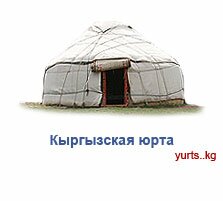
So, what is www.yurts.kg all about? If you consider the others in the series, (horses.kg, tastes.kg, sounds.kg and even crafts.kg), then the names more or less speak for themselves … but for those who don’t already know what a yurt is, then yurts.kg could appear as just a meaningless collection of letters.
For the record: a yurt is the traditional dwelling of the nomadic peoples of Central Asia – including the Kyrgyz – which are found from Anatolia to Mongolia. It is not possible to say which of the ancient nomadic tribes originally developed the traditional design. The yurt is still in use by people throughout the region and plays an important role in the lifestyle of the Kyrgyz “chaban”, or shepherd, and although styles of architecture and city planning come and go, the yurt remains a stable and lasting link with the past.
A bit like large tents, they have a frame, (a wooden frame called a kerege and the roof is formed by wooden poles called auks) but they are made from felt – not material which can be folded up and compresses quickly so that it can be carried in a backpack. Then again, they are not meant for a hiking trip where you move on day after day, but the nomads would traditionally settle in one spot for a while whilst their animals grazed the pastures. It was a sort of house made of felt – a home.
They are popular with tourists for a least one night on a tour, even the ones that don’t want to sleep on the ground, because they provide that link with the past and a traditional nomadic lifestyle that has almost disappeared elsewhere in the modern world.
It can be good fun to participate in erecting a yurt – a real collective effort where everyone can play a part, even the very young.
Given sufficient time, then it is good to take a look around at the decoration. Most yurts in day to day use are sparsely decorated … they serve a practical purpose, but those of the rich and wealthy would be highly decorated and make a colourful environment where every element had a practical purpose as well as a decorative one.
It has even been suggested that they might provide good emergency accommodation in the face of natural disasters, an earthquake, flood, hurricane or the like. Easy to store, erect and dismantle – spacious with ample room for an entire family and providing an effective and time proven shelter from the elements.
If you are interested to know a bit more then why not go and visit the site … and while you are at it, why not visit the others in the series as well and see if you can get a feel for the rich and varied culture of traditional nomadic life.


 Bishkek