Travelling with Children

The ICD flag
: On a green background, (symbolizing growth, harmony, freshness and fertility), a stylized image of the Earth – our “common home”, is surrounded by “pinstick” figures – red, yellow, blue, white and black, symbolizing diversity and tolerance.
Today happens to be International Children’s Day.
This day is commemorated around the world – but there is some confusion because many countries have similar occasions on different dates. Since 1950, for example, the United Nations has also recognized the Universal Children’s Day on November 20th. However, almost fifty countries officially recognize today as the holiday
This is probably one of the world’s oldest “international holidays” and can trace its origins back to 1925, to a proclamation of the World Conference on Child Welfare in Geneva.
According to some sources, however, the Chinese Consul General in San Francisco has arranged for a group of Chinese orphans to celebrate Duanwu Jie, (the Dragon Boat Festival), which that year happened to fall on June 1.
The first commemoration to be recognized as an International Children’s Day as such, was held in 1950, by the Women’s International Democratic Federation on its congress in Moscow.
It seemed appropriate to mark the day with some “pointers” about travelling with children …
I appreciate that this is not “rocket science” and that for many parents it will probably seem like I am stating the obvious, and also that each situation is different depending on individual issues such as the age of the child … and so on … but we compiled these notes some years ago when preparing a response to a question about travelling in Kyrgyzstan with children.
There are three issues to bear in mind
- General issues
- Traveling to and from Kyrgyzstan, and
- Your time within Kyrgyzstan
General Issues
- Make sure that your travel insurance covers all members of the family.
- Seek special advice from your doctor about vaccinations for children.
- Consult with the airline before traveling:
- especially if special children’s meals are required;
- some airlines may have special “baby seats” – like car seats – which can be booked;
- ask if the airline flight attendants are allowed, or have facilities, to warm milk bottles;
- so that special safety belts, (and life belts, if appropriate), are available
- many airlines will provide special packs – activities – for child travelers – but not all … especially local airlines.
- Airlines do NOT carry medicines for children – make sure that you pack any necessary medications in your hand baggage.
- Also, remember to pack some nappies, etc.
- aircraft used for long haul flights usually have a pull-down “change table” in the toilet.
- Always change nappies in the toilet – not in the main cabin – for hygiene reasons
- Young children might be invited to the flight deck – if so they will be accompanied by one of the flight attendants – who will see that they return to their seats after the visit.
- Consider the seating arrangements for infants and toddlers – especially for a long flight.
- On most international flights, children over two years of age must occupy a seat. (We know, however, of one case where the airline “recommended” that the mother hold her child on her lap for an eight hour flight).
- The child may need to drink – or chew something – to help prevent ear-ache during take off and landing. For a baby – a dummy or bottle might be sufficient. Remember, the condition can be extremely painful, and distressing, to a child – especially if this is their first flight.
- Make sure that the child’s limbs (arms, legs) don’t protrude into the aisles … they could be hurt and/or cause an accident.
- Sleeping – Children usually want to stretch out … but they are not allowed to sleep on the floor of the aircraft.
- Ask the flight attendants for assistance if you need to take a “toilet break”
- Consider how you are going to handle your luggage:
- If you are having to look after a child – then you your hands may be full.
- This might also make you more vulnerable to pickpockets and thieves.
- The child should carry some form of identification – in case you get separated.
- For emergency situations carry a number of recent photographs of your child(ren). It would also be a good idea to leave some copies at home with a friend or relative.
- Ask about the availability of child seats and belts – not just in the aircraft, but in cars and coaches.
- Be prepared for travel sickness – even if you consider that your child is an “experienced” traveler.
- Use a suitable sunscreen – and keep you children out of the midday sun.
- To avoid dehydration be sure to give cool drinks frequently.
- Be especially careful about what our children eat and drink – especially water …
- … and hygiene.
- Just in case, carry rehydration sachets in case of diarrhea
- Keep your children away from stray or sick animals.
- Seek medical assistance as soon as possible if your child falls ill.
- Some countries ask for documentary evidence of proof of parental responsibility for single parents or other adults traveling alone with children before allowing them to enter or leave the country. (Some countries insist that everyone of their citizens traveling abroad, including children – including newborn infants – have to have their own passport, although many countries allow for a child to included in the passport of one, or both, of their parents. It is not clear if this is sufficient proof.)
Specifically about Traveling to and from Kyrgyzstan:
In Kyrgyzstan, there are often questions about children traveling alone – or in the care of only one parent. This is a result of international concern about the number of cases of child abduction – especially by one parent in the case of a custody dispute. We have known of mothers traveling with children, without the father, being asked for proof of the father’s consent for them to leave the country. You should seek advice about the current situation and requirements before traveling.
Your time within Kyrgyzstan
If you are taking a baby or small child to Kyrgyzstan, then:
- Stock up on nappies, etc. Although disposable nappies are available in the cities they may be difficult to find in more rural regions.
- Ask about what baby products may be available … In larger cities, for example Bishkek and Osh, disposable nappies, and specialized baby foods may be easily found … but not necessarily in more rural regions.
- Bring some books/toys with which the child might feel comfortable and familiar
- Feeding:
- If you are breastfeeding then ask for advice about if it is tolerated in public … generally, in Kyrgyzstan it is very rare to see this and maybe particularly frowned upon in more traditional culture.
- If you are “expressing” milk then make sure you bring the necessary equipment.
Generally speaking, Kyrgyz society is very “child friendly” … however, you should bear in mind the following:
Traveling – remember that journey times may be longer than you might expect as a result of the distance, and the condition of the roads, especially if you enter the mountain regions. For example – although Bishkek to Naryn is only 350km – about 220 miles – the journey is likely to take something like 6 hours – more if you want, for example, to make a detour to Son Kul. Although this allows for breaks … much of the time will be spent in the vehicle.
For customized itineraries, it is usually better to ask for a total price rather than a per person price … for example: usually a child takes a seat in the vehicle – so if the itinerary is charged per person … then little concession is made for the fact that it is a child …
Activities – depending upon the age and interests of the children … you will need to judge what activities you want on your tour:
- Rest and relaxation at Lake Issyk Kul
- Time in towns such as Bishkek and Osh
- A motor tour visiting a number of sites around the country
- Walking in the mountains
- Horse riding
- … etc.
Food: especially if your child is “fussy” about what they will eat.
Accommodation: in some places there is no discount for children, although a child up 6 years old may be charged a nominal fee or half price, Some locations may offer a child’s bed … ask …
Then again, there is another issue:
Consent letter:
Officials and transportation companies are extra vigilant in cases where children cross international borders. Immigration and customs officers, (and other authorities), are looking for missing children and may ask questions. When traveling with children, you should ensure that you carry the proper identification for yourself and any children traveling with you. In addition to passports, proper identification could include, (but is not limited to), such documents as: birth certificates, citizenship/identity cards, immigrant records and certificates indicating status.
Please note that, generally speaking, anyone younger than 18 years of age could be considered children.
In addition, it is recommended that in cases where the child in the company of just one of the parents, in the company other adults or alone, that there is also a letter of consent signed by the absent parent(s), indicating that they know of and consent to the journey. It should be specific to the particular trip. If the travelling without either parent then, a single letter can be signed by both parents, or two letters can be provided. It may advisable to carry additional supporting documents where appropriate, (for example if there is separation document, a document awarding custody, or if one parent has died).
Technically, the letter should also be witnessed, and although in many countries anyone can witness/sign these letters, it is probably best to have it certified, stamped or sealed by an official who has the authority to administer an oath or solemn declaration (ie. a commissioner for oaths, notary public, lawyer, etc.) so that the validity of the letter will not be questioned. Technically, to be legally enforceable outside the “home jurisdiction” this should then be legalised by a consular office or Foreign Ministry – which means that they verify the signature and stamp of the witness. Also, although English is a fairly universal language – it might help if it was translated into the local language (e.g. Russian).
This letter may be required by authorities in some countries or there may be other, additional, country-specific entry requirements. As far as we are aware, this is not the case in Kyrgyzstan, although we know of one case where a mother was asked for such a letter on leaving the country. You should contact the representatives of any countries to be visited by the child to ensure that you have the most up-to-date information regarding their specific entry requirements.
It would also be advisable to contact the transportation company (airline, train, bus, etc.) in order to observe any additional policies that they might have in place.
The following sample letter is based on one provided by the Canadian Foreign Ministry and can be amended to meet specific situations and requirements.
____________________
To Whom It May Concern:
I (We), ________________________________________________________,
(full name(s) of custodial and/or non-custodial parent(s)/legal guardian(s))
am (are) the ____________________________________________________
(lawful custodial parent and/or non-custodial parent(s) or legal guardian(s))
of
Child’s full name: ________________________________________________
Date of birth (DD/MM/YY): _________________________________________
Place of birth: ___________________________________________________
Passport number: ________________________________________________
Date of issue of the passport (DD/MM/YY): ______________________________
Place/Authority of issue: ___________________________________________
_________________________________ has my (our) consent to travel with,
(child’s full name)
Full name of accompanying person: ___________________________________
Passport number: _______________________________________________
Date of issue of the passport (DD/MM/YY): _____________________________
Place/Authority of issue: __________________________________________
to visit __________________________________________________________
(name of foreign country)
during the period ____________________—-____________________ .
(dates of travel: departure and return)
During that period, _______________________________________________
(child’s full name)
will be residing with ______________________________________________
(name of person where child will be residing in foreign country)
at the following address:
Number/street address and apartment number: __________________________
City, province/state, country: ______________________________________
Telephone and fax numbers (work and residence): ________________________
Any questions regarding this consent letter can be directed to the undersigned at:
Number/street address and apartment number: _________________________
City, province/state, country: _____________________________________
Telephone and fax numbers (work and residence): _______________________
Signature(s):__________________________________ Date:_________________
(Full name(s) and signature(s) of custodial parent, and/or non-custodial parent(s) or legal guardian(s))
Signed before me, _____________ , this ______________ at _____________ .
(name of witness, date and location)
Signature: ________________
(witness)


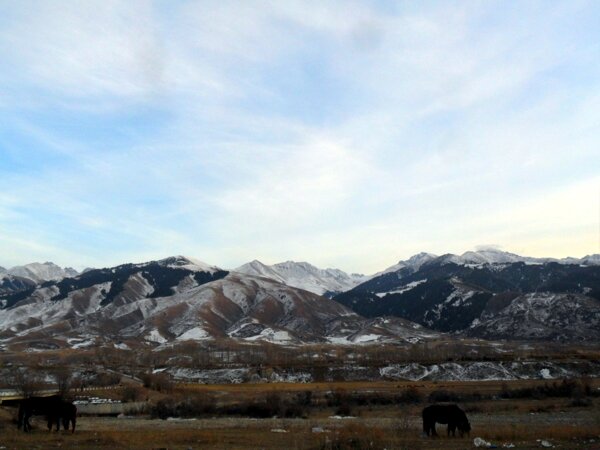


 Bishkek