“It’s a disaster !!!”
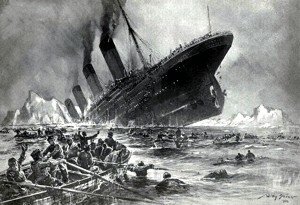
The sinking of the Titanic … now, that was a disaster!
I once had a colleague who would frequently burst out with the phrase: “It’s a disaster!!!“.
At first, my reaction was to ask, “Why?, What’s happened?” … and then try to see if I could find a way to resolve the problem, or at least mitigate the effect of whatever calamity had befallen and upset his plans. Soon, however, I came to realize that it was probably just a nervous reaction and that he was overreacting and using hyperbole to overstate the case.
OK – I admit it, I am a pedant … but the term disaster carries serious overtones relating to the scale of an event, implying that it occurred suddenly and caused either a great loss of life, a significant amount of damage or hardship. Eventually, on one occasion, I brought him up sharp by asking him, “Really?, How many people died?” and on another I calmly replied, “No, it’s not … the sinking of the Titanic … now, that was a disaster! … this is a problem that we have to solve.”
Yes, OK, I admit it … I am not just a pedant – I’m also a smartass, (an irritating person who behaves as if they know everything – often using a sarcastic, wisecracking or humourous manner). However, I think I made, (and he took), my point.
I thought of him recently when someone directed me to an article in USA Today, ”Terrible Travel Mishaps – and how you can avoid them“.
Notice that in the headline they refer to “mishaps”, not disasters … although in the article they do refer to “absolute catastrophes” – more hyperbole.
Please don’t misunderstand me … I do understand that if and when any of these things do occur then, especially to the individuals concerned, they can be devastating, have serious implications and costs … and can be I am not trying to belittle either them or the emotions that they arouse. Indeed, as it happens, most of these things have happened to me in the past, so I can appreciate the range of emotions that people experience.
The first thing to remember, as the article pointed out, is that “no trip will go perfectly as planned”, and the second is that it is possible to do things to help be prepared for the unexpected by taking simple steps as precautions to avoid unnecessary disappointment and stress and prevent what should be a pleasant, relaxing and reinvigorating holiday from disintegrating and developing into “disastrous” proportions. As the old insurance company advertisement put it, you don’t have to “make a drama out of a crisis“.
The article highlighted eleven different situations … all of which had been nominated by readers responding to a request published earlier … I am not going going to repeat everything that is in the article or the comments – you can click on the link and read it – but I thought it was worth adding a few comments of my own.
1. A hurricane cancels your trip – for hurricane, of course, you can read any natural phenomenon – earthquake, tsunami (well, maybe not in Kyrgyzstan), etc. – or, for that matter, a man-made “disaster”.
The main point, of course, isn’t the event itself, (in this case the hurricane), but the fact that it necessitates cancelling, rescheduling or curtailing, the trip. A recent news story told how a hotel in rural England had to close and cancel all of its bookings because a sinkhole had appeared in its car park … on one sad occasion, one of our clients was already in the airport about to board her flight to come to Kyrgyzstan when she got a phone call saying that one of her parents had died … and, of course, she had to cancel her trip.
The point the author’s make is that travelers should take out insurance … and check the cancellations policy with regard to refund. We always recommend taking out insurance, and although it is an additional expense which will end up being money “thrown to wind” … after all, most travelers never end up having to make a claim … and probably, nobody wants to be in a position where they have to make a claim against their insurance policy … but it is worth it, if only for the peace of mind that it provides.
And … as the British Foreign and Commonwealth Office (FCO) put it rather bluntly: “If you can’t afford the insurance, you can’t afford to go.”
In my case, the hurricane didn’t cancel my trip – I was already on holiday when it struck – I was on a Caribbean Cruise when Hurricane Andrew emerged out of the mid Atlantic in 1992 – to become, at that time, the costliest Hurricane in US history. We also had to curtail our trip and rearrange our travel plans – which involved additional stress … and expenses … but everyone involved – including the insurance company -proved to be very understanding and a “drama” was avoided.
Having to cancel a trip can be disappointing … but it doesn’t have to assume disastrous proportions … it may be possible to reschedule the trip or consider some alternatives. On one occasions we had clients booked and an incident occurred which led to the FCO to advise against all but essential travel to that particular region where they were planning to travel. They were somewhat distraught but did feel that the advice was sufficiently strong that they shouldn’t ignore it. However, it was only a small part of a much longer trip and they asked if we could suggest any alternatives that would allow them to bypass the particular region … and we found one … so they were still able to go ahead with the majority of their trip.
2. You get robbed – as the authors put it “the obvious advice is to stay in safe areas”, avoiding as far as is possible any places which might be considered “dangerous”.
That doesn’t, however, always work … and even places that might normally be considered safe can attract thieves.
It is often said that travelers often let down their guards – they are on holiday, relaxed and out for a good time … they forget or disregard the basic rules and precautions that they take for granted at home whereas, if anything, they should be more vigilant, in a strange place, with a different culture and probably not being fluent in the language.
So travelers should be attentive and keep a careful watch on their belongings … by not keeping all their valuables (money) together in one pocket, for example, and not “flashing” a wad of banknotes; dressing appropriately so as not to draw attention to oneself as a potential victim.
I was pleased to see the suggestion that, if someone does get mugged, then they should report it … not only will failing to do so mean that they cannot expect to claim in their insurance policy, but it also means that there is a chance, (albeit, maybe, a rather slight chance), that the guilty party will be apprehended, the property returned and the miscreant receiving their just deserts.
Of course, there’s a cost … time, effort and inconvenience as well a host of unpleasant feelings sitting in police station … feeling helpless and frustrated … but sometimes it has worked. Unfortunately, we’ve had a number of clients who have been robbed and on a couple of occasions that were persuaded to report the incident and, against all expectations, the police were very prompt and efficient … and managed to retrieve their belongings …
3. You lose your passport – this can be even more frustrating and costly than losing cash … and it may mean having to rearrange travel plans.
Having copies and alternative means of identification, (for example a drivers’ license), is advisable. Once again, it should be reported at the earliest opportunity, and take copies of any official report.
As well as reporting it to the police, it will be necessary to get alternative travel documents … and for that the traveler will need to contact their nearest embassy or consular office … so it is advisable to have a list with the appropriate contact details.
4. Your flight is cancelled – if it is the airline’s fault or something beyond their control, (for example, bad weather), then arrangements are usually put in place for food or accommodation to be provided – although this is governed by regulations which may seem too rigourous and insufficient given the time limits they impose.
The important things the author suggests are: keep calm and communicate … “get in line”, call the airline and basically try to get as much information as possible, remembering that the people you are talking to may be as much in the dark, and as frustrated, as you are..
Then again, you may simply have missed the flight for some reason … it does happen. Perhaps as a result of bad weather, delays due to heavy traffic, a vehicle breakdown … or, the timetable has been rearranged and the flight took off earlier than originally scheduled! So, don’t forget to check the flight times … not only on the ticket but call ahead and confirm.
5. The hotel loses your reservation – unfortunately this happens … and many hotels around the world sometimes “overbook” – basically because they have a number of “no shows” (people who have made a reservation but don’t actually turn up … maybe they’ve missed their flight … or perhaps they simply forgot to cancel the booking when they changed their travel plans …).
I must stress: we don’t do that in our hotels, in Bishkek or Naryn … although, to be honest, the human factor sometimes crops up … people do, after all, make mistakes.
The general advice is to have copies of the booking and any confirmation and show this to the reception on arrival. In theory, this makes it the responsibility of the hotel to find suitable alternative accommodation … at least equivalent to that which was booked.
As with flight tickets, although it shouldn’t be necessary, it’s also a good idea to “reconfirm” before your arrival if at all possible. For example, we have clients who contact us to “confirm” that there will be a car to meet them at the airport when they arrive.
6. The Airline loses your luggage – To be fair, most luggage arrives at the same time as the traveler … according to the statistics quoted in the article only something like 0.3% of baggage is “mishandled” (delayed, damaged or completely lost).
That may seem like a small proportion … but it doesn’t really matter, if it’s your luggage that goes missing – even if the figure was 0.00…001%. To make matters worse, but the situation is patchy; apparently some airlines and some airports are better than others … significantly better.
The first piece of advice is to report it – make a claim and tell the airline where they should deliver it once the baggage does arrive. (That can present considerable difficulties for those on a tour – for example, horse riding in the mountains).
It’s a good idea to carry essentials with you in your hand baggage – maybe some clothes and toiletries and any important documents you need for a presentation the day after you arrive (!) Indeed, there are travelers who pride themselves on “traveling light”, with just hand baggage … perhaps that’s a subject for another postcard.
It may be necessary to make arrangements to buy replacements … if possible; (it’s no fun arriving on a cycling holiday to discover that your bike has found its way onto a different flight).
They don’t actually say this in the article, but it’s another one of those situations where it pays to “keep calm” … there’s little point in getting too distraught because it is not going to help get the bags delivered to you any sooner once they have been located … in many respects that depends on the flight timetable …
7. The Hotel isn’t what you expected – the advice that the authors offer here seems to be “do your research” and check reviews – and don’t rely on publicity or advertising “blurbs” - I have written about that elsewhere.
As a hotelier, I would say that if you have a problem with the hotel, “talk to the management”. It is always possible to ask for an upgrade, and if they can’t (or won’t) do anything then, maybe, it will be necessary to consider looking for an alternative, but in general most hoteliers faced with a reasonable request would rather address a problem than see a dissatisfied guest.
8. You get sick – Everyone gets ill from time to time … and, as the old adage has it, “prevention is better than cure” … so the author suggests taking appropriate precautions and maintaining hygienic practices.
They also suggest carrying a range of standard medicines, (painkillers, antacids and antiemetics).
Although they have a comment about the possibility of needing to locate a doctor, the author seems to omit a number of important points … especially for somewhere like here in Kyrgyzstan: firstly that it may be difficult to find a doctor that speaks your language; secondly that a traveler should remember any pre-existing conditions and have their normal medication (remembering that rules vary around the world and what is freely available in one country may be prohibited in another) and, finally, the importance of having adequate health insurance.
9. You crash your rental car - Driving in a foreign country can be stressful, with different road conditions, traffic rules, etc., and although it is possible to find rental cars here in Kyrgyzstan, it is unusual and expensive. Most people hire a vehicle with driver. As a result, this is rarely a problem here …
Insurance is, once again, a vital element for the traveler to consider. In Kyrgyzstan is (at the moment) optional but car hire firms may require it … and it is important to know exactly what is, and what is not, covered. As the author points out, it may be possible to have alternative insurance – for example provided by a credit card used to pay for the car hire.
10. You get hopelessly lost – this one surprised me but the author of the article considers the value of apps, mobile communications and global positioning systems. These may be of value in the larger cities, but can be of limited value in the mountains although there is extensive and increasing coverage of mobile telephones around much of the country.
Once again, it’s a case of preparation and advance planning.
11. You run out of money – the article raises three issues: the importance of budgeting and of having a “backup” source of obtaining finance – for example, an alternative credit card, and having a list of contact numbers to report their loss or theft.






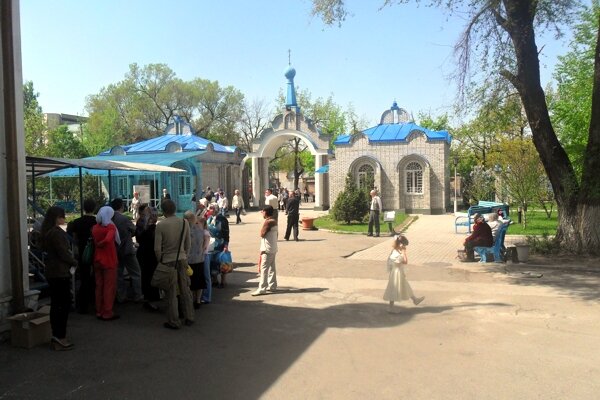

 Bishkek