Ali bin Uthman al-Hujwiri – Sufi Saint
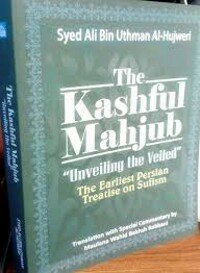
- The Kashful Mahjub or Unveiling the Veiled – an early treatise on Sufism - by Ali bin Uthman al-Hujwiri.
Tomorrow evening marks the start of Ramadan - probably, it all depends on the sighting of the new moon and whereas some Muslims are happy to calculate the date on the basis of astronomical data, in Muslim circles this is a hotly debated issue. Anyway, for those who rely on actual sightings it is possible that in some parts of the world the month will start tomorrow.
Also, in the Muslim calendar, the day isn’t reckoned to run from midnight to midnight but runs from sunset to sunset … so if today is the first day of Ramadan – for practicing Muslims, it actually began at sunset today.
Anyway, I though I would take the opportunity to look at one of the major characters in the development 0f Islam who has connections with Kyrgyzstan: Ali bin Uthman al-Hujwiri.
.
The religion of Islam is based on the teachings of the prophet Mohammed who died in 632 AD. Disputes arose after his death as to the leadership of the faithful – which led to a division between the Sunni and Shiite that is still reflected in the world of Islam today. In general, the Kyrgyz are adherents to the Sunni branch of Islam.
Another branch of Islam is Sufism – defined by its adherents as “the inner, mystical dimension of Islam”. Others say that it is “a perennial philosophy of existence that pre-dates religion”.
The word “Sufi” is derived from the Arab word for wool and was assigned to certain groups because of the woollen robes that they wore. The Sufi tradition tends to emphasise the compassionate nature of God to be found in the Koran, as to the more austere view presented in some of the other traditions, and Sufi “dervishes” sought a mystical union with the Almighty and eventually Sufi orders began to emerge.
One of the places which played a prominent role in the development of Sufism was the Ferghana Valley with a number of Sufi saints such as Ali bin Uthman al-Hujwiri and Khwaja Qutbuddin Bakhtiyar Kaki studying here.
The Grand Shaykh Ali bin Uthman al-Hujwiri was born around the turn of the first millenium, (1000AD or 390 according to the Muslim calender), in Ghazna (in modern day Afghanistan), which was then the capital of the mighty Ghaznavid Empire – into a family that was apparently held in high esteem for piety and learning.
An eleventh century Sufi, he is renowned as the author of the celebrated Persian treatise on Sufism: Kashful Mahjub, (“Unveiling the Veiled” or “Revealing the Mystery”), which was the first book on the subject to be written in Persian. (At that time Arabic was the dominant language for religious Islamic works and several texts about Sufism apparently existed – and are referred to in the work - some of which no longer exist.) It is considered a one of the most comprehensive treatments of Sufism and includes accounts of the lives of some of the great historical figures of the movement (including quotations of their sayings), a discussion of various features of the doctrine and practices of the movement (including an examination of the differences between different schools within the movement) and accounts of episodes drawn from his own life and experience. Despite its age, it is considered to still be one of the best descriptions of Sufism and it is said that those who seek a guide in Sufism should do three things:
- pray for guidance;
- visit the tombs of the great shaykhs, and
- read the Kashful-Mahjub.
(There is an abridged English translation by Reynold A. Nicholson, made in 1911. There is also another version, of the complete text with a commentary, by the Chishti Scholar Captain Wahid Bakhsh Siyal, published in Malaysia.)
Few details are known about his life apart from what is contained in this book – roughly a third of which is biographical. According to one source, the image of the great man presented in the book is of a “kind but irascible” person, with a “shrewd yet forgiving judge of character”.
It is not clear if he ever married … there is one passage in the book which some scholars have claimed suggest that he did – but others say that it can be interpreted in different ways. In general, it appears that he has a poor opinion of women.
The book opens with an explanation of why he has placed his name so prominently – claiming authorship – to avoid plagiarism. Apparently, with some earlier manuscripts he lent the manuscripts to some unscrupulous people who erased his name and replaced it with their own.
He traveled extensively and lived in Southern Kyrgyzstan for quite some time. He had some of the most important experiences of the formative period of his life in the region and describes the key spiritual figures of the Ferghana Valley in the second part of the work.
He spent the last years of his life in Lahore (in modern day Pakistan) – where the Kashful-Mahjub was probably written at the request of his close friends and disciples who had come with him from Ghazni and Sarkhs.
He died in about 1072 (465 according to the Muslim calendar) in Lahore and is considered as the “patron saint” of the city, which marks the anniversary of his death (19 Safar, according to the Muslim calendar) every year with an official holiday. He is buried in an busy urban area, outside the Bhati Gate, near to the old city.
In the thirteenth century, a dome was built over the enclosure. Also, the Sufi Saint and scholar Khwaja Muin al-Din Ajmeri visited the tomb and stayed there for 40 days seeking permission and faiz, (spiritual benefit), from him before moving to Ajmerm in the eastern part of India.
The shrine (known as Data Dabar) is apparently the largest Sufi center in South Asia, (it can accommodate about 50,000 worshippers at any one time), and one of the most popular sites of pilgrimages in the sub-continent and attracts hundreds of thousands of devotees on the anniversary of his death. When Benazir Bhutto, the former Pakistani Prime Minister, returned to the country from exile in 1986, her cavalcade headed directly from the airport to the shrine. It is currently administered be the ministry of Religious Affairs.
He is also known as: Ali Al-Hijiri Al-Jullabi, Al-Ghazanwi – because he lived in all three places – and as Daata Ganj Baksh (“The giver who bestows treasure”).





 Bishkek