Alexei Pavlovich Fedchenko – Explorer
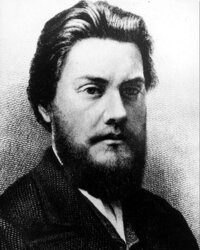
Alexei Fedchenko
In some ways, today is the 179th Anniversary of one of the Russian explorers who helped to open up the heartland of Central Asia – the explorer and naturalist Alexei Pavlovich Fedchenko – also known as Mabuza.
It was 7th February, 1844, in Irkutsk, (to be fair -apparently me sources suggest it might have been in Barnaul), in Siberia when the Alexei Fedchenko was born … but in most of the world it was already 19th February. Russia was still operating on the Julian Calendar at that time, whereas most of the Western world had already adopted the Gregorian calendar reforms.
He grew up in Irkutsk but, unfortunately, we have very little information about this period of his life except for the fact that he lived with his parents – apparently his father owned some gold mines and went bankrupt, died whilst Alexei was still in High School – leaving the family destitute.
In 1860 he and his mother moved to Moscow so that he could study at university. He enrolled in the Natural History Department of the Physics and Mathematics faculty at the Moscow University, where he developed a particular interest in entomology, (the study of insects), following a trip to the Salt Lakes of Southern Russia together with his older brother, Gregory, in 1863.
When he graduated, in 1864, he began working at the Moscow Society of Naturalists. Here he served as served as the Secretary and Chairman of the Entomological Commission at the Department of Anthropology. He also started teaching at the Nicholas Institute.
Three years later he married Olga Alexandrovna Armfeldt – a graduate from the Nicholas Institute who was also teaching there. They honeymooned in Scandinavia, visiting the scientific museums of Sweden and Finland. She was to be his assistant and companion on his explorations into Turkestan – Central Asia – which had recently joined the Russian Empire, traveling to the region a year later, in 1868.
The following year, they explored the area around Samarkand and Zarafshan … and in subsequent years they traveled through the Turkestan, Zervshan and Hissar mountain ranges.
He began his most famous journey of exploration in 1871, which took him through the Kyzyl Kum Desert, the Ferghana Valley and the foothills of the Pamir Mountains – which, at that time was still very much a terra incognita - with no accurate maps. He and Olga were entering into the unknown and much of the prevailing ideas, such as those of the German scholar Alexander von Humbolt, what they were likely to find proved to be erroneous.
Their party was the first to visit the Alai region and explore the Zaalai range and it’s highest peak, which he named Mount Kaufman after the Governor General of the Russian province of Turkestan – which is now known as Peak Lenin.
During their journeying, the party made many significant discoveries -not just of mountains and routes over them, but s in terms of the wildlife – both flora and fauna – collecting specimens which would be the subject of study for many years.
It wasn’t all easy going … many of the local rulers were uneasy about the presence of a foreigner in their midst, some roads were closed to him and there was at least one skirmish with local tribesmen, but word about his interest in the natural wildlife of the region went before him and his collection, together with honouring local customs, won him friends.
On his return to Russia, Fedchenko did not sit back but set out on a trip to Western Europe, to France and Leip[zig, (where he was offered a job). On the trip he undertook a study of the geology of the Alps, taking particular interest in the glaciers which he thought would be useful in further explorations of Central Asia.
Unfortunately, however, events were to take a different turn. During one of his expeditions in the mountains, accompanied by two inexperienced brothers who were acting as local guides, bad weather set in and he became ill during the descent down the Glacier Col du Jehan. His guides left him to go and fetch assistance but he died before help could arrive. That was 13th September, 1873 – he was just 29 years old.
He was buried in the vilage of Chamonix at the foot of Mount Blanc
His accounts of his Central Asian expeditions, (Journeys in Turkestan, In the Khanate of Kokand and Botanical Discoveries), were edited and published by his wife after his death, between 1874 and 1876. As a biologist she also worked on the collection of specimens that they had gathered in their journeys and made name for herself in her own right Their son, Boris – who was also Biologist, continued the connection with Central Asia – traveling to the region several times and also colleting a vast selection of specimens.
In 1878, the traveler Oshanin discovered a huge, long and narrow, glacier in the Pamirs, at the head of the Balyandiik River in what is now Tajikistan, and named it Fedchenko in his honour. At 77 kilometers in length, (about 48 miles), it is the longest glacier outside the polar regions. It covers about 700 square meters, descending from 6200 meters above seas level down to 2909 meters. At its thickest is about 100om deep – making the total volume of ice an estimated 144 cubic kilometers.
Interestingly, there is also an asteroid named after him.




 Bishkek