An initial foray into Issyk Kul

Semenov in his old age
Pyotr Semenov was born on 2nd January, 1827, (according, that is, to the Julian calendar – in the rest of the world which had adopted the Gregorian Calendar it was already the 14th of January), into a noble family in the village of Urusovo in the Ryazan Province of Russia. His father was a retired captain, but owned several estates including a number of serfs. He died when Pyotr was only 12 and the young Pyotr became head of the household.
Until he was 15 he was brought up in the countryside, but then he and his mother moved to Saint Petersburg where he attended a military school before studying at the University. After graduating he joined the Russian Geographical Society and took an active part in its activities.
During the 1850s he traveled to Berlin where he studied geography and geology under Alexander Humboldt and Carl Ritter, (whose writings he translated into Russian for the Geographical Society). On Humboldt’s suggestion, Semenov set out to explore the largely unknown mountains of the Tian Shan.
In 1856, he set off from Barnaul on his first expedition, passing through the Altay Mountains and visiting Lake Issyk Kul on his way.
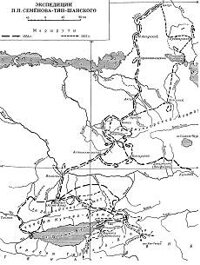
A map showing Semenov’s first journey into the Tien Shan
It was August 1856 and he had traveled to Lake Balkash and turned South towards Vernoe, (Faithful City, now known as Almaty – the Father of Apples).
His journal tells how he encountered the Kyrgyz, (but at that time this term was used to describe the Kazakhs, the Kyrgyz being called the KaraKyrgyz, or Black Kyrgyz), and describing their lavishly decorated yurts.
He tells that in Almaty there were few houses … only a few of the more prosperous merchants had managed to dig foundations and had brought timber down from the mountains – but they all complained about the poor quality.
He and his servant, (a serf), were given an escort from Almaty for the journey to Issyk Kul – comprising of ten Cossacks, two local Kyrgyz (Kazakhs?), three pack horses and a camel – which, because of his military training was put under his direct control. The party grew as two young Cossacks, (too young for military service – pun intended – but anxious to undertake some hunting), and three Imperial officers attached themselves, along with their own escort, for at least the first part of the journey.
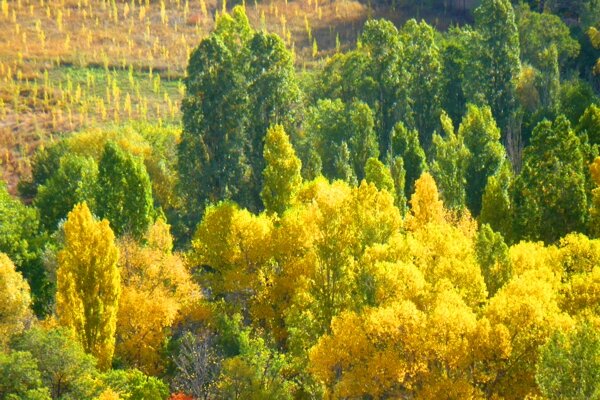
On 2nd September, the party headed into the Zaliinskiy Mountains to the South of Almaty, up the valley of the Issyk River and over various mountain passes, with steep hills lined with Spruce trees. The youth go off hunting as they encounter Stags, Bear, and even Tigers.
They reached the crest and crossed the Tabul’gasu Pass – from which magnificent panoramas of the Tien Shan opened up before them. They descended into the valley below and camped in a well protected site in the foothills, by the side of a fast flowing river. It was still early, being the middle of the afternoon so he and one of the Cossacks road off to the nearest knoll where he was rewarded with a clear view of the lake below.
To the south, he describes an unbroken chain of snow giants, apparently rising directly out of the lake.
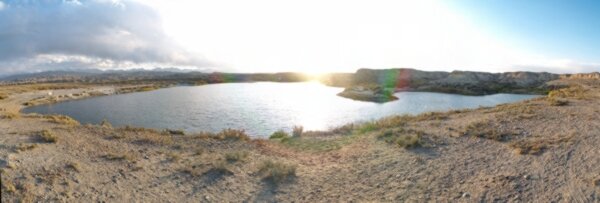
The next day they descended as far as the Tyup River – the Tyup-Dzhargalan valley was a wide treeless expanse, crossed by streams that formed tributaries of the Tyup and littered with marshy areas overgrown with bullrushes. At one point he “leaves the road” and rides cross country for an hour and a half to the shore of the lake which he describes in this fashion:
The lake’s water looked beautiful with its transparency and light blue colour, but it was salty and unsuitable for drinking. The waves broke steeply. On the sandy shore there were no boulders, except for pieces of loose conglomerate, formed by the lake itself, and not rounded off as either boulders or pebbles. … On its northern side, twenty to thirty versts away, a high mountain buttress jutted out into the Kungei valley’ and came near the lake, assisting in the formation of beautiful bays. There were no islands at all in the lake.
In Almaty, he had been warned that the Eastern part of the lake was likely to be deserted due a long and bloody conflict between two of the tribes – one, (the Sarybagish), subjects of Kokand and the other, (the Bogintsy), subjects of China – who had fled the region and, as yet, the Sarybagish had not moved in on the traditional ancestral lands of their opponents.
Even so, he took caution, having encountered a grave digger and a lone horseman en route. During the day they had passed the remnants of a large number of destroyed yurts – the result of bloody battles that had taken place here earlier in the year and, there was always the possibility that groups of one tribe or the other were still in the area and might pose a threat. So, rather than risk camping on the shore of the lake, where they would have been easily visible and easily cut off the party, they decided to return to a more sheltered spot.
By now there was a strong and piercing icy wind. The temperature had dropped to below zero and then it started raining – at first a drizzle, but that soon turned to snow with large flakes falling on them. There was nothing with which to build a fire – and there were still anxious of being observed, so they only unloaded their exhausted camel, but left the loads on the pack horses and lay down on the damp grass to sleep under the open sky.
The party then turned North and North East, traveling to the Kakara River and then over to the Kegen, (which now gives its name to the first town over the border in Kazakhstan), which later became the Charyn and made their way back over the mountains, encoutering many friendly ayils, yurt encampments en route, before finally arriving back at Almaty on 16th September – just two weeks after he had left.
But … that was not to be the end of the story, just the end of a chapter … in the two weeks he had been away exploring and making notes, relations with the Sarybagysh tribe had taken a turn for the worse with the Kyrgyz crossing into Russian territory and attacking a merchant caravan on its way to Tashkent just a short distance from Vernoe … and the Russian commander Khomentovskii had resolved to send a expeditionary force with deal with the raiders.
This was to give Semenov a second chance to visit the lake that September … but that’s another story … for, perhaps, another time …
Semenov’s journal is full of details about the geology of the region, the wildlife and the specimens that he collected. He describes, for example, wild boar, tigers, snow leopard and porcupine, “hiding in the plentiful rushy undergrowth”, the abundance of tortoises, lizards and snakes, as well as insects and arachnids, scorpions and beetles – including his first ever encounter with a daddy-long-legs, (phalangida). Alas, much of this variety has long since disappeared.
In 1857, he was to return to the Tian Shan, exploring the interior of this hitherto unknown mountain range. He was the first European to see the scenic panorama of the Tengri Tag, and its most beautiful peak, the colossal Khan Tengri.




 Bishkek