Healthy living at high altitudes … Altitude sicknesses
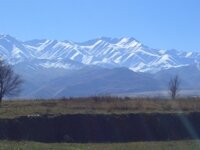
High in the mountains
The other day I came across some new research … well, it was new to me, although the paper is dated April 2011.
What attracted my attention in the first place was the “teaser”: “Living at a high altitude can protect you from certain diseases“, which was accompanied by a link to a short article with a slightly more worrying headline: “Living at a high altitude can protect you from certain diseases, but increases your risk of suicide!” The article had another link – this time to paper giving the report on the research.
As it happens, this was just one of a strong of reports that I have come across recently on the subject of Altitude Sickness (a condition triggered in people who experience difficulty in adapting to the reduced levels of oxygen as they ascend higher and higher in the mountains - causing mild sickness, headaches and life-threatening problems affecting the heart, lungs and brain). There was, for example:
- the report of new research that suggests that Altitude Sickness is actually a combination of two different syndromes which interact in different ways in different people – balancing symptoms like headaches and fatigue and sleep disturbance … some people experience serious headaches but have no problems sleeping whilst others cannot sleep but report splitting headaches … with a whole array of combinations in between;
- the possible development of a test that may help predict the people who may develop Altitude Sickness. By measuring the heart rates and conducting a series of tests – including ultrasound – at different altitudes, researchers think that they may have identified a common factor in the heart’s action in those that go on to develop the condition … which may help in both the diagnosis and selection of the most suitable form of treatment for individual patients who fall ill; and …
- how studying people who different people who develop the condition may help in determining show to care for patients in intensive care units … especially those who have low levels of oxygen in their blood.
.
Depending upon the sources you read, something like 20-25% of the earth’s surface is classified as mountainous, (in Kyrgyzstan it’s over 90%), and about 20% of the world’s population live in the mountainous regions – but at least one source claims that about half of the world’s population depend on the mountains, “one way or another”, primarily as a source of water resources.
The main issue affecting people living in at altitude – whether as permanent residents or temporarily, (for example, nomads migrating with their flocks, people working at special locations such as the Kumtor Gold Mine, those on military service … or even mountaineers scaling a peak or two), is hypoxia, the lack of oxygen in the air, which can cause a variety of symptoms and even life threatening situations.
Over the years there has been considerable research into the effects of living and working at high altitudes and the effect it can have on people’s health and bodily functions; adaptations – both long and short term – to the climate and conditions of living in high altitude environments; as well as social and psychological phenomena of living in such surroundings.
The literature on medical and giological aspects of human life in the mountains tends to divide altitude into five different categories or zones:
Low altitude: 500-1500m a.s.l. – where there is basically no difference in the social and climatological factors affecting health when compared to the surrounding plains … and the course of most diseases are described, at least in one account that I have seen, as “ordinary”
Moderate altitude: 1500-2400m a.s.l. – where serious altitude related illnesses among otherwise healthy people is rare, although some people may experience more pronounced symptoms, (especially the elderly), and there may be implications for people’s diet.
High altitude: 2400-4500m a.s.l. – which is where most altitude related problems are observed, even among otherwise healthy people.
Very High Altitude: 4500-5500m a.s.l. – which are normally encountered only by relatively few mountaineers and trekkers. There will be frequent “base camps” where people might stay for a few days and it is important to approach these altitudes gradually to allow for acclimatization.
Extreme Altitude: above 5500m a.s.l. – which very few people ever attain. It is very difficult for the body to adapt to conditions at these altitudes, and there are other problems resulting from the landscape and weather, (such as avalanches, frostbite and hypothermia), which also play an important role.
Apparently the development of altitude related illnesses are associated largely with the altitudes at which one sleeps rather than highest elevation reached for a short time.
Living and working at high altitude is recognized under Kyrgyz law as having particular aspects which need to be recognized. People living and working in high altitude regions, for example, are entitled to additional salary supplements, and can retire earlier than their counterparts living in the lowlands.
I know that I sometimes feel the effect and need to take things easy for the first couple of days when I am in Naryn, (altitude 2041m a.s.l.), usually having driven up from Bishkek, (770m a.s.l).
Here are some notes that we put together a few years ago in response to an inquiry from a concerned client, on the subject of Altitude Sickness, based on medical advoce that we received at that time:
Altitude Sickness:
Remember that even in Kyrgyzstan you may travel at over 10,000 feet (3000 meters) and at even higher altitudes in some places.
There are inherent risks in traveling at high altitude. High altitude is generally reckoned to be above 2438m (8000 feet) so that includes places like the Ala Archa, the Dolon Pass, Naryn, Son Kul and Tash Rabat. Very High altitude is considered to start at 3658m (12000 feet) and that would include the Torugart Pass. Anything over 18000 feet (5500 m) is considered extreme altitude – but it is unlikely that any of our tours will ever go this high.
We are not doctors and we cannot advise you. We suggest that you should consult your doctor and ask about altitude sickness, particularly if you are elderly or have breathing problems, asthma, etc.
To the best of our knowledge, very few people suffer from altitude sickness while travelling in vehicles and if they do, the best cure is a prompt return to lower altitudes.
There should be little or no problem for most of our clients, (for example: if you are in a vehicle or even while walking gently at 3000 m.) However, even one of our younger and more athletic staff may reported feeling tired after running a short distance at an altitude of over 4000 meters (just why he was “running” at that altitude is a good question … he had wandered off to take a photo for a client and was returning to the vehicle … forgetting exactly where he was … next time, he said, hewill walk!). Also, a 48-year old and quite asthmatic passenger felt a little uncomfortable when travelling with us over the Torugart Pass, but was no more than a little uncomfortable and aware of the height at which he was travelling.
There is no way of telling who may be affected by altitude. There are no simple factors such as age, sex, or physical condition, which can be used as indictors. Most people are able to go to 2500m and feel no affect – whereas others are taken ill very quickly. For people who are accustomed to travelling at altitude, caution is the best advice. Even for those who have been – proper acclimatization is important.
Altitude sickness arises because there is less oxygen in the air – and to get enough oxygen into the bloodstream, the body has to adjust and the rate of breathing increases (even when at rest). The main cause of altitude sickness is going too high, too fast. Given time to adapt, the body is able to cope with the changes necessary to copy with the changed conditions – this process is known as acclimatization and usually requires between 1 to 3 days at a given altitude. It is important to remember that different people acclimatize at different rates – so it is important to consider the group as a whole – and not to be guided by the first few individuals to acclimatize.
Over 10000 feet (3048 m) – most people will experience some symptoms. The onset of symptoms is normally delayed for about 12-24 hours after arrival at altitude. Symptoms include headache, dizziness, fatigue, shortness of breath, loss of appetite, nausea, disturbed sleep, and a general feeling of malaise. They tend to be more marked at night because the body activity is decreased and more relaxed. It is important that any symptoms to be reported by clients as soon as they become apparent.
Although some medications are available to help prevent altitude sickness – they should only be taken under medical supervision – and the only cure for altitude sickness is to descend. Medication may help to relieve symptoms but they cannot resolve the overall issue.
If possible, travellers should not drive or fly to high altitudes. It is best to start at below 10000 feet, (3048 m) and walk up. It is important not to over-exert yourself – and if possible to remain at the same altitude for about 24 hours. Ideally further ascents should be at the rate of about 1000 feet, (about 300m) between sleeping altitude per day, with a days rest at that altitude, or at least one rest day every third day. It is best NOT to sleep at the maximum height reached that day (although at places like Son Kul this might be difficult to achieve). If symptoms develop, then no further attempt should be made to go any higher – indeed the advice is to descend. Every person in the group should keep hydrated – drink copious amounts of water and avoid alcohol (also tobacco and other depressant drugs – including sleeping pills). The diet should be high in carbohydrates.
If we are informed beforehand that altitude sickness may be an issue for a particular group of individual, then it may be possible to make arrangements to carry oxygen cylinders. These should only be used by people that have received proper training and are in possession of the appropriate certificates. It should be remembered that these are only an aid – and cannot solve the problem. The only cure for altitude sickness is descent.
Remember:
DESCEND, DESCEND, DESCEND!!!
The particular research being highlighted in this new article examined data about suicides in the mainland continental United States.
The authors point out that altitude seems to show some correlation with the incidence and severity of certain medical illnesses … for example, an apparent decreases in mortality among certain types of patients disease receiving dialysis, coronary artery disease, and stroke, but an increase in some psychiatric disorders such as panic attacks.
They wanted to see if there was any sign of correlation between living at altitude and suicide rates … and discovered that there was indeed – strongly … and, they suggest, in a way that is not explained by differences in demographic factors, income or geographic isolation,.
They also point to possible areas for further research to focus upon – the situation in other societies, individual differences between different levels of altitude … including physical measurements rather than just data analysis … in order to see what the cause is, if any – social, physological or psychological, for this apparent relationship.
They have already considered (and ruled out), for example, the fact that firearms are a more common in such high altitude communities than those at lower altitudes … it seems that the method of commiting suicide, (use of firearms as opposed to other ways of taking one’s own life), does not play a significant role in the statistics. The correlation is just as marked when other techniques are considered as it is with the use of firearms.
I am sure that a careful reading of the paper, and consideration of the data sets that they present, will raise other questions … for example, they only consider successful suicide attempts – not those that fail – either by chance, (such as the intervention of “third parties”, poor imlpementation of the plan of action … or because the attempt was simply a cri de couer … which seems to me to be a another valuable source of evidence worth exploring.
.
They.





 Bishkek