Driving force
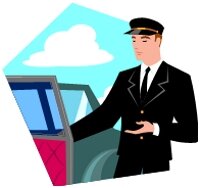
What makes a driver a “professional”?
Back in 1980, in the days of the Soviet, the last Sunday in November was declared the Day of Transport and Road Workers.
This professional holiday is sometimes colloquially called simply Motorists’ Day – but that’s a bit of a misnomer because it was originally intended to commemorate and celebrate the contribution to society made by all those who work in the road transport: maintenance workers, engineers, technicians, dispatchers, managers of trucking companies and, for that matter, anyone and everyone working in providing road transport services of one sort or another.
A “motorist” of course, could be just a private individual driving their own vehicle … although they are not a “transport worker”.
The driver is an important person in the Tourism Team – those working in tourism to convey people on their tour whether they are driving a tour bus, a car, or even a taxi.
In the Soviet Union, the role of Professional Driver was a recognized occupation, with training leading to a professional qualification. In a way, that concept has been devalued and it sometimes seem that anyone with a driving license and vehicle can lay claim to being a professional driver – it’s as if the term is used for anyone who earns an income from driving.
I often point out, however, that it is not that simple … a driving license is a document that is supposed to recognize that the holder has followed a training course and passed an examination in the “rules of the road” … but does not really say anything about the many other aspects of being a professional driver; their responsibilities to their passengers, their employers, the community and their fellow workers.
The role of a professional driver involves many aspects: knowledge, skills, experience and attitude. They carry a huge responsibility on their shoulders … not just for the quality of their driving and the safety of their passengers but also for the condition and safety of the vehicle.
Safety is, of course, their primary concern … If problems do arise, then their first priority is to determine if a passenger’s safety or security is at stake; assess the severity of the problem and resources available, and respond accordingly.
.
In order to obtain a driving license, a person has to learn and demonstrate:
- the safe operation of a motor vehicle – in different circumstances and situations, (such as weather conditions, night time driving), exercising self-control, alertness, foresight, judgment, and skills in handling and maintaining control of the vehicle at all times;
- knowledge of the law, rules and regulations relating to driving;
Learning to operate a vehicle is, in itself, a difficult task involving knowledge of laws, regulations, visual and mechanical skills, judgments, decisions, and accurate responses. The driver also needs to be:
- familiar with their vehicle – they will be responsible for maintaining it in a safe and working condition. In fact, most local drivers in Kyrgyzstan are familiar with motor mechanics;
- In theory they should also be experienced:
- with several years driving experience, and
- know the itinerary – be familiar with the route and road conditions they are likely to encounter;
In addition, they need to have personal qualities that are not examined in the standard driving test:
- be a dependable person who can be relied upon to carry out their duties;
- be emotionally stable to work effectively and patiently with others – clients, officials, and the public;
- be mature enough to cope with unexpected and unusual situations;
- be interested in the welfare and needs of others;
- be willing to practice patience and understanding;
- be observant of all traffic laws, regulations, local rules and policies;
- be neat and clean, both in themselves and in maintaining a clean vehicle;
- refrain from using profanity;
- be well rested at all times, so that they are free from fatigue, (they need to be mentally alert at all times and keep their concentration on what they are doing), and;
- be free from the effects of alcohol and drugs, (including prescription and “over-the-counter” medication).
Although it is easy to think that the role and responsibilities of the driver starts and ends with the vehicle … it’s condition and operation. They are, however, also working with people. Therefore they also need to be aware that their mood not only affects their driving, but also the people around them. Working with people is notoriously difficult.
The professional driver needs to maintain a positive attitude:
- to recognize and adapt their moods; making allowances for the poor attitude and driving of other motorists, and not allowing the actions of other motorists to cause them to react emotionally and possibly involve them in an accident;
- to establish a positive relationship with their passengers, (who are, after all, paying for their services);
- to be able to deal politely and effectively with officials, colleagues and members of the general public;
- to further complicate matters, if they are working for a tour operator, (like us), then they also to remember that they are the representative of a company – even if they are working as a freelance driver and engaged for a specific tour;
For the record: We sometimes get asked about the possibility of providing self-drive “car hire” services. Although, at one time, there was a Hertz franchise opened in Bishkek, that close some years ago and now there there are currently two companies in Bishkek that offers such self-drive car hire services. However, other agencies, (including ours), can offer “a driver and vehicle” service.






 Bishkek