Tourism and Water: Protecting our Common Future
Logo for World Tourism Day, 2013
Every year since 1980, September 27th has been designated World Tourism Day. The date was chosen to commemorate the adoption of the Statutes of the World Tourism Organization (WTO – but it is now known as UNWTO because the World Trade Organization has usurped shorter acronym).
It is said that the date is also appropriate because it marks the end of the High season in the Northern hemisphere and the start of the season in the Southern hemisphere … and it is true that those of us who work in Tourism here in Kyrgyzstan, (in the Northern hemisphere), have indeed been kept busy for the last few months … but we would be very happy if the work was spread throughout the year … instead of being crammed into just a few months. Fortunately, the season doesn’t come to a complete stop in September, and we are likely to be relatively busy through October and November even if some venues, (the high mountain meadows, for example, and some of the mountain roads), aren’t accessible … at least there is the possibility of skiing and some festivals still to come.
Each year a theme is chosen to provide a focus for events to mark the day … and this year’s theme is “Tourism and Water: Protecting our Common Future”. It seems that the theme was chosen to fit in with the fact that this year, 2013, has been designated the International Year of Water Cooperation … part of the International Decade for Action ‘WATER FOR LIFE’ 2005-2015.
As it happens, that seems to be quite an appropriate theme for Kyrgyzstan.
As Taleb Rifai, (the Secretary-General of the World Tourism Organization – UNWTO), puts it in his message for the day: “Water is one of tourism’s main assets. Each year, millions of people travel around the world to enjoy water destinations both inland and in coastal areas. Water is also one of tourism’s most precious resources.”
Kyrgyzstan is well endowed with such water resources … with:
- over 8000 glaciers of different sizes covering over 4% of the country, the supply of fresh water preserved in them, (650 billion cubic meters), is more than twelve times the capacity of the country’s rivers flow resources in the country. The main glacier centers are located in the extreme east, in the basin of the river Sary-Jaz where the largest plain glaciers are located and in the south of the Zailiy ridge. However, despite the fact that there is some controversy about the existence of climate change, there are forecasts that, by 2025, the area covered by glaciers will be reduced by 30-40% resulting in a reduction of water of 25-35%. There have even been suggestions that Kyrgyzstan could loose most, if not all of its glaciers, in the foreseeable future.
- almost two thousand lakes, and thirteen artificial reservoirs, covering almost seven thousand square kilometers, and containing about 1750 billion cubic meters of water, most of them, (84%), located at altitudes between 3000 and 4000 meters.
-
more than 3500 rivers which supply water to the neighbouring states of Kazakhstan, Uzbekistan, Tajikistan, and the Xinjiang region of China. The longest is the River Naryn which is important for a series of Hydroelectric power stations, some of which are currently planned or being constructed), which will regulate the flow of water downstream across national borders.
Rifai went on to say: “Water powers all tourism industries, from hotels to restaurants, leisure activities and transport. As one of the largest economic sectors in the world, it is the responsibility of the tourism sector to take a leadership role and ensure companies and destinations invest in adequate water management throughout the value chain. If managed sustainably, tourism can bring benefits to the national and local communities and support water preservation.”
The United Nations General Secretary, Ban Ki Moon, went on to say: “I urge tourism establishments to cut consumption and improve waste management and I call on individuals to play their part by making environmentally conscious choices when they travel. By making water saving a priority we can all help to build the future we want.”
Although the day is mainly intended for professionals working in the industry, there are steps that the individual traveler can take, which include:
- Simple steps, (such as taking a shower instead of a bath, or choosing not to have bed linen and towels changed and washed every day), can make a huge difference and will avoid unnecessary use of water and chemicals;
- Try to know if their destination faces water and electricity power shortage … a long shower could mean a lack of water available for the local community. Where possible they could select accommodation with efficient equipment that allows for the rational use of water;
- Respect the sites they visit, (for example, by not leaving litter or taking home souvenirs such as shells from the natural environment and using water-resistant sun block to avoid polluting the sea and damaging marine fauna);
- Reporting any incident or irregularity they observe – they are, after all, part of the process of environmental, social and economic improvement of the destination;
- Reading the Global Code of Ethics for Tourism in order to make sure that their trip is as sustainable and responsible as possible.


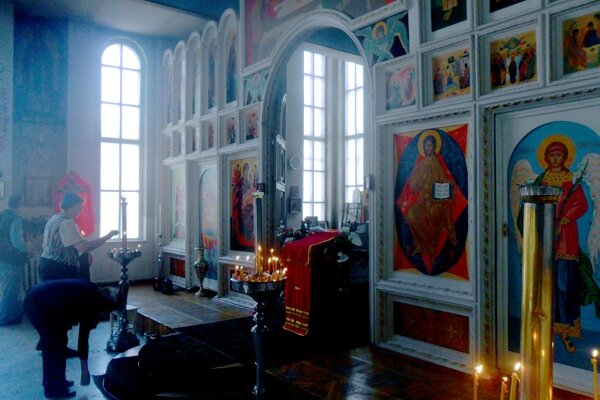


 Bishkek