A Code of Ethics … for nurses
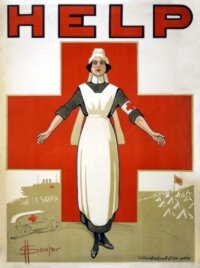
A Red Cross poster from the First World War
In June, the Ministry of Health approved a code of ethics for medsestry – nurses.
Normally, such a document would “pass me by” but this time it caught my eye as
- I have had some recent experience with hospitals – especially following Maxim’s illness, and
- I was involved last year in an attempt to draft a similar code of practice for tour operators in Kyrgyzstan.
Although reading the document through raised a few questions in my mind, it seems that there is little in it that would be considered controversial in it. I think it contains the same sort of provisions that one would expect to find in such documents anywhere in the world … but, all the same, I thought that it was worth sharing.
The four page document is split into five five sections, but the first is just a general description of the professional responsibilities of the nursing profession and the last simply says that it operates throughout the republic and lays the foundation for handling any infringements that might occur. The main body is contained in the middle three sections which address the responsibility and actions of the nursing staff before patients, others in the medical profession and to society as a whole.
The profession role of the nurse is defined in the opening paragraphs as one of “humanity and mercy”, involving the complete all round care of patients with a view to relieving their suffering and recovering their health, as well as offering assistance in maintaining good health and preventing disease.
The code then goes on to consider the relationship between the nurse and their patient:
- the patient’s right to quality care which the nurse is expected to provide within the limits of their competence … “to any person requiring it“;
- in terms of that competence, the next point requires that they remain up-to-date and “perfect” their specialist knowledge and abilities;
- the nurse is expected to be compassionate and respect the respect the patient and their rights and, in particular, is expressly forbidden to participate in torture, executions and other forms of severe and brutal treatment;
- they should render assistance to patients “irrespective of their age or sex, the character of disease, racial or a national identity, religious or political convictions, social or financial position or other distinctions“;
- the nurse should be truthful and fair, informing the patient of their rights and respecting their right to information about their condition, the possible risks and advantages of different forms of treatment – although that information should be provided by the physician – unless they are convinced that such disclosure might do serious harm to the patient’s health;
- in particular the nurse has a duty to respect the patient’s right to refuse medical intervention, having explained the the consequences of such a refusal and they can act without the patient’s consent in strict conformity within the relevant provisions of the law;
- they also have a duty to respect the confidentiality of information about the patient’s state of health, the diagnosis, treatment and prognosis as well we the details about the patient’s private life, and only has the right to access any such personal data with the consent of the patient;
- in cases where the patient is dying, then the nurse should do all they can to maintain the patient’s dignity and respect, while offering and administering palliative treatment to enable an easy death with phystical, emotional and spiritual comfort rendering the patient and their family psychological support … but short of euthanasia which, “even under request is inadmissible“
In respect to their responsibilities before the medical profession, the nurse should:
- support the authority and reputation of the profession, doing what they can to advance medical standards, (for example by participating in research activities), whilst nothing that they do should reflect negatively on the profession, (for example they should rigourously observe the rules and standards of hygiene), and although they have the right to accept “gratitude” from the patient this should not contradict justice , principles of decency or the law;
- in their relationships with colleagues, (apparently, “familiarity” between Doctor and Nurse which does not fall within this professional relationship is “inadmissible”), the nurse should show due respect to teachers, be fair and decent, recognizing and respecting their knowledge and experience and their contribution to the medical profession, accepting and carrying out the instructions of doctors with regard to treatment … if they want to question the instruction then they should do so with the doctor first and if still concerned then they should refer their concerns to a higher authority;
- in the even that a nurse encounters examples of “illegal, unethical or incompetent medical practice”, then they should err on the side of protecting the interests of the patient and society – which means that they have to be familiar with the relevant legislation and regulation ( … as well as the application of what is called “traditional medicine”), and they can appeal to relevant state bodies for support.
When it came to the nurses responsibilities towards society as a whole, it decrees:
- the nurse should have a care for the maintenance of availability and the high quality of medical care for the population, actively participating in efforts to create an informed society, helping parents make appropriate choices in their dealings with the medical community – whether state or private – as well as taking an active role in the development of medical services;
- they should support the autonomy, independence and integrity of the profession, protecting society from misinformation or misinterpretation, and if taking some form of industrial action they are still expected to render urgent medical aid;
- in return the nurse should be entitled to lawful protection, physical inviolability (including the right to carry out their duties both in peacetime and in wartime), with the right to a standard of living corresponding to their status, and safe working conditions, proper protection in cases that are not the result of negligence in performing their professional duties, the opportunity for receiving training and the timely reception of the privileges granted to medical workers under legislation.
The final paragraphs establish that the code is in effect throughout the country and is binding on all nursing staff, and lays the foundations for handling any infringements which might occur – and be addressed to the Commission on Ethics in the Health Services, within Professional Associations and the possibility of other bodies, “according to the legislation of the Kyrgyz Republic”.





 Bishkek