Peter Fedorovich Shubin
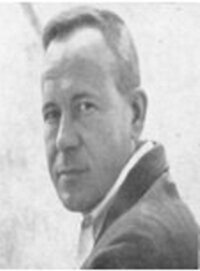
Peter Fedorovich Shubin
One of the great names in Kyrgyz music is that of Peter Fedorovich Shubin. He wasn’t Kyrgyz, himself, but he played a major in the development of music in the country as a teacher, conductor and composer.
Shubin organized, for example, the first orchestra of traditional Kyrgyz instruments, based on the Phiharmonic society, and wrote arrangements for many traditional songs. As a teacher he taught many of the notable musicians and composers of the age.
He was born in the village of Tagil in the Troitsk region of the Orenburg Province on 10th July, 1894, (although at least one source says it was 10th June … ), and he only arrived in what is now Kyrgyzstan in 1928 … and like so many others – he stayed settled down and made the country his home for the rest of his life.
His father was a mason and the family was poor, so as a young boy he had to help out with daily chores whilst at the same time completing his schooling. It soon became evident that had a good ear for music, a good voice as well as a talent for composing and considerable organizational ability. At the age of ten he was already singing in the local choir and even supervised a local children’s orchestra which performed his own compositions.
A couple of years later, in 1906, the local landowner arranged for him to go to St. Petersburg in order to continue his education and in 1912 he enrolled in Higher Education as a student of Music Theory, Composition and Piano. Three years later, (in 1915), he was already working as a teacher in his own right.
Then in 1917 came the October Revolution and he enrolled in the forces to protect and defend the newly formed order in the Civil War that erupted. He was sent to Bashkiria where he acted as a Political Instructor, but he used his time there to start writing down some of the traditional Bashkiri songs. He also wrote some stirring and inspirational songs which proved to be popular throughout the whole country.
He returned to Orenburg in 1922 and for the next three years threw himself into a career involving composition, teaching and performing. It was a creative period and he produced about 150 different pieces representing various different genres, including a three act ballet and a symphony; most of them based on themes based on the revolution and its leader, Vladimir Ilyich Lenin.
In 1928 he received an invitation from the Council of Trade Unions of Khirgizia, (as Kyrgyzstan was then known), and he “upped sticks” and came here, throwing himself into the task of building a new musical culture and professional art here in the republic.
He began work the newly formed Theater of Young Workers, where he trained them in music, (reading, writing and music appreciation courses), as well as composing for their productions. In 1935, together with Maldybaev, he wrote a seminal piece which laid the foundation for the creation for a new theater of music and drama, and Shubin was chosen to lead it.
This was to be a fairly major step because up until that time, Kyrgyz music had no tradition of collective performances, (ensembles or orchestras), but was basically an individual artform – each performer playing solo and singers accompanying themselves. Against this background, Shubin set about forming an orchestra of national instruments in 1936 based on the Philharmonic Society – no easy task. It’s a measure of the man’s drive and leadership that he was able to succeed and inspire even renowned masters of improvisation up into their eighties to not only participate but also to learn theoretical topics such as notation.
Part of the reason for his success seems to have been the fact he didn’t just restrict his ensemble to performances in the capital, but took them out into the villages, attracting large and appreciative audiences. The repertoire included arrangements of many well known and popular melodies as well as introducing new compositions to a wider audience.
In 1937, Shubin already had the makings of a full, 60-strong, orchestra comprising three sections, woodwind, strings and percussion, and including some of the country’s most prominent musicians.
Although a stickler for theory, (he was a teacher after all – teaching, for example, composition to the young Maldybaev as well as other composers who went on to be famous in the republic), he wasn’t by any means a conservative “stick in the mud”, he was prepared to make innovations … as if creating an ensemble, (that is, moulding together individuals , for whom it was a totally alien concept), into a collective wasn’t innovative enough. For example, persuading a factory in Moscow to manufacture different forms of the traditional instrument, the Komuz – extending the range of pitch that was usually available. He also introduced a number of instruments from what is traditionally called “classical music” to supplement and support the nomadic instruments where he felt there was a need.
Year by year the repertoire was extended as did the expertise of the performers. Interest in the developments here in Frunze was stirring further afield, particularly, (but not exclusively), in Moscow. His work and that of his proteges in the orchestra was recognized with awards.
With the outbreak of the Great Patriotic War, (World War II), which came to the Soviet Union with Operation Barbarosa when the Germans invaded in June 1941, the orchestra gave performances to military units, in hospitals and anywhere where they could help provide inspiration to promote the war effort.
Peter Fedorovich Shubin died in 1948, (although I can’t find the actual date). He was only in his mid-fifties and at the peak of his creative ability and career.
His legacy took the form of a thriving and lively musical cultural scene, transformed beyond and yet incorporating much of the traditional nomadic heritage that found on his arrival here in 1928 … his influence spread far and wide through his pupils … and in recognition of his contribution, as well as the awards, honours and titles he was granted in his lifetime, one of the most prestigious music schools in the capital is named after him.




 Bishkek