Keeping the Peace
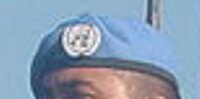
The Blue Beret - as worn by UN Peacekeepers
On May 29th, 1948, the United Nations officially authorized a team of observers to be deployed to the Middle East to observe and maintain the ceasefire arising from the Arab-Israeli war – sparked by the creation of the modern state of Israel.
(As a result – May 29thh is designated as the International Day of United Nations Peacekeepers.)
Since then, there have been over sixty such mission mounted by the United Nations – with almost twenty currently underway – and a number that have been organized and supported by other international organizations such as NATO or the African Union – or even by individual countries such as the Indian Peace Keeping Force which operated in Sri Lanka between 1987 and 1990.
The concept of “peacekeeping” involves assisting countries torn by conflict to create conditions for a sustainable peace. Peacekeepers, (military officers, civilian police officers and civilian personnel from many countries), undertaking activities that contribute to the furtherance of a “peace process”. This might include monitoring the withdrawal of combatants from a conflict area, supervising elections, and the provision of reconstruction aid. Such assistance comes in many forms, including confidence-building measures, power-sharing arrangements, electoral support, strengthening the rule of law, and economic and social development.
It was not envisaged that the peacekeeping forces should themselves get involved in any fighting but circumstances sometimes evolve that put the troops “in harm’s way” … some two and a half thousand peacekeepers have been killed in the course of duty – the largest numbers from India, Canada, and Ghana.
A Peacekeeping Force is normally deployed once ceasefire conditions are already in place … and the relevant parties had given their consent: observing and reporting. Once the conditions are in place, the parties may request a peacekeeping force and, if it is approved by the Security Council, then the United Nations Department of Peacekeeping Operations begins planning the mission and seeking contributions from member states. A “Special Representative” of the Secretary General is appointed to formally head the mission.
You might expect, (I know that I did), that the majority of peacekeeping forces came from “developed” countries, (like The United States or Britain …), but in fact that’s not the case. Of the something like 125000 personnel from 130 nations currently serving in these forces, the largest contingents come from countries like Bangladesh, Pakistan, India, Nigeria, Egypt, Nepal, Jordan, Ghana, Rwanda and Uruguay … Apparently, apart from
- being a good thing to do, and
- forces from such nations being seen as a more politically acceptable to receiving parties as they don’t represent former colonial or “imperial powers”,
providing personnel is seen as having a number of practical advantages for countries contributing to such a force:
- providing experience and training opportunities,
- add to the country’s image as a responsible, peaceful and responsive member of the international community … and also
- a source of financing to help them equip and maintain their armed forces.
A couple of months ago, it was reported that Kyrgyzstan wants to participate in UN peacekeeping operations and the Defence Ministry has begun to prepare the groundwork for such a measure,
In fact, a small number of Kyrgyz personnel already served on a number of such missions. It was the first of the Central Asian countries – and the fourth of the CIS countries – to provide personnel.
They have served in places like Burundi, Dafur, Haiti, Kosovo, Liberia, Syria and Timor – enforcing ceasefires between conflicting parties and facilitating reconciliation, patrolling borders and participating in disarmament, promoting the implementation of humanitarian assistance and the return of refugees, helping and assisting Governments in the reconstruction of war-ravaged economy.
Some have held positions of responsibility and been awarded the UN medal “For Peace”.
However, there seems to be serious intention to formalize a greater involvement … according to a recent report, following the passage of a new law, (“About the bases and an order of participation of the Kirghiz Republic in activity on international peace and safety maintenance” and the subsequent “Position about an order of preparation of the military men directed to peace-making missions of the United Nations”), a special 300 strong “peacekeeping battalion” has been established – and deployed in the Batken region.
They are currently undergoing training including taking special English lessons, and the special regulations and procedures involved in peacekeeping operations, (which are different from those relating to usual military service).






 Bishkek