The postman … or postwoman
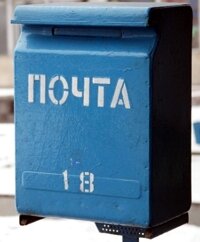
Postbox
Most days the doorbell rings and a little old lady hands over the newspapers which I eagerly take, and start scanning before anyone else gets their hands on them, If I don’t, then there’s a good chance that I won’t ever get to see them as someone else will pick them up and that’s the last I’ll see of them.
As well as the newspapers, she may also hand over the odd letter, because she is also the postwoman and newspaper delivery to your door is just one of the service offered by Kyrgyz pochtasi – the Kyrgyz post office.

Postman Bob
My father was also a postman, working for the Royal Mail for all of his working life except for the time he served as a tank driver in the Second World War. Although he enjoyed his work, it wasn’t exactly an easy life.
I don’t know what it is like today, but back in those days postmen worked a shift system. One week he would get up in the early morning hours – about 4:00am and head into the Post Office to sort out mail before setting off on his round, walking the streets shouldering a heavy mail sack in all weathers, (in sunshine and rain, in fog and in snow), delivering letters and small packets and finishing at about midday.
The next week he get the chance to lie in during the morning then head to the Post Office at about midday and then spend the afternoon driving a van around some of the outlying villages, delivering mail and emptying post boxes, finally getting home again in the early evening. I think he preferred the afternoon shift as it gave him more freedom.
Over the years he got to know and established good friendships with many of the people on his routes. On several occasions when he was retired and I was visiting home, I would take him for a drive into the country and he would often ask me to take him down this or that route – pointing out the different farm houses and telling me who used to live there and a little bit of their family history.
Apparently, when the chance for promotion came his way, he turned it down. He enjoyed the open road too much. My mother never really forgave him and blamed his ill health later in life on the demanding rigours of the routine.
It could have been worse … ask Kevin Costner who played The Postman in the 1997 film based on David Brin’s post apocalypse book … a nomadic survivor who flees a warlord’s army while unwittingly inspiring hope of restoring peace. On the other hand, he could have served in one of the worlds most famous postal services of all time: The Pony Express.
The famous Pony Express logo
The service started on April 3rd, 1860, when the first rider mounted his horse and set out from the town of St. Joseph in Missouri and headed West … across the Great Plains of the Mid West, over the Rocky Mountains and the Sierra Nevada to Sacramento in California. Using a series of 184 relay stations located anywhere from 5 to 25 miles apart, (between 8 and 40 kilometers – depending on the local terrain), where fresh horses were always available, the riders were able to cover the vast distance of almost 2000 miles in just ten days … that might seem a long time today, but back then, (before the days of telegraph service became established – yet alone the telephone or the internet), this was revolutionary and helped to cement the place of California in the United States – separated as it was from the rest of the country by territories that had yet to be absorbed into the Union.
The importance of the Pony Express is hard to quantify … it certainly went down as a cultural icon and I remember, as a child, reading stories and watching films based on the fearless exploits of the riders who’s motto was “The Mail must go through“. This image may well have had something to do with the image of William Cody, (otherwise known as Buffalo Bill – who claimed to have been one of them … although, apparently, some people have questioned this), and his travelling Wild West Show which did much to promote and popularize it.
The surprising thing about the Pony Express is that it was very much a “flash in the pan” – a short lived venture. Just eighteen months later it was ceased operation, having been superseded by the new-fangled telegraph. The image and service of delivering letters and packets was, however, perpetuated – albeit at a much more sedate pace … at first by the Wells Fargo Stage Company and later the US Postal Service.
I’m not sure how easy or difficult it is working for Kyrgyz pochtasi. There aren’t that many letters for the pochtalian – postwoman – to deliver … but I suspect there may be some stress because I sometimes have to run after her because she has tried to give us a neighbour’s mail having mixed up the addresses. (To be fair, that’s usually when the letter is from abroad and the address has been written in a foreign language – English).
She’ll also deliver small packets but anything larger has to be collected from the post office – either the local branch office or the Glavpochtamt - main post office – on the corner of Sovietskaya and Prospect Chui. Only courier services like DHL, FedEx, UPS, OCS or EMS will deliver parcels to your door.
Mail within Kyrgyzstan is usually quite efficient – delivered within a day (at least in Bishkek) or a couple of days if it has to travel from the regions. International mail may take a lot longer … but that’s because it has to come through other distribution hubs. A couple of weeks ago I received a Christmas card posted in the States in mid January, but it only arrived in Bishkek in mid March.
Kyrgyz Pochtasi is a state enterprise, established in 1993, to operate postal services for the newly independent country. It has over 800 offices and 4000 employees which serve all parts of the country and handles three and a half million letters and 150,000 parcels each year.
It’s portfolio of services covers not only the delivery of mail – and newspapers, but offers over 50 different services … postal services, financial, (paying bills, making money transfers, etc.), they operate a microfinance facility, and it’s even possible to buy tickets for trains, planes, theaters and so on, through them. Internet access is available at some of their offices.


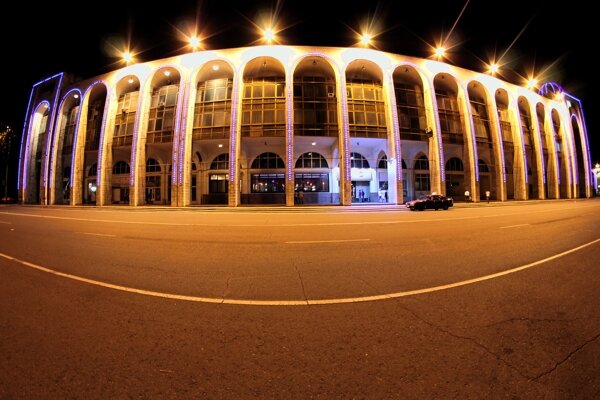

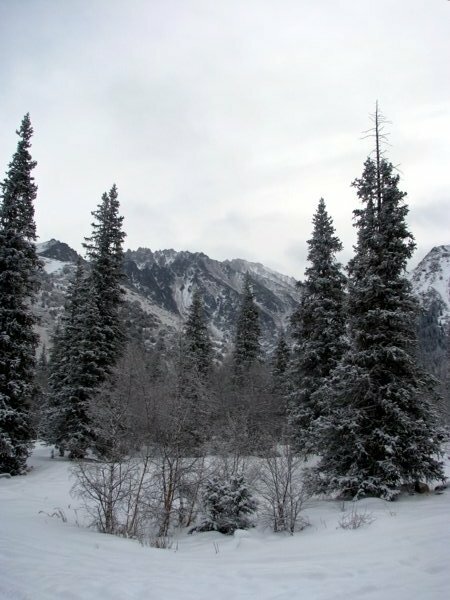

 Bishkek