A Lesson in Market Research
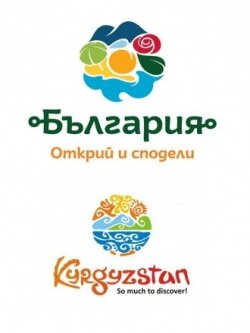
Similar?
Last year, Kyrgyzstan adopted a new tourism brand – the winning entry in a competition depicting a multicoloured circle with swirling patterns resembling traditional Kyrgyz ozori, (pattern), portraying the sun, mountains, lakes and a swimmer with the slogan “So much to discover”.
Although it was selected from about 40 different entries by a commission representing many of the different sectors of the industry, it wasn’t a universally popular design – with some people complaining about the kaleidoscope of colours and the “busy” image was too complicated. It was designed by a student and that fact was also the subject of some comment, in that it wasn’t a design produced by marketing specialists.
Although the previous Kyrgz logo, which was the product of a professional marketing company, was not circular, it featured similar colours and imagery, (and the slogan was “Somewhere that you haven’t yet been” … although in English it was “Somewhere new, somewhere different“). It also proved to be somewhat controversial.
As it happens, a similar logo was developed separately by a group of individuals and made a considerable impact on Facebook, attracting over 12000 “likes” and regularly receiving around 4000 reposts.
At the beginning of the year, the newly adopted logo became the subject of much discussion once again. This time, however, the attention came from abroad – from Bulgaria. It seems that they have also been undergoing a rebranding process. They contracted a marketing firm to carry out research and design a new brand. The design that was eventually chosen was a similar multicoloured circle with swirling patterns and the slogan “Discover and Share”. It proved to be a controversial choice with the people working in Bulgarian Tourism with many expressing their opposition and dislike of it.. To many people working in Bulgarian Tourism, it also looked very similar to the Kyrgyz design and there were cries of plagiarism … although the marketing company strongly denied this.
It made me wonder if the designers all studied together, or had used the same textbook – or if it was an example of “great minds think alike“.
In many ways, Bulgaria is like Kyrgyzstan. It’s not a large country and has an existing tourism industry based on traditional markets. It doesn’t have a single USP, (Unique Selling Point), which marks it out as different from its competitors. It has three main types of tourism: Recreational Tourism based on the Black Sea ports, (similar to Issyk Kul), Adventure and Cultural Tourism (based on their mountains), and Health Tourism, (based on a number of sanatoria spread throughout the country), with a number of other niche markets which it might like to develop such as skiing and Sustainable Tourism, (based on something that looks very similar to CBT – Community Based Tourism).
To be fair, there are also important differences – particularly the fact that it is part of the European Union and much closer to new potential markets that it hopes to exploit.
One of the major issues in the controversy over the design and choice of a logo in Bulgaria seems to have been that, whereas the Kyrgyz logo had cost very little – the competition had been organized as part of project funded by the European Union, thousands of US dollars had been spent on the Bulgarian logo. In defense of the expenditure the marketing firm pointed out that the expense represented far more than simply creating the final design, which was just one of several which were all considered.
As part of the process they undertaken considerable Market Research … asking visitors to the country about their experiences and impressions and used this information to help them in creating the various alternative designs. It gave them valuable information, telling them who their visitors were and where they came from, what they did, where they had visited and where they had stayed . It answered questions like, what the visitors found interesting and appealing?, what they had enjoyed?, what had gone well during their visit? and … what could have been improved? What hopes and aspirations they had before their journey? and to what extent had they met? If they were to return, then what they would like to see and do given the knowledge and experience that they already had? and if they would recommend Bulgaria to others, their relatives, friends and colleagues?
All this was valuable information. More importantly, however, the company realized that these people represented a biased sample, in that they had already chosen Bulgaria as a destination. It gave them valuable information, but didn’t tell them anything about grabbing the attention and attracting potential visitors who may not know anything about the country and may never have thought about travelling there. What sort of image did they have of Bulgaria?, what did they know about Bulgaria? what did they look for in a holiday destination? where did they go to get information? what would attract their attention? and influence their decision? and what would discourage them from choosing a destination for their holiday?
So, they went outside Bulgaria and talked to people who had never been to the country. In this way they gathered a lot of information which was not available to them if they simply asked people on the streets of the capital Sofia or visitors to the main tourist spots, by handing out a questionnaire to tourists at the airport as they were about to board the plane to return home.
All this was also valuable information and gave them the opportunity to explore new avenues and seek to attract new visitors, possibly opening new markets.
It seems to me that Kyrgyzstan could learn from this example. Most tour operators and hotels welcome and ask their clients for feedback about their experiences and impressions of Kyrgyzstan and their services. Also, over the years, there have been several research projects which have asked tourists for similar information and there are proposals for an exit survey to be conducted, funded by a donor project.
As with the Bulgarian example, these surveys give us valuable information. How much more useful, however, it would be if we could gather the additional data from abroad.
Unfortunately it is also an expensive exercise … but the Bulgarians thought it was worth it. As it happens, as I understand the situation, it didn’t cost the Bulgarian taxpayer anything as it was all part of a project – funded by the European Union.
Originally written for: Tourism in Kyrgyzstan: Problems, Practice and Perspectives




 Bishkek