Atake Baatyr – The first Kyrgyz Ambassador
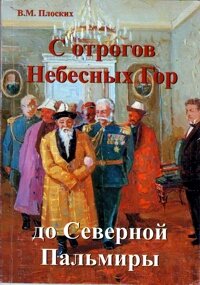
Atake Baatyr - The first Kyrgyz Ambassador to Russia
Although Kyrgyzstan declared its independence from the Soviet Union in August 1991, it wasn’t until March 20th the following year that the two, Russia and Kyrgyzstan, established formal diplomatic relations.
The relationship between the Kyrgyz and the Russians has a long and complicated history. Atake Baatyr played a vital role in establishing friendly relationships between the Kyrgyz and their powerful neighbours.
Atake Baatyr was born Ateke Tynai Biy uulu into the Sarybagysh tribe and ruled over the Northern Kyrgyz based in the Chui valley at the second half of the eighteenth and the start of the nineteenth centuries. His exact dates are not known.
Between 1718 and 1722 the region was invaded by the Dzunghar Khanate and Tynai Bey, Atake’s father, took his people to Southern Kyrgyzstan. Behind them they left, as they fled, property, belongings, cattle, and even children and the elderly who could not travel. In the south, they prospered and turned to agriculture. The invaders, however, had trouble exerting their authority and the Kyrgyz longed to return to their homeland. The death of the Dzungan Khan in 1840 led to rivalries and internal strife – and the Kyrgyz under Atake took the opportunity to return home. First to the Talas valley, then into the Chui valley.
There is an account that as the Kyrgyz approached the fleeing Dzungans, a suggestion was put forward that the fight be settled according to ancient tradition – by single combat between the champions of the two armies – a “David and Goliath” contest. It happened that neither champion could gain the upper hand and vanquish his opponent, and so a fully-fledged battle ensued – with, apparently, 10,000 casualties.
Despite the casualty rate and the amount of bloodshed, it was not a decisive battle – others were to follow and mopping up took some time before the Kyrgyz regained control of the northern regions.
Atake was wounded in the fighting and received a facial scar which, in later life, he kept hidden by wearing a permanent bandage.
The new leader of the Northern Kyrgyz was invited to visit Kokand – where Atake was artful in negotiations and managed to avoid subjecting his people as subjects of the Khan. There were difficult times in trying to ensure the independence of his people. When a party of a hundred warriors arrived to collect tribute for the Khan from the Kyrgyz, Atake responded by pointing out that they were not a subject people and did not have to give a tribute. Concerned for the future of his people, he realized that in order to provide security and a peaceful life, he needed some form of strong protection to deter such incursions. He assembled a Kurultai. (an Assembly of representatives of the Kyrgyz people), and proposed that a diplomatic mission be sent to St. Petersburg. The Kurultai agreed, the envoys selected, provisioned and dispatched in 1785. They presented the Empress, Katherine II, with numerous gifts, including the hides of three Snow Leopards. Although the first contact had been made – the mission failed in cementing a strong relationship because the Russian empire at that time was suffering a number of internal difficulties.
One result, however, was Russian interest in trade. The official reply the ambassadors brought back with them a present of 800 silver roubles and included a request for help in establishing trade. Issyk Kul was seen as an important route between the Russian empire and China and a number of merchants arrived in the area. In the early part of the 19th century more diplomatic contacts were made.
In the face of Kokand expansion, he moved with part of the Sarybagysh tribe to the Issyk Kul region in 1825. Later in the 19th century Kokand managed to conquer even this region.





 Bishkek