Summertime – and the living is easy …
Today is a public holiday – not here in Kyrgyzstan but in Iceland. The first Thursday after 18th April is designated as Summer Day – the first day of Summer.
It might not seem like Summer, traditionally the warmest of the four temperate seasons when people take advantage of the warmer temperatures and longer days by spending more time outdoors, undertaking such activities as traveling to the beach and going for picnics, but it is based on the Old Norse Calendar which divided the year into just two seasons: Summer and Winter.
The identification of the seasons has often caused me problems since I came out here where, for example, summer is deemed to begin on June 1st. When I grew up I was taught that the season began three weeks later, on June 21st – the day of the Summer Solstice (… even though just a few days later – on June 245th – we would commemorate Midsummer Day.)
Meteorologists, however, tend to divide the year into four seasons – each lasting three months and for convenience they are deemed to start on the first days of March, June, September and December rather than on the dates of the equinoxes and solstices … and this is the practice here in Kyrgyzstan. No matter how hard I try, however, “old habits die hard” and I find it hard to adapt to the local custom.
I am not alone. Apparently, there has been some controversy on this issue back in the UK in recent years. In fact, not everyone follows this convention.
It is all fairly arbitrary, anyway … in the same way as the New Year is deemed to start on January 1st. Indeed, the association of the start of the seasons with the first days of March, June, September and December, goes back only to 1780 and the Societas Meteorologica Palatina.
The division of the year into four seasons may be an age old tradition, but is by no means universal. This probably reflects the temperate climate of Northern Europe and has been exported as peoples traveled, the world exploring and colonizing the world.
In the old Norse calendar, the year was divided into just two seasons – Winter and Summer and the first day of Summer was celebrated on 18th April … and still is Iceland.
Some environmentalists, or ecologists, for example, consider that four seasons does not provide sufficient differentiation and make the case for dividing the year into, not just four but six seasons, each lasting approximately two months:
- Prevernal (early or pre-spring): when deciduous tree buds begin to swell and migrating birds fly from winter to summer habitats.
- Vernal (spring): when tree buds burst into leaves, birds establish territories and begin mating and nesting.
- Estival (high summer): when trees are in full leaf and birds hatch and raise offspring.
- Serotinal (late summer): when deciduous leaves begin to change color and young birds reach maturity, join other adult birds in preparing for migration.
- Autumnal (fall): when tree leaves are in full color then turn brown and fall to the ground and birds migrate back to their wintering areas.
- Hibernal (winter): when deciduous trees are bare and leaves that have fallen from the boughs begin to decay and migrating birds are settled in their winter habitats.
In a similar way, the Hindu calendar also divides the year into six seasons, arising out of the peculiarities of the Monsoon:
- Vasanta (Spring),
- Greeshma (Summer),
- Varsha (Monsoon),
- Sharad (Autumn),
- Hemanta (pre-hibernal),
- Shishira (Winter)..
Indeed, in tropical zones, where Monsoons may also play a vital role, there are a number of “mini seasons” rather than large blocks of time which can be characterized by the majority of plants and animals behave in a similar way.
Also, Australia Aborigines used to define the seasons by what they saw was happening in the world around them: to the plants, animals and weather. As a result, each local tribal group had different seasons at different times … and it appears that some of them defined as many as eight different seasons.
It is easy to understand why, for example, Spring falls in second half of the year in the Southern Hemisphere, (for example, in Australia and New Zealand), as that is when the season marking the transition from Winter to Summer occurs, but the Irish tradition that Spring begins on St. Brigid’s Day – February 1st – is perhaps more difficult to comprehend.
In Sweden and Finland, the seasons do not begin on fixed dates of the year. Meteorologists apparently define the seasons on temperature: Spring, for example, begins when the average daily temperature rises above 0°C for a a period of seven consecutive days. (Summer begins when the temperature rises above +10°C, Autumn when it falls below +10°C and winter when it falls below 0°C.)
This also means that, because the definition depends on the observation of the measurement of actual temperatures, it is only possible to know after the event … and also that, as in the case of the Australian Aborigines, the seasons can begin at different times in different parts of the country!
In fact, the climate and weather conditions can vary from year to year, affecting the blossoming of vegetation and the activities of animals which are the traditional signs and signals associated with the season. These typical indications of the season take place at different times each year – sometimes a little earlier … sometimes a little later. A warm spell in January or February can bring “spring like weather” and April and May can still bring frosts.
It has even been suggested that in recent decades, a “season creep” has been observed, which means that many phenological signs, (arising from the study of periodic plant and animal life cycle events and how these are influenced by seasonal and other variations in climate, as well as habitat factors, of spring are occurring earlier in many regions – by a couple of days per decade.
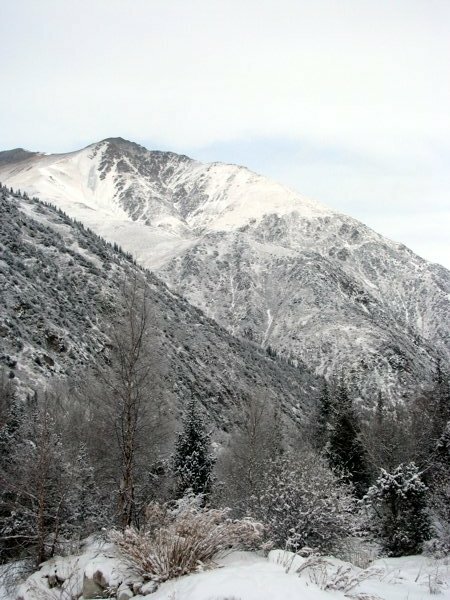
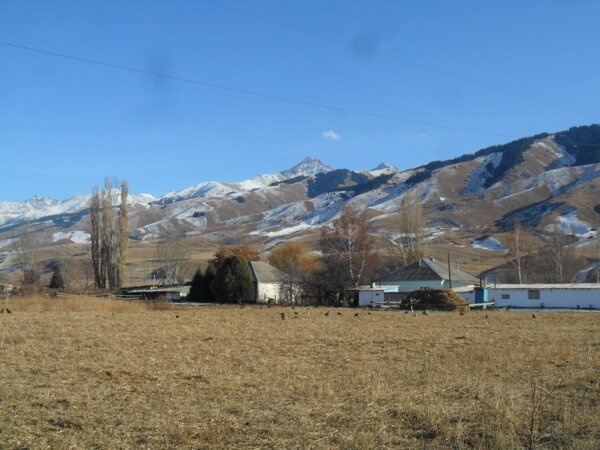
One of the great claims for Kyrgyzstan is that it is possible to experience “all four seasons” in one day – especially when travelling in the mountains – where snow can fall even in the height of summer, in July and August.



 Bishkek