Samsa
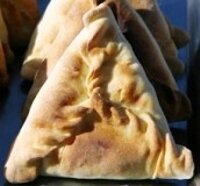
Traditional Samsy
Whenever I meet new people, they often ask me how I came to be here and how long I have been in Kyrgyzstan.
I have told this story several times, (for example here). I have been here since 1995, although I originally planned to be here for just one year.
On my first visit back home at Christmas, my mother was obviously full of questions. She was particularly concerned that I was eating properly, (a typical motherly reaction), and I tried to put her mind at rest by cooking some specimen meals.
I chose three dishes:
- The first was Borscht … to us, Borscht was always Beetroot Soup … but here, Borscht is more like a watery stew – a meat soup with vegetables.
Although it was an acceptable attempt, it wasn’t a profound success. As I proudly put the bowl down before her, she looked at it and asked: “What is it?” … and I replied Borscht … to which she responded, “Where’s the beetroot?”
- The second was Manti.
Traditionally, Manti are a form of ”finger food” (i.e. eaten with the hand, not with cutlery).
I was somewhat hampered by the fact that we didn’t have a Mantishnitza - a special steam cooker. As a result, the thin pasta dough fell apart and although it was tasty, all I seemed to achieve was to convince her that I was obviously s lost case.
- The final was Samsa, (samsy in the plural) a common form of “street food” but are also served in many cafes.
Similar to Indian Samosas and small Cornish Pasties, they are also a form of “finger food”.
In Kyrgyzstan they are usually triangular in shape, but square samsy can be found.
Fortunately, my attempt at making Samsa was more successful … certainly they proved to be acceptable to my mother who remarked that they were just like flat Meat Pies, or Cornish Pasties without the potatoes.
A word of warning: The filling can be quite hot and a bite into the pastry can lead to a squirt of hot, liquid fat – especially if they are piping hot and fresh … so caution is advised when eating Samsy.
For those who might be interested in repeating my efforts, here is a recipe for traditional Samsa:
Ingredients:
- 2 cups flour;
- red pepper;
- 1 egg;
- 3-4 cups minced (ground – or finely chopped) beef or mutton (beef or chicken can be used);
- 2 onions, chopped fine;
- 10 cloves of garlic,
- chopped fine;
- salt;
- pepper;
- melted butter.
Sometimes other vegetables, such as pumpkin, are added instead of red pepper.
Method:
Dissolve 2 tablespoons of salt in warm water. Beat the egg and mix with the flour. Add the salt water to the flour a little at a time until the dough holds together but isn’t sticky. Set aside in a covered bowl.
Mix the ground beef or mutton, onions, garlic, salt, pepper, and red pepper together. It is best kneaded together by hand.
Roll out the dough into one big thin circle. Spread a thin layer of butter on it, and then roll up the circle as you would a rug, into a long tube. Cut off a 3 inch section of the tube and roll out again, to create fine layers in the pastry. The “patties” should be about the size of a hand – so that when folded over the sides of the finished samsa are about 8-10 cms long.
Place 1-2 tablespoons of the filling mixture on the dough and fold opposite ends together to make a little triangular package. Seal the seams of the “packet” well by working them into one another.
Repeat until the dough and filling mix is used up. Bake on a greased baking tray and brush the tops with a little oil. Place the baking tray in the oven at a medium heat (350) for 40 to 50 minutes or until the meat is cooked through and the dough is brown.
Some useful tips:
- In Central Asia, Samsa without plenty of finely chopped meat is unthinkable. This means knives need to be sharpened often and thoroughly.
- In Kyrgyzstan, spices are used sparingly – and hence the taste tends to be rather plain. Additional herbs and spices can be added to bring out different tastes – hot and spicy or mild and “natural”, according to taste.
- When removing them from the oven, place the samsy on a paper towel and brush once more with oil.


 Bishkek