Reading v Studying
As a youngster, I could be quite a philistine at times.
Now there’s a pejorative term that gives away part of my background … the term is used to mean someone who is uninterested in intellectual pursuits, someone who is smug and ignorant, indifferent or hostile to artistic and cultural values.
Now, the Philistines were an ancient “sea people” who settled the coastal region of what is now the Gaza Strip and Israel, around Gaza Ashkelon and Ashdod, in the 12th century BC. They ran up against the ancient Hebrews and are clearly feature as the “bad guys” in the Old Testament, (the Bible contains about 150 references to them or Philistia). Apart from their conflict with the Israelites – the stories of Samson, Samuel, Saul and David include accounts of Philistine-Israelite conflicts – there is nothing really to identify them as a particularly smug, ignorant. indifferent or hostile to art or culture. Indeed, the Philistines were an advanced culture relative to their contemporary Canaanite neighbors – and it is a moot point if the Hebrews can be counted amongst those neighbours. Archeological discoveries in Israel show that in terms of their urban structure, commercial complexity and technology (especially in pottery and ironwork) the Philistines were more advanced than their contemporaries – and in the First Book of Samuel there is a reference to the resentment of the Jews (who were, basically, still a bronze society), about their trading-dependence upon the Philistines for obtaining and re-sharpening their iron agricultural tools.
Incidentally, the Philistines have another lasting legacy in that apart from the pejorative term in that the modern name “Palestine” comes, (via Greek and Latin), from the the term “Philistine”.
Anyway, why do I say that I could be quite a philistine at times? Basically, because in my youth I found little time for reading, or music, or Art. It wasn’t that I was antagonistic to beauty and creativity – just that I took the view that there was so much literature, so much music and so many works of art in the world that I would never be able to encounter them all, so why bother … I had other things to do … I had my life to lead.
The turning point came one rainy afternoon in Oxford. A friend of mine, a fellow student, was going through a rough time with her boyfriend and we sat and chatted about it over a cup of coffee in one of the cities “trendy” coffee houses. I don’t think I said anything useful, but was simply a “sounding post” … someone who let her talk and listened, letting her sort out her thoughts and feelings in her own mind. Anyway, when it came time to leave I paid the bill and we walked out through the bookshop at the front of the cafe. There she stopped and picked up a copy of “The Hobbit” by Tolkein and said she wanted to buy it as a present for a friend … there was a long and complicated story behind it, but the main point that she didn’t have any cash with her … so she asked me to buy it for her. I wasn’t too happy about this for several reasons … but gave in and handed over the cash. She borrowed my pen and wrote a brief inscription in the book … and we left the bookshop. As we parted to each go our separate ways, she handed me the book and said that I was the friend she wanted to give the book to … the rest of the story had been just an excuse … and sure enough the inscription said “To Ian …”. I took the book and went back to college where the book lay on the shelf for some time. Then, one day I took it up and started reading … and continued reading … I can’t say that I read it in one sitting – but it was soon finished and I was heading to the bookshop to buy The Lord of the Rings. I had been bitten.
She also introduced me to Art … She was studying to be an Art teacher – and on one occasion she had to produce an illustrated dissertation on the Bauhaus Movement. She had had weeks to do the work but, like many a student, had left it all to the last moment. She wasn’t stupid, she knew her stuff and had done the research – she just didn’t get round to writing it down. She came to me and said that she had a problem … she had to submit the essay the following day – or else she would fail the course … what could she do? The answer was simple … write the essay … “But I don’t have time!” … “Yes, you do … write the essay in sections, a paragraph at a time, and one of us will type it up … we’ll … “. Well she went for it …so while she started writing and another friend started typing, I went to the Library and took out all the books I could find on the subject and photocopied a host of illustrations and she drew quick sketches based on them. Up until that point I didn’t know anything about the Bauhaus – and I still don’t, but for several years I would amaze acquaintances that could recognize a Bauhaus chair or other item of furniture. It was the start of another interest.
So I started reading books for pleasure and looking at pictures and everyday objects in a new light. I suppose I owe her a lot!
From Tolkein’s Middle Earth, I progressed into lots of different genres of literature. It took many years, and there are still a lot of books I haven’t read, but hope to some day … although it’s quite difficult to get hold of them here.
Although I read a little every day, during my holidays I made a special effort. Once, during a six week Summer Holiday I managed to read a book a day … it is true that some of them were quite short – but others were much longer and took me several days to finish. In order to overcome my earlier concerns about trying to encounter the vast extent of available literature to be sampled, I would make a point of reading different types of books in rotation: a “classic”, a “detective” – or “pulp fiction”, a science fiction or fantasy, an historical novel, a biography … and so on.
Of course, over the years I have developed a preference for certain authors where I take every opportunity to devour whatever I can of their output. I suppose the first of these was Grahame Greene. He had a wonderful range of books and short stories from and I could easily have spent several cycles of my reading program dedicated just to his work. However, I found others … one of those was Chaim Potok who wrote, amongst others, novels about the tensions between the Hassidic and liberal Jewish communities in modern America.
When I was in Oxford we never talked about what subject we were “studying” … but rather what subject we were “reading”. In Oxford you “read” for your degree.
It seems like a quaint distinction but, to me, it actually represents something quite profound. To be honest, even though I had been a studied at Oxford, I never really thought about it until I read a book by Chaim Potok. In one of his novels a boy, the son of a Hassidic Rabbi, breaks with tradition and enrolls at University to read Psychiatry. Although he has a strong interest and is highly motivated … he experiences difficulty and can’t seem to get to grips with and master the ideas of Sigmund Freud and Carl Jung … then one day it hits him … he is READING them … like one would read a book – and not STUDYING … as he would have studied the Talmud. So, he stops “reading” and starts to study … with footnotes and references … and things start to fall into place. I am not sure how Potok’s Orthodox readers would have liked the equivalence of the Torah and the Talmud to the works of the like of Freud and Jung … but the main point of his observation is the process involved and not the subject matter.
I remember thinking about how, in my youth, I had attended Bible Reading classes in one church and a Bible Study Group in another. I hadn’t really noticed a difference in approach at the time – and I’m not that sure that there really was one in those particular groups … but it gave me food for thought. Reading is basically a passive activity: by reading you simply absorb ideas and information … whereas studying is much more an active occupation: involving concentration, questioning, research and follow up. It’s like the difference between hearing and listening, (you hear a sound but listen to a speech); between seeing and watching.
Again, when I came to Kyrgyzstan, I had to learn Russian, so I took lessons every day and actively studied … cases and tenses, participles and parts of speech … … but living in a Russian speaking environment I was immersed in a culture that made it easier to simply pick up the language passively. The problem is that although this helps me to I understand a lot, it is still possible to make simple but important errors. In Russian, for example, there is a difference between the words for “to hear” and “to listen”: sleeshat and slooshat – just one letter, but it makes all the difference.
That’s not to say that the passive approach doesn’t have a place. In fact, we learn a lot from both approaches: we absorb a lot of information, culture and attitudes passively … by reading, seeing and hearing … as much as by actively seeking them … by studying, watching and listening. When it came to learning about my new home, I have discovered much information by simple absorption … being in situ … reading newspaper articles, seeing places, hearing people tell stories, observing what goes on. The problem with relying on this “passive” learning is that it tends to be haphazard and random, and as in the case of the old Chinese proverb:
I hear and I forget,
I see and I remember,
I do and I understand
So, in order to put this all into context, so that I could understand it all better, I search out information in books, explore new places such as museums, ask questions, take photographs and make notes.
This has helped me in one aspect of my job: when I meet clients, it involves answering their questions and giving some information about Kyrgyzstan. I can’t always answer the questions but often, I know someone to ask or where to look in order to find the answer, (or as the catchphrase in the advert went …, “I know a man who does”). Sometimes, people are surprised by the snippets of information that can slip into a conversation … I have even been told by locals, “Really?, I didn’t know that.”
The author of a guide book to the region looked at the small “library” of books that we have in the office about the region and expressed admiration … they couldn’t get anything like that range of books back in Europe. As I pointed out, however, I have lived here for over 10 years and simply accumulated them over that time … a passive accumulation of knowledge – akin to “reading” - … and I have them available and can dip into them from time to research a topic when the need arises … reflecting the active aspect of learning – akin to “studying”.
The trouble is that without the concentration, questioning, research and follow up it is possible to read, to hear and to see and, all the same, to miss the point.






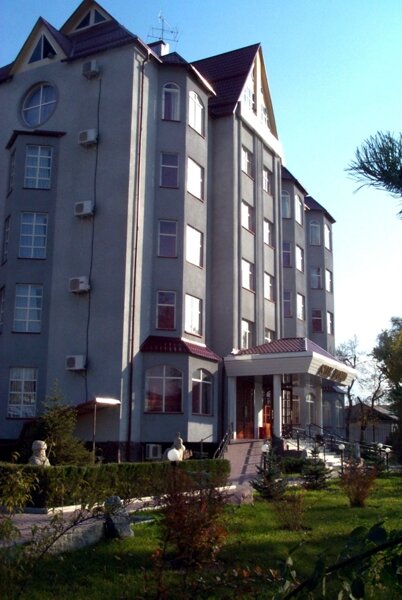
 Bishkek