Olga Manuilova
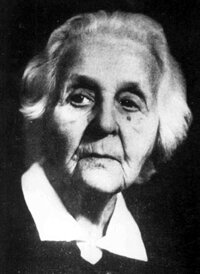
Olga Manuilova
Olga Maksimilianovna Manuilova, (nee Tikhomirova), was the daughter of an army doctor, and was born on October 30, 1893 in Nizhniy Novgorod in Russia.
When she was nineteen, in 1912, she went to Munich to attend a private school where she studied sculpture, art history given and anatomy under some prominent scholars of the day. Upon returning to Russia a year later she attended the Moscow Painting, Sculpture, and Architecture School.
In 1932 she began work as a sculptor and tour guide in a rural regional museum (in Clear Glade) and six years later was entrusted with a commission to create a sculptural construction for the Uzbek SSRs pavilion in the Moscow Agricultural Exhibition.
The following year she was invited to Kyrgyzstan by the government to work on a statue for the Toktogul Satylganov memorial. Like many others, she was attracted by the natural environment of the country and the character of the Kyrgyz and settled down, spending the rest of her life in Kyrgyzstan.
Around this time a collective of talented cotemporary artists such as Chuikov, Aitiev, and Akilbekov were based in Frunze and Manuilova became one of the first sculptors to join this group. Indeed, during the War years, she was probably the only sculptor working in the republic.
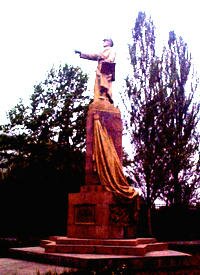
Manuilova's memorial statue of Panfilov
Throughout her career she worked on over 600 sculptures many of which can still be seen today in the parks and streets of Bishkek. Amongst them are memorial statues of Panfilov, Bokonbaev, Togolok Moldo, and Kurkeneev and also has works in the Naval Museum in St. Petersburg, the Tolstoy museum, the Museum of Anthropolgy, the Tretyakov gallery, the Art Museum of the Eastern Peoples, in Russia, and in the Museum of Fine Arts in Bishkek.
For her works “The Women Builders of the Grand Chui Canal” “Helping the Front” (1942), and a memorial statue of General Panfilov, Manuilova was granted the title “Honored Art Worker of the Kirghiz SSR”. She also received acolades as National Artist of the Kyrgyz SSR, the orders of the Red Labour Banner, the “Sign of Honor,” a medal for “Valiant Labour,” and the honorable document of the supreme council of the Kirghiz SSR.
Manuilova’s two most praised works are “Portrait of the National Artist of the USSR Kiyizbaeva” (1952), and “Young Kirghiz” (1955).
She died in Bishkek, in 1984, aged 91. The following year a museum in her honour was planned – but it only opened its doors finally in 2000. Located in a small, Russian style, house on Tynystanova Street (at the crossroads with Kievskaya) it comprises four rooms. Two are dedicated to her life , displaying her diaries, letters, and photos (of her, her family and friends). There are also some of her drawings and miniature sculptures, including sketches of some famous contemprorary Russian and Kyrgyz people.

The Manuilova Museum
The Olga Manuilova Memorial House Museum
Location/Address: Tynystanova 108,
Between Kievskaya and Toktogul
Tel.: 661174
Open: Monday – Friday 09:00-17:00 (Closed 12:00-13:00 for lunch)
.


 Bishkek