An interview for “Open Central Asia “
I’m used to being “a bit of an oddity” here in Kyrgyzstan … one of a small number of foreigners to make their home in this little known country in the heart of the Eurasian landmass. I get asked question all the time … and I’m often asked to give interviews about my experiences and what life is like as an expat here. Normally I turn down such requests … I am more than happy to give comments to the press where I think I have something to say and make a contribution to the debate, but … I don’t like being “the” story.
Sometimes, however, a request for an interview is difficult to turn down. Not long ago I got a request from a friend, a publisher, who was about to launch a new English language magazine dedicated to Central Asia: “Open Central Asia”. In the end, I agreed to participate and received a series of questions by e-mail, (the journalist commissioned to write the story was based in the UK).
Although his questions covered much of the same ground as other interviews, (and other “postcards” on this website), it also had some new and interesting questions, and so I thought I would include it here:
* Could you give us an introduction as to how you have ended up living as an expat in Kyrgyzstan?
It’s all an “accident”. When I came here back in 1995 it was originally for just one year – and I just sort of stayed.
A friend of mine, Tony, worked as a lawyer for a large international firm based in London. He was in Moscow on a mission for an international organization about the time of the dissolution of the Soviet Union. There were something like fourteen people in the team and when they heard that something was happening in Kazakhstan, (note – Kazakhstan, not Kyrgyzstan). Kazakhstan is a big country – the size of Western Europe. It had gold, oil and nuclear weapons. Maybe they needed to send someone to Almaty, (which was then the capital city, before Astana was granted that status), and so three of the team were chosen to go there and see what was going on. He was one of them. When they got to Almaty, they realised that just 250 kilometers away was Bishkek, the capital of another former Soviet Republic, and maybe it was worth sending someone there as well. Well, there were only three people to choose from – and he got the job. (Sometimes we joke about whether he got the long straw or the short one.)
Anyway, he loved the place. He is from New Zealand and he said that it reminded him of life back home when he was growing up. Mountains and open spaces, lots of sheep and abundant wildlife, a multi cultural and friendly people with a friendly openness and hospitable tradition. At that time there were very few Westerners that made it to this part of the former Central Asia, access to this part of the Soviet Union was strictly controlled, and he was feted everywhere he went, (again, we sometimes joke that he was “fated”, if there is such a word). He took every opportunity to come back and eventually decided he would like to open his own law firm here as he saw great potential for development.
On his suggestion I came here for a holiday in 1994 and liked the place, but I never thought that I would eventually move here. However, when he asked me to come out and help him to open an office I agreed. I originally came for one year, but things never quite go according to plan and as the year was coming to an end there was still lots to do, so I stayed on to finish the job. I could have gone back home. I had a job waiting for me and staying here meant saying goodbye to that and a career that I had been developing for twenty years. To be honest, however, I was ready for a change and I looked forward to meeting the challenges of starting something new.
Once the office was up and running we what we saw as a gap in the tourism market, as it was then, Since Soviet times there have always been a lot of visitors from Kazakhstan, Uzbekistan and Russia to Lake Issyk Kul. Apart from that there were mountaineering and hunting expeditions, and the occasional Silk Road tour which crossed one of the few land crossing points open for passenger traffic into China. We thought that there were lots of Westerners, like ourselves, who would welcome the opportunity to visit and explore this little known region. Perhaps they had spent their long vacations when they were students visiting interesting parts of the world and were willing to accept the rigours and hardships of travel. They had time available to simply wander and explore but had little money to spare. Now, however, they have jobs and responsibilities that meant that, although they have money, they have limited time available and “had to be back behind the desk on Monday week.” They still wanted to visit remote and interesting places but needed to make the most of their “two weeks” annual leave and didn’t want either the hassle or discomforts that they were prepared to accept as students. With this image of our potential clients we started the tour company, together with another British friend who was also interested in the potential of the region, and opened a couple of hotels, one in Naryn and another in the capital, Bishkek. We would have liked to open more, but, (as I said before), things don’t always go according to plan.
In the meantime Tony met and eventually married a local girl and together they have two children. They now live in Australia. Tim is still in the UK, and I am still here.
* Is there anything that you miss from life back in Britain?
That’s easy: Marmite and Branston Pickle! On the other hand, back in Britain you can’t get Maksim Shoro, so it’s a case of: “you win some and you lose some”.
Actually, you can get most things here in Central Asia so it is not really a question of material things.
When I first came here the answer would probably have been “news from home” but these days, thanks to the internet and satellite TV that is not such an issue. The range of available books and films is perhaps a bit more limited than at home. It can be frustrating to read on the internet about new books that have just been published, or the film releases, and then have to wait until they can be delivered by Amazon instead of just wandering down the High Street to the local branch of WH Smiths to pick one up, but it’s not that big an issue.
* 20 years ago Central Asia was hidden within the Soviet Union but it is now fast becoming a key strategic focal point. What changes have you seen during you time here? Has anything shocked you?
Looking back to 1995 the three biggest changes are probably:
- The amount of traffic. There are a lot more vehicles on the streets these days than there used to be, and the traffic jams in the cities are getting worse. When I first came here we used to be able to cross the street without looking because you could hear the vehicles approaching, but now you have to great care with your “kerb drill” if you don’t want end up “falling under a bus”.
- The number of restaurants and cafes. I remember on my first visit back in 1994 that there were very few cafes and restaurants and when we told that a new café had opened we decided to try it out. It was a small room with just three tables, and the menu consisted of just a few local dishes. Nowadays we are spoilt for choice – offering a wide variety of cuisine.
- The amount of new construction. Modern shops and restaurants, leisure facilities such as cinemas and a skating rink, apartment blocks and hotels. There are still some building sites where the carcass of an unfinished building has stood idle for several years following the collapse of the Soviet Union, but there are a lot of new buildings going up all over the place – most of them demonstrating interesting architectural features.
All of these are signs of a developing economy, as is the ever improving range of goods available in the shops.
Another of the big changes is the presence of more and more foreigners. In addition to the tourists there are many more consultants and businessmen visiting the country and also the personnel serving at the US air-force base at Manas airport just outside Bishkek.
Some things, however, haven’t changed that much. For example, the main statue of Lenin may have been moved from Bishkek’s central square, (Ala Too Square), but he didn’t move that far, just round to the other side of the Historical Museum. You can still see him in many places around the country. The Soviet Union which he brought into existence and presided over in its early years, ruled the country for seventy years and has had a marked impact on the country. Its influence is still evident in many aspects of life in Kyrgyzstan.
The biggest surprise I ever had was when I was walking back to my office from a meeting and driving along Kievskaya Street I saw a bright red London Routemaster bus with the destination board displaying “Westminster”. I wanted to flag it down and point out that it was heading in the wrong direction – East rather than West.
* How does it feel to be living at the centre of a New Great Game?
To be honest, you don’t notice it that much, because it doesn’t really impinge on daily life.
Of course we are aware of it. For example, we hear and read about the various controversies regarding the US “Ganci” airbase – but it is just one of a number of issues that is raised from time to time.
* Kyrgyz tourism is very much focused around the community. How do you see this as differing from European tourism?
I am not sure I would agree with you, entirely, about the focus of Kyrgyz tourism being centered around “the community” … it is one aspect of Kyrgyz tourism, an important one, (and, I would say, one of the great success stories in Kyrgyzstan), but still it is only one aspect.
Community based tourism (CBT) is something that has been well developed in Kyrgyzstan … but I think it more of a feature rather than a “focus”. The idea arose from a desire to help the local rural communities improve their standard of living by offering a way of diversifying and finding alternative sources of income. The concept was developed mainly through the Swiss Development agency Helvetas, who helped establish local groups. Other donors also used the model and the number of groups has grown over the years so that there is now a wide network covering most of the country – and in some areas they offer the only available facilities for tourists. These groups offer accommodation, local guides and interpreters, transport and other services.
Although some, (many), tourists may use the facilities of a CBT group during their stay, it is probably going too far to say that it is a “focus” of Kyrgyz tourism. Many “westerners” have heard of CBT because it is featured in many of the guidebooks and some visitors make a point of planning a trip entirely using CBT services. However, they are not the majority of visitors, nor is this a major feature of Kyrgyz marketing.
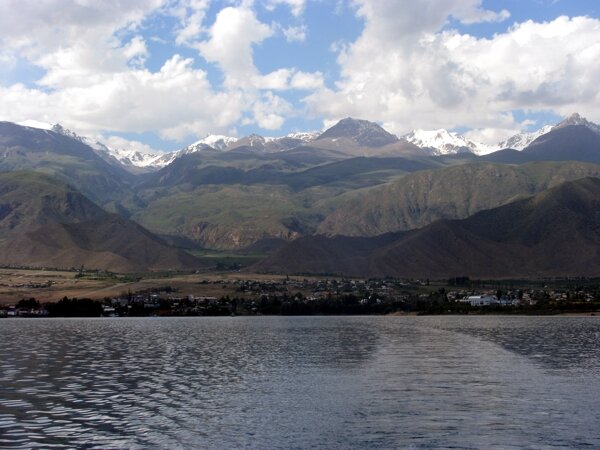
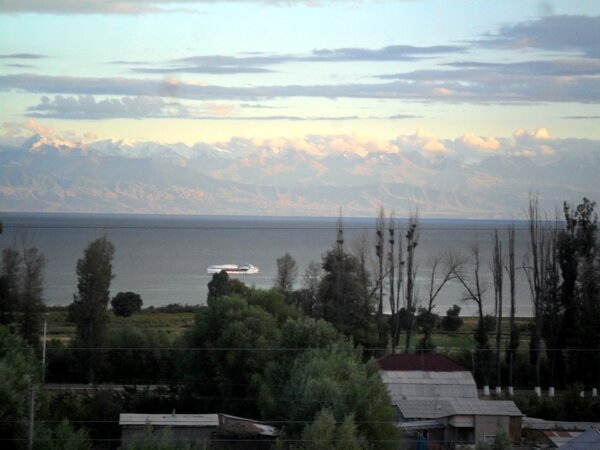
In fact, Kyrgyz tourism has, for a long time, centered mainly around Lake Issyk Kul – with most of the visitors to the country coming from neighbouring Kazakhstan, Uzbekistan and the Siberian regions of Russia to relax on the lakeside beaches, swim in the salty water, take advantage of the facilities of the various health resorts and so on. That was true in the Soviet days, and it is still true today. So much so that there are many new developments up by the lake to offer modern facilities that will help Issyk Kul compete with other destinations vying for the same business, such as Thailand and Turkey. I think it is fair to say that the main focus of Kyrgyz tourism is still: Issyk Kul. Personally, I think it is a bit of a pity, because the country has so much more to offer.
If the vast majority of tourists visiting the country head for Issyk Kul, then another thrust of Kyrgyz tourism is the Adventure Market: mountaineering, trekking, horse riding, rafting and so forth. (Although they may stay with local communities, most of these visitors actually want to get out into the countryside.)
A third sector of the country’s tourism can be stylized as “travels along the Great Silk Road”. Kyrgyzstan is a transit country between the ancient cities of Uzbekistan, (such as Samarkand, Khiva, and Bukhara), and China, representing the “mysterious orient”, with two main land border crossings, Torugart and Irkeshtam. Once again, these tourists may stay with local communities but, unfortunately, their timetables are normally so tight that they only spend a few days in Kyrgyzstan.
As an aside, one aspect of CBT is that, (except where the local CBT group offers the only realistically available local facilities for tourists – and is therefore used by all visitors to the area), it more suitable for the “independent” tourist. Unfortunately, unlike the situation in Europe, “independent tourism” is not well developed in the country, or well catered for. There isn’t, for example, a network of local Tourist Information Centers around the country, and those that do exist tend to be focused on a local area and are run by the private sector. As a result, it is usually necessary for the visitor to have, already, an idea or plan of what they want to do beforehand – especially if they have limited time available.
* Could the model work around Central Asia to promote tourism?
The concept is a particularly appropriate model for Kyrgyzstan which, apart from a few main centers, is basically a rural society with relatively few facilities and infrastructure.
Although there are CBT groups in Issyk Kul, (where there is a lot of competition from well established hotels, resorts and sanatoria) and the second city, Osh, most of the groups are found in smaller communities such as Kazarman or Arslanbob.
CBT is a model that is well suited for the whole region. It has been the subject of a lot of interest from Russia, Kazakhstan and Tajikistan. KCBTA, (The Kyrgyz Community Based Tourism Association), has been involved with projects to adapt the concept in the neighbouring countries and there are plans for a Central Asia network based on the Kyrgyz experience.
* What are some of your favourite memories, sights and sounds from the region?
Hmmm … that’s difficult. There are so many possibilities:
- my first sight of the Tash Rabat caravanserai hidden away in a remote mountain valley …
- the sight and sound of the manaschi reciting in a trancelike state the description of the battle between Manas, the legendary hero of the Kyrgyz, and the Chinese armies from the ancient Manas Epic …
- the sound of the Chopo Choor, a clay wind instrument like a recorder playing a traditional haunting melody …
- telling the Kyrgyz Prime Minister, in my best “pigeon-Russian” that the government had just effectively increased a tax by 50-fold …
- standing at the roadside at 10 o’clock trying to decide which was worse, the vodka being thrust into my left hand or the horsemeat sausage, (a traditional Kyrgyz delicacy – which was 90% fat), being thrust into my right hand by my Krgyz host and looking for a place to dispose of them both without upsetting or offending her … against my better judgment, I consumed both
- seeing a Routemaster bus driving along a Bishkek street …
- …
… to cite just a few
* Have you engaged in or watched any of the traditional sports or activities that you can tell us about?
There used to be a website which stated that “Kyrgyzstan is not particularly well endowed with festivals”, which is grossly unfair …they may not always be the best organized affairs, but there are a wide variety of festivals giving visitors the chance to see (and often to participate) in such traditional sports and activities.
On one occasion we had to organize some traditional games for a German film crew, and one of the most worrying moments in my career was watching the cameraman bolt for safety as he got too cliose to the action and was charged down by a horse and rider. I was worried for his safety, but he was more concerned about this camera which went tumbling to the floor.
As a former Maths teacher, perhaps my favourite was the demonstration of making traditional felt carpets, with their symmetrical designs and motifs.
* What advice would you give someone coming to the region for the first time either on business or for pleasure?
Don’t take anything for granted. Life is full of surprises, few things are ever simple and straight forward and it best to be prepared for the fact that you might have to “roll with it”.




 Bishkek