The impact of Global Warming
Making predictions can be a difficult business. Predictions can expose the self-proclaimed prophet to the possibility of praise and admiration as an oracle, a seer like Nostradamus, or ridicule and scorn. Prophecies of doom and destruction, in particular, can result in comparisons to Cassandra, the daughter of King Priam who predicted the fall of Troy.
The risk is two fold – both in the short term, (in the immediate period shortly after the predictions are made), and also the long term, (possibly well into the future, long after the author of the prophecies is dead, when people are able to look back and review if the prediction has been fulfilled … or not – in which case they can simply look ridiculous when compared to the actual realities of history).
The more dramatic, or imaginative, the description – the greater is the risk of ridicule and scorn, in both the short and the long term.
The Case of Global Warming.
The term “Global Warming” is used to refer to an increase in the average temperature of the world’s atmosphere and oceans over the course of recent history.
Scientists have discovered that over the centuries the temperature of the earth’s oceans has varied considerably, and has resulted in dramatic changes in the earth’s climate.
We have known for a long time about the various “ice ages” that have occurred, when the polar ice-caps and mountain glaciers have advanced to cover vast areas of the earth’s surface. Apparently, for most of the earth’s long history there has been virtually no ice cover, but at others considerable sheets of ice have covered much of both the Northern and Southern hemispheres. There are many reasons why these cold periods occur including the mechanics of plate tectonics, changes in the earth’s orbit and, more recently, especially the effects of a rise in CO2 and what are called the “Greenhouse” grasses.
The earth’s atmosphere has a feature called the “ozone layer” – and in the 1970’s it was discovered that a “hole” was developing in it over the Antarctic. The scientists argued that the effect of this was that more of the sun’s rays were able to penetrate into, and “warm up”, the lower strata of the atmosphere and the earth’s oceans – as well as increasing exposure of all living things to the potentially harmful effects of dangerous solar radiation.
The discovery of the “hole” led to speculation about both, the causes of and the likely effects resulting from, the phenomenon. Of course, special attention was given to how it might impact on human life and society. These speculations varied but centered on predictions of “global warming” and “climate changes” including the possible onset of a new “ice-age”. They were met with a range of reactions – from being embraced completely with demands for “changes in lifestyle” to outright derision and scorn.
Later measurements indicated that the hole was in fact growing – and the debate widened, fuelled by articles in “glossy” magazines, “serious” newspapers and Hollywood blockbusters.
So, … What has all this to do with Kyrgyz Tourism? Actually, quite a lot …
An increase in tourists?
In 2006 group of economists in the United States examined the likely effects of global warming on different tourist destinations around the world. Their conclusions implied that certain of the places which, at the moment, are favourite destinations for tourists would experience a dramatic change in their climate – and that this would have an equally dramatic effect on their tourism potential. Their model suggested that many destinations might experience a drop in the level of tourism by as much as almost 60%. Other areas, on the other hand would experience an increase in the numbers of tourists. Kyrgyzstan fell into this second group – and the economists predicted a growth of 89% by the year 2100 in the number of tourist arrivals over what could be expected if global warming did not happen.
Implications for Kyrgyzstan: e.g. Planning, Marketing and Infrastructure
The year 2100 may seem a long way off into the future – but it is unlikely that this will be an immediate, “overnight” effect, but more gradual, developing over a period of time. Will the Kyrgyz Republic be ready to take advantage of this potential growth?
The suggested increase in tourist numbers of 89% was an increase not on current levels of tourists – but on what could be expected if global warming was not to happen. The number of tourists visiting Kyrgyzstan is growing … and, it is hoped, will continue to do so. Even if the increase was based on current levels – then this could mean as much as an extra 890000 visitors to Issyk Kul. Do we have the facilities?, the available beds?, the staff? … Even to meet a more modest increase in the number of tourists we need to make plans and ensure that the necessary infrastructure is in place – and new investments are encouraged.
One press report about the economists’ research was headlined: “Book your Mongolian Vacation Now” … The model suggested an increase of 122% in the number of tourists for Mongolia. Mongolia is often identified as one of the traditional competitors for Kyrgyzstan in the “destination market” for Western tourists. Kyrgyzstan and Mongolia both have spectacular landscapes and mountains; an ecologically clean natural environment with varied wildlife; a nomadic culture; historical connections with the likes of Genghis Khan and so forth. Mongolia also has scale … and, of course, the name – well known and easily recognizable! To attract the tourists
However …
As the English poet, John Donne, said, “No man is island entire of itself, every man is a piece of the continent, a part of the main.” Events are not isolated but connected to each other by a series of Cause and Effect.
It may well be that a vast number of additional tourists might flock to our mountainsides rather than to some more traditional destinations … if they can get here. On the other hand, other events may occur to prevent this from happening.
Many nations around the world are already considering what measures they can implement to prevent the worst effects of the hole in the ozone layer, global warming and climate change. Like Kyrgyzstan, over 160 countries have ratified the Kyoto Protocol and are seeking more “green”, environmentally friendly, alternative energy sources … and how to reduce their “carbon footprint” and the amount of greenhouse gasses they emit … and so forth.
One of the measures available to governments is to introduce new regulations to regulate activities which are thought to influence global warming. Regulation, however, is often seen as an element of “government control”, an infringement or limitation on the freedom of the individual, and there is often a tendency for people to resist such moves unless there is an overwhelming justification for them. Another approach which is often adopted is to use the power of persuasion – so that people exercise their freedom of choice and decide for themselves to take appropriate steps to achieve the aim. One instrument employed by governments to achieve this aim is through taxation. (Consider, for example, the case of tobacco … where an increase in excise taxes may be justified either to increase revenue to the budget – or to reduce smoking ad the harmful effects on health).
One such measure adopted in Great Britain is a tax (Air Passenger Duty) on air-travel which was doubled at the beginning of 2007. The effect is likely to be substantial – especially if it is increased still further. One report in the media was headlined: “Only ‘elite’ will fly long-haul in 30 years!” and another indicated that 55% of the money paid by the passenger for a ticket went in different taxes and cited one case (London to Amsterdam) where taxes amounted to almost 98% of the ticket price. (!)
Faced with higher prices the tourist will be forced into making a series of decisions – not just where to go for their holiday, but how to get there. “To fly, or not to fly?”, that will be the question.
Implications for Kyrgyzstan: e.g. Planning, Marketing and Infrastructure
Because Kyrgyzstan is so far from many of the world’s main tourist markets this could have serious implications. It may be that Kyrgyzstan needs to consider other, greener, possibilities. Perhaps, more attention needs to be paid to other forms of transport – the railway, or coach tours. Travels along the Silk Road would be an obvious Tour Product which could be promoted to take advantage of this sort of extended “journey” rather than short “vacation” tours.
One aspect of such extended trips is that, because they involve a long time away from home, there is a limited number of people who can take advantage of them. Typically this includes the student who is taking a gap-year either before or after leaving university. Another category of traveller who might have the time available would be the retired.
Another implication of this possible trend is that, perhaps, the Kyrgyz Republic should concentrate more of its efforts in marketing nearer to home. A large proportion of the world’s population lives not far from our borders. This includes, not only our traditional clients, Kazakhstan, Uzbekistan and Russia, but also China and India – two “outbound” markets which are emerging as important targets for destinations from all over the world in search of potential visitors. Perhaps the Kyrgyz Republic, too, should consider these as potential markets, which are ripe for development.
To develop a new market is not easy. It needs research into what the clientele will be looking for in a destination, (do they want adventure or recreation, what sort of cuisine, entertainment, etc.) and then planning to provide facilities and itineraries to meet those requirements. Planning and arranging methods of access to Kyrgyzstan from their countries, and simplifying procedures so that genuine tourists can benefit from an encounter with our mountains, landscapes, nature, history, people and culture.
Ecotourism:
There is already a trend towards developing and marketing “environmentally friendly” products. How many tour products are advertised with the label “ecotourism”? One of the trends which we are likely to meet is an increase in the number of “green” tourists – environmentally aware and looking for products which demonstrate and justify their ecotourism qualifications.
Plans for hotels and tourist attractions already have to meet certain environment standards – to show that their impact on the environment and local communities is minimized – or neutral.
In several countries there are already regulations and procedures being implemented regarding safety and security. Foreign tour operators who organize tours beyond their own borders have to make “due diligence” checks and inspections with regard to safety and security arrangements provided in the destination to which they send clients. As “global warming” and “climate change” become a more important issue in the world – we can probably expect governments to implement similar measures with regard to the environmental impact of the itineraries which they offer.
Implications for Kyrgyzstan: e.g. Planning, Marketing and Infrastructure
Tour firms already have many clients who seek “ecotourism” opportunities, who comment upon or enquire about the impact of their visit on the environment and local community. It will probably be necessary for them to prepare themselves for further scrutiny by tourists and foreign partners. It won’t, however, stop there. Kyrgyz tour companies, themselves, will probably have to consider such questions when considering the service providers they use when delivering a tour. In other words, it is likely to affect everyone involved in tourism. How many hotels, for example, have undertaken an environmental audit?
Will we be prepared?
Now is the time to consider such questions. The longer we wait – the more we have to lose.
Written for the journal “Tourism in Kyrgyzstan: Problems, Practice, Perspectives”.


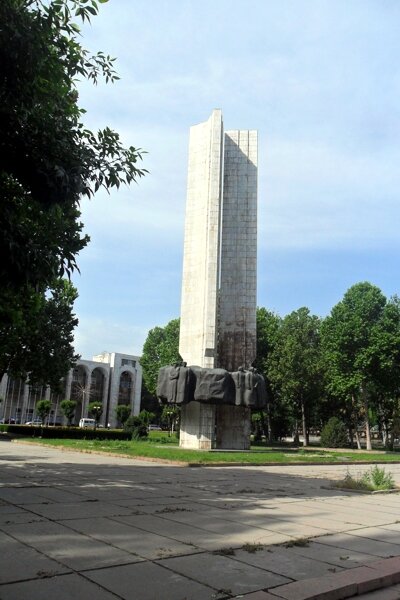


 Bishkek