Questions, questions
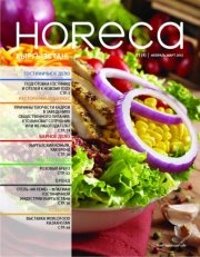
Horeca magazine
It is that time of year again … the tourist season is about to commence and everyone starts to ask what is in store for us? … will it be a good season? … what problems do we face? … and how do we set about trying to solve them …
Being the head of a tourist company and a foreigner to boot, I often get asked to give an interview to the press … and this year, because I am President of the Kyrgyz Association of Tour Operators, there seems to be a number of such requests.
Normally, I don’t enjoy these interviews, but I was asked by some journalists working on a new magazine, HoReCa … (for the record, this is a term which is used to refer to the food service industry and is an abbreviation for Hotels, Restaurants and Cafes).
The latest issue has articles about the School of Tourism and Hotel Business at Manas University; changes in the styling of restaurant business, (the reanimation of restaurants and cafes); the taste of natural foods; the role of the cleaner; wines available here in Kyrgyzstan; different ways to fold serviettes; an interview with an International Class waiter; Fish; a report on a tourism fair; restaurant reviews and advertising features
As such, it is not just a general purpose interview but one specific to the industry … here’s the questions they asked … and my answers.
I am sorry, but I not sure that this is a useful question. The government may well have allocated resources from the budget to be spent on measures for the development of tourism, but we are already over a third of the way through the year and we still do not have any official body to plan and oversee how those resources are spent.
What share of gross national product of our country is made by tourism?
According to official statistics, tourism accounts for about 4 % of the country’s GDP, but to be honest, I am not sure. As you say in your question, there are many different aspects to how tourism contributed to GDP, and it is not just through payments to tour companies. After all, tourists may make their own bookings in hotels, (independent of any tour operator), and if they are not on an inclusive tour then they will chose where to eat. They will also pay for transport around the country; buy souvenirs and other goods from shops and bazaars; visit museums, theatres and other attractions.
What do you think of the Ministry Tourism? Is it necessary to create one again? What work was carried out by the tourism ministry?
Even if tourism does represent an important sector of the economy of the Kyrgyz Republic, I am not sure to what extent it is necessary to have a separate Ministry of Tourism. Although there are many countries where there is a specific Ministry dedicated to the sector, but there are also countries where there is no specific ministry. It seems to me that the most important thing is not the form and structure, (Ministry, Agency, Department … or whatever), of the official body which oversees the affairs of the industry, but what is does and how effectively it is able to work. Its role is mainly one of information and co-ordination because many of the issues which affect tourism involve or are controlled by other bodies – the border services, the police, and so on. Perhaps the one major task which they can perform is the promotion of Kyrgyzstan as a destination: marketing the country and attracting clients to visit us.
Who should be involved in the marketing of the country by abroad, the state or private tour agencies which have an interest in it?
This is an interesting question … but not a simple one. It is not a case of either / or … it is a case of both. Promoting the country is something in which the state must be involved. It has a vested interest. Not just because of the tax revenues which are raised, but also because it involves the image of the country, its name and reputation; it affects not only tourism but also plays a role, for example, in the attraction of investments. If you like, the State promote the country as opposed to other countries whilst the tour companies and providers of individual tour services, (accommodation, restaurants, attractions etc.), within that framework. Compare it to promoting a new Hollywood Blockbuster film … the studio will advertise the film on a global scale to raise awareness and interest in the film and then individual cinemas will run specific local advertisements when they show the film.
Why, until now is there is no logo for our country as, for example, as at Turkey, Egypt, etc.?
For this we need a brand, slogan and logo which would help to identify and project an image of the country. In the past there have been such symbols: Oasis on the Silk Road, a special rendition of the Tunduk, the Aigul flower and even the slogan “The land of Santa Clause”. Although a brand may be designed to last for several years, it is necessary to develop new logos and slogans from time to time and Kyrgyzstan is in the process of trying to do so now – with a recent announcement of a competition for this purpose. It it is not a simple task to devise and agree on a brand, logo and slogan; it takes time and many people will have different opinions which will have to be taken into consideration and not everyone will agree on the final version.
How do you think, the political events which occurred in 2010 will affect the tourist season of 2012 if at all?
The events in 2010 obviously had an effect on the tourist industry in the country, discouraging tourists from visiting Kyrgyzstan. As time passes, however, the effect will diminish, and the events of 2010 will no longer be an important factor. I think it is too early, however, to say that this is already the case and we will have to see when, for example, the number of tourists visiting the country returns to the level of 2009.
What can the capital’s hotels hope for from this season?
Although the number of tourists visiting the country may be growing, we also have to recognise that few tourists spend more than one or two nights in the capital – preferring to get out and about. I think and hope, however, that hotels will see a better season this year.
What is the situation concerning the How affairs with a visa-free regime between our country and other countries? And what countries are included under this mode?
The bill, (draught law), about extending a visa-free regime to forty four countries has passed its first reading in the Jogorku Kenesh, but it is not clear if and when it will pass the further stages and be enacted into law. It is unlikely that even if the measure were to be adopted today that it would have any real effect on the season this year.
Whether to attraction western and tourists absence of an individual approach influences tourism development?
Many, if not most, people in the West know anything about Kyrgyzstan and the potential of the country. So, yes, of course it makes a difference. If we want to attract Western tourists to visit Kyrgyzstan, then we have to address them, to prepare special materials to market the country to them ….
At the Ak-Zhol customs post, on border of Kazakhstan and Kyrgyzstan, in summertime there is a huge congestion of cars, which can result in tourists from Russia and Kazakhstan spend on border from 3 till 6 o’clock. Whether this is still a question or is resolved?
Arrangements were made last year so that groups of tourists could be met and pass through the border formalities and we have been promised that they will apply again this year. The arrangements are not ideal and only apply for organised groups, but they are a sign that the authorities recognise the problem and want to address it. We are also expecting other border posts to be available for tourists to cross the border as well this year, which should help to alleviate the problem.
Why not raise the question of the absence of direct flights with a number of the European countries? How can we involve international airlines?
This is a very acute problem, but it is an example of what we in the West call a “Chicken and Egg” question – which comes first?, passengers or flights? If the airlines thought that there were sufficient travellers wanting to fly to Bishkek, then they would be only too happy to arrange flights and if there were flights then that would help to attract passengers.
How does the restaurant and hotel business, and tourism as a whole, develop in other regions of our country?
I am afraid that this is another “Chicken and Egg” question … restaurants and hotels will develop when there is demand and demand should stimulated by the existence of new facilities. I can say, however, that in the time I have been here in Kyrgyzstan, (already seventeen years), I have seen considerable development in terms of the restaurant and hotel business throughout the country. However, this not uniform across the country – in some areas it is much more pronounced than in others.
Many assert, what the price and quality of given services in boarding houses of Issyk Kul do not correspond to each other. Can you can comment on this situation? How it is possible to discipline the market?
There are three factors involved in this question: Price, level of service and a value judgment about whether they are equivalent, (if the price and quality of given services correspond).
In fact, the issue of whether something is “value for money” is a difficult one. I am not sure if the comments you refer to are complaints about the price (which is considered to be too high), or about the level of service, (which is considered as being “poor”), or both.
Tourism is a service industry and it is not always easy to assign a value to service. It is, however, relatively easy to be critical and say that things could be better, which is a “truism” in that it is nearly always true … it is very rare when something is perfect and cannot be improved upon. We should always try and improve on levels of service and train our staff accordingly.
Statements about whether something offers “value for money” often involve a comparison with what is charged elsewhere in the world, in which case we should be careful to compare “like with like”. (As a foreigner, I get upset when someone asks me what I would pay for the same goods and services back in Britain. We are in Kyrgyzstan and price levels in Britain are not relevant.) Whereas a price must be fair and realistic, it has to cover the costs incurred in providing the goods and services, (and providing sufficient income to allow for development and future growth), and not simply what we feel we can “get away with” or based on what is charged elsewhere in the world.
How can these questions be resolved in the opinion of the association of tour operators in Kyrgyzstan?
No two issues are identical and each “problem” has its own solution, and often there is a choice to be made between two or more different possible “solutions” which are implemented by different people or bodies in accordance with their own powers, responsibilities and spheres of influence. KATO works together with its members and partners, (whether that is in government service or the private sector), to raise issues and explore those different solutions representing the views of members. One of the most effective things that can be done is to establish a forum where the different interested parties can meet, raise and discuss proposals and issues before they actually become problems.
In the country there are a lot of associations, (for example, yours, hotel and restaurant business). Do you cooperate and conduct work in common?
It is true that there are many different associations in Kyrgyzstan – but each one represents a different aspect of business. KATO, for example, unites Tour Operators whilst the Hotels and Restaurants brings together and represents the interests of those businesses, individual service providers (providing accommodation in homestays and yurts in rural districts) join together in KATOC, and there are associations in the regions, such as in Naryn and Issyk Kul. Of course we co-operate and work together when there are issues of common interest that affect tourism just as we liaise and work with other bodies, (such as the International Business Council) on more general issues affecting business in general.
Your wishes to your colleagues.
Basically, of course, I wish my colleagues a successful season and the opportunity to plan for the next season.




 Bishkek