BLT … and all that
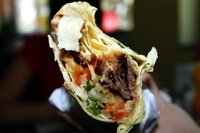
Shaurma
Some stories are just “too good to be true” … and the story and, (or at least so it seems to me), the story of John Montagu, the 4th Earl of Sandwich (who died 220 years ago today), is one of those.
Supposedly, he is said to have ordered his valet, (butler, servant), to bring him meat tucked between two pieces of bread, so that he could eat at the table and continue to play his game of cards uninterrupted. Apparently, others followed his example and began to order “The same as Sandwich!”.
And thus, a legend was born.
It appears, however, that Montagu did not invent the sandwich, and if he did indeed have a propensity or particular fondness for it, then at least one commentator says that he was more likely to have consumed it at his desk in the Admiralty than at the card table in his club. Still, I suppose that it makes for a good story.
In fact, the combination of putting meat or some other filling between pieces of bread goes back a long way in history … much further than the eighteenth century when when Montagu was looking for a bite to eat between hands of cards.
The practice can be traced back to, (at least), the first century BC, when the Jewish scholar Hillel is said to have wrapped pieces of the Passover lamb and “bitter herbs” in a Matzah – a piece of unleavened bread. It turns up in a number of different cultures as well albeit in a variety of different guises … even here in Bishkek:
- Often, sandwiches go under the common name of Buttabrod - although like its German namesake, this term is often used to refer to a single, open-faced, piece of bread, buttered and topped with something like meat, cheese, or (maybe) caviar.
- Many of the cafes that cater for ex-pats offer Club Sandwiches … a “triple-decker” sandwich, (i.e. using three pieces of bread), with fillings of meat, tomato and lettuce with mayonnaise – although the traditional BLT (Bacon, Lettuce and Tomato), is still fairly rare – bacon not being very common in Kyrgyzstan.
- Fast good joints such as Begemot, (which means Hippopotamus), serve Hamburgers, Cheeseburgers and the like.
- Turkish restaurants and cafe’s offer a variety of kebabs including the Donner with thinly sliced meat and garnish enclosed in bread, and the Turkish staple, Shaurma.
- The Mexican Cantina, of course, offers dishes with Tortiallas, Fajitas and Tacos.
- There are a couple of places in town where toasted sandwiches were on the menu.
- It is possible to pop down to the supermarket, (such as those in the Narodniy chain), and pick up prepacked filled rolls – some with halal fillings but others with vechina, (that is, ham).
The appearance of sliced bread – loaves cut into convenient and consistently uniform slices – meant that sandwiches and toast were much easier to make. In Bishkek’s supermarkets, however, it is still a fairly recent phenomenon, especially when you consider that sliced bread made its first appearance back in the United States as long ago as in 1928.
For the record: the first prototype “bread slicer” was made in 1912 but was destroyed in a fire and it was only some 16 years later with the appearance of new types of loaves bread which proved difficult to cut at home, that the idea was resurrected. It was marketed under the slogan: “the greatest forward step in the baking industry since bread was wrapped”. This soon led to the popular phrase, “the greatest thing since sliced bread”, entering common parlance.
Electric toasters have also made a recent appearance as a luxury item, including “sandwich toasters” – consisting of hot plates which clamp together around the sandwich, (similar in design to a waffle iron), sealing the outside edges of the bread together, completely enclosing the filling.
Sandwiches offer a quick and convenient form of food that is easy to prepare and transport – ideal for “packed lunches” to take to work, school or on a journey.
One of the things I have always enjoyed about making sandwiches is the opportunity it provides to experiment with fillings and flavours, from the days when my brother and I tried “sugar sandwiches”, (not something I would recommend … ).
Those symbols of a staid English “afternoon tea”, cucumber sandwiches, don’t seem to have caught on here although cucumbers, (ogurtsi), are a fairly staple item commonly found in salads, pickles and the like. On the other hand, another standard, ”paste” (or pashtet, as it is known here), is readily available.
I was particularly surprised a few years ago at the effect created by one of the fillings that I prepared: Cheese and Onion. This was a standard filling that I would often prepare back in the UK, but one that no-one seemed to have tried here. There was no particular interest when I started slicing the cheese and it was only when I took the onion and started to slice it that people started to take an interest. It proved to be a popular combination although the onions here tend to sweeter than those back home.





 Bishkek