Zhiguli
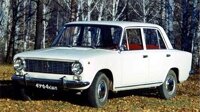
The classic Zhiguli
Quite how an American, living here in Bishkek, ends up writing tweets about a story in a tabloid British newspaper is beyond me, although the article was about one of those enduring symbols of the former Soviet Union – the Zhiguli.
At least, it was an enduring symbol of the former Soviet Union, until earlier this month Britain’s Daily Mail newspaper ran a story about how the manufacturers, (AvtoVAZ – the Volga Automobile Factory), had announced that they were going to discontinue the line, (although I couldn’t find anything about it on the AvtoVAZ website).
I must confess to often confusing a Zhiguli with a Mosckvitch. They both date from the late 1960′s and were box sedans. Whereas the Zhiguli was made by AvtoVAZ, the Moskvitch came from Lenin Komsomol Car Factory just outside Moscow. AvtoVAZ had been set up in the 1960′s as part of a joint venture with the Italian car manufacturer, Fiat and is one of the largest car factories in the world with 90 miles of production lines.
The classic Zhiguli, a box shaped sedan car, was based on the design of the Fiat 124, and was produced under license, adapted for the Soviet and Eastern European markets. It was basically a “no-frills” vehicle, marketed under the brand name Lada. (The word Lada is an old Russian word for boat and the choice of a viking longship as a logo reflects this.) The original Zhiguli was based on the Italian design for the FIAT 124, although there were some notable adaptions to help it cope, for example, with the extreme Siberian winters.
Although it was renowned for breaking down, it was just as well known for being easy to maintain and repair and for being a “reliable” work horse … often being employed to carry strange cargoes such as bales of hay, or with all the seats piled with apples or potatoes or even live sheep.
Although they are not as common a sight when I first arrived here seventeen years ago, there are still a lot of them around – especially once you get away from the cities. The old work horse is still to be seen, especially sporting it’s strange colours: lime green, sandy yellow or rusty red … where, of course, the bodywork hasn’t been touched up and left an off white where the fibre class filler has been left exposed.
I used to take a certain amount of ribbing because I tended to turn up to meetings in a lime green zhiguli … although we had much more prestigious vehicles for the hotel, and especially for use with clients, my driver would often drive me around town in his own car – which happened to be a zhiguli. When people made jokes about it I just replied: “It’s a car … I don’t need luxury but what I do need is for it to get me from A to B … and a zhiguli goes almost everywhere, is fuel efficient and easy to repair … much better than many foreign models.”
To be fair, AvtoVAZ also made other models which were (are) more up market including the 4-wheel-drive, off road, Niva. The old style “box” shape has given way to more modern curves with more customer features to help it compete in a modern ‘buyers’ market”. It is also worth noting that the Lada also sold well in the export market, (even being sold for a time in the UK), where it enjoyed a cost advantage even if it suffered from an image problem and ruthless jokes at it’s expense.
Nowadays, something like a quarter of the shares are owned by the French manufacturer, Renault, who apparently paid USD1 billion for them back in 2008. It seems that the Russians hoped that this would bring an influx of new ideas and a revival of the line, but it seems that demand for the “old faithful” standby has slumped and so the decision was taken to discontinue production. Other models will continue to be made and many of the twenty million odd vehicles that have rolled off the production line will continue to serve their long suffering, patient owners, but, all the same, it’s like the passing of an era … akin to the end of the Volkeswagon Beetle, the East German Trabant, the British Mini, (the Mini Cooper, Morris Mini Minor, … the star of the film the Italian Job).



 Bishkek