Gorky Park

Maxim Gorky
When people arrange to meet me, they often suggest meeting at the Silk Road Lodge, assuming that I am based there. In fact my office is in a different building in the city center, about ten minutes walk from the hotel.
Whenever I go down there I tend to walk. I enjoy the walk as it gives me a chance to get a breath of fresh air and to gather my thoughts. The most direct route takes me through a small square of open land known as Gorky Park. It’s nothing like its famous namesake in Moscow, which is huge – some 300 acres or 120 hectares – alongside the River Moskva and home to an extensive amusement park.
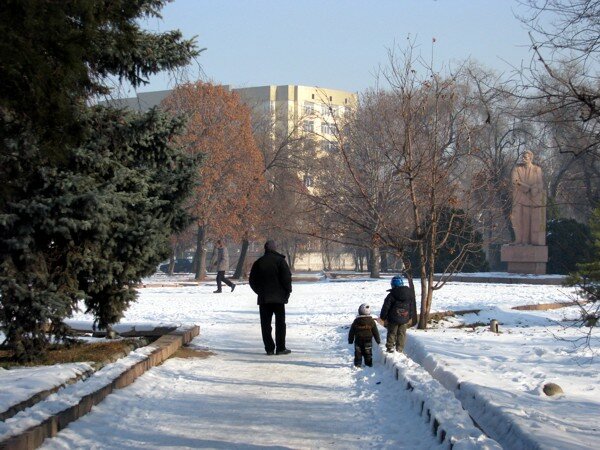
On the corner of Isanovna and Ryskulova, behind the Palace of Sports, Gorky Park is an small open area with a statue in red granite erected in 1981of the Russian writer, Alexei Maximovich Peshkov – who was better known under his pen name of Maxim Gorky.
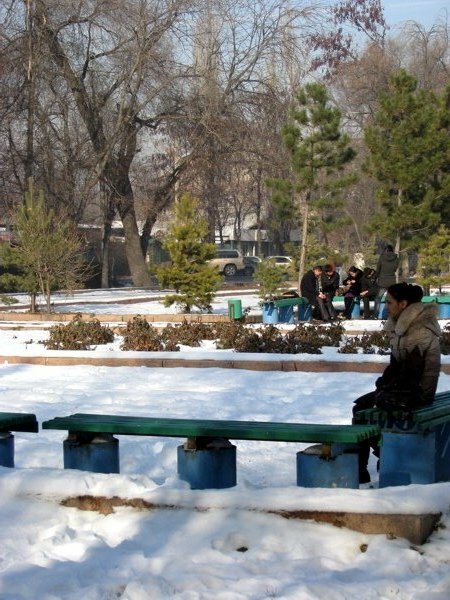
Gorky Park can be a pleasant place to sit on one of the many benches in the cool of the evening. Although it has a number of Horse Chestnut trees and Blue Firs, the lack of shade in the central space may make it too hot for the full glare of the summer sun during the day.
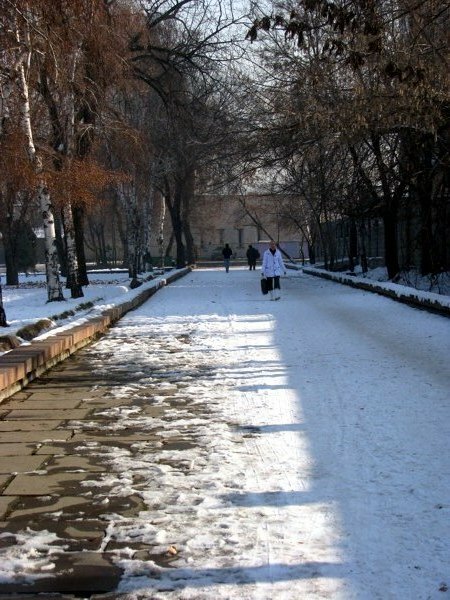
The pathways sometimes serve as an impromptu running track for sportsmen in training or PE classes from one of the local schools.
During the Bakiev regime, it was the designated area for holding protest meetings, in attempt to move them away from the Central Ala Too Square and the White House.
The name Gorky means “bitter”, and some people tell me that he adopted it as sign of his predilection for Vodka, but the general theory seems to favour the fact that it reflected his simmering anger about life in Russia and his determination to speak the “bitter truth”.
Gorky was born on March 28th, 1868 and is famous as the founder of the Socialist Realism literary method which predominated literature in the Soviet Union. For him literature was an important political tool that could help to change the world. He wrote incessantly describing the lives of the ordinary people, those on the lowest social strata, the poor and the outcasts, depicting their hardships and depravations but also their inward dignity and humanity.
Towards the turn of the century he was gravitating towards the emerging socialist movements and in 1902 he met Lenin and they became close friends. This approach would often put him at odds with the Tsarist authorities and he was arrested on several occasions and even imprisoned. He even spent seven years in exile on the island of Capri, albeit ostensibly for health reasons.
Although a close friend of Lenin’s and his close relationships with the Bolsheviks, (it’s not clear if he was ever actually a member of the party), he ran into trouble with the Soviet censors after the revolution and there was another period of self imposed exile in Italy on health grounds, althoughgh he was return and was to eventually die in Russia and at his funeral his coffin was carried by Stalin and Molotov amongst others.
Gorky never actually made it to Kyrgyzstan as far as I am aware, but he was portrayed as a major character: a great Soviet writer who emerged from the common people, a loyal friend of the Bolsheviks, and the founder of the canonical “socialist realism” form of literature.
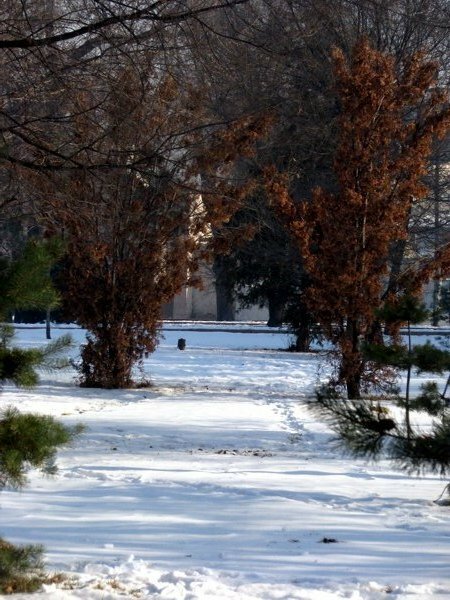
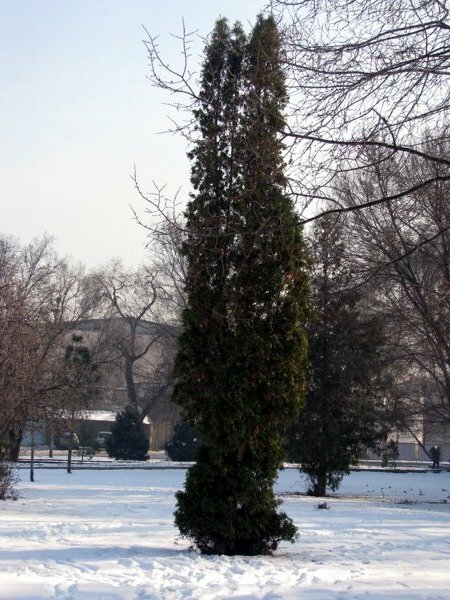
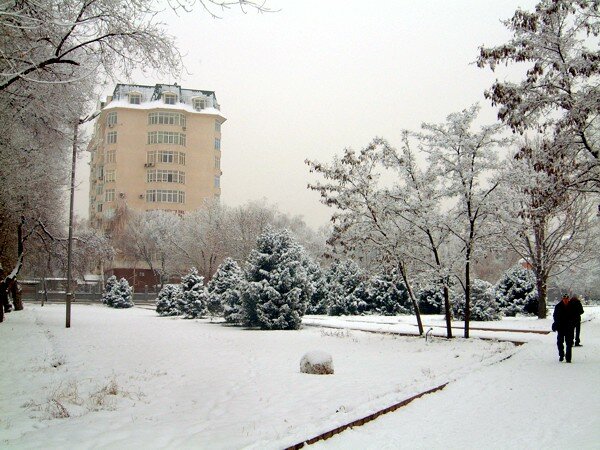
Here is a gallery of photos of the park to give you an idea:









 Bishkek