Almaz – a documentary film
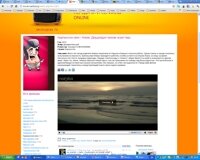
Almaz on namba.kg
The other day I came across a link to a film on one of the local video sharing sites, Namba.
The film was called Almaz, which is Kyrgyz for “Diamond” and is a common boys name.
The film caught my attention because it was in the Kyrgyz Cinema section, and although Kyrgyz Cinema has a long and fascinating history, it can be difficult to find them or watch them. The reason for the latter is that they are usually in Kyrgyz and I regret to have to admit that, after sixteen years here, I still haven’t managed to learn the language. Fortunately, this one has subtitles as it was obviously made for a foreign audience.
This probably wasn’t the sort of film you would want to go to an see in a cinema, as it’s a documentary rather than what is called here an hudoishnikoye kino, (an “art film” or feature film,) nor a boiyevnik , (a block buster).
It tells the story of a remarkable young man his triumph over adversity and determination to improve his situation.
His family moved from the Naryn region to Bishkek in search of work. Life in the city, however, was not easy. They eventually get a small plot of land and build themselves a house. Almaz stays in the background and has to work in order to pay for his schooling becoming one of the boys selling lemonade at one of the local bus stations and later graduating to be a tachist, (collecting bottles) in Bordoi, Central Asia’s largest bazaar. Overcoming a serious illness, he starts to study and finds himself in another world as one of ten Kyrgyz students transported to Holland as part of an aid programme, which gives his life a new meaning. He is now preparing to enter the American University of Central Asia – which is quite impressive in itself as this is one of the, (if not the), best universities in the country … with fees to match.

Almaz in Holland
It’s a touching and inspiring story, which is told slowly, in snippets, with voice to camera interview style and scenes from daily life recorded in a “fly on the wall” style, (feeding the cows, studying, preparing himself a meal, teaching his younger brother to dance), mixed with long silent shots setting the scene, (at home, collecting bottles in the Dordoi market, in the village, the road to Naryn and so on).
To be honest, however, my initial reactions as I began watching were quite different. I found myself thinking, “I can see what you are doing, Mr. Director … and I don’t like being manipulated like this”.
In particular, I found the contrast between Kyrgyzstan, (poor and bleak), with Europe, (rich and bright), quite depressing and worried about the image it conveyed, but that was probably the tour operator in me coming out. I also worried that it would make the locals who saw it think that everything was “hunky dory” and ignore the fact that we have problems, poverty and harsh conditions, as well.
I had to admit to myself, however, that it was a fair description of life for many people here in Kyrgyzstan and I thought that most people who saw the film would realize that it was a documentary, meant to be thought provoking and challenging, and not an “entertainment” which could be taken at face value and then forgotten.
The film tells a story of one boy and some important moments in his life. In my opinion, it actually tells the story quite well and, we are told, without embellishment. It is also without sensationalism or judgment.
Despite the predictable stereotypes, I felt that it was well worth watching. The scenery, the snapshots of daily life and the harsh living conditions endured by so many were well shot and I didn’t find myself begrudging the short time it took out of my life, (53 minutes), as I often do after watching a boiyevnik.
Elnura Osmonalieva, (Ms. Director, not Mr. Director!), I take back my words. Molodetz! Well done!
Oh, … and Almaz Suiunbekov, molodetz to you too!
If you are interested, (and I hope you are), you can catch the film here:
http://movie.namba.kg/watch.php?id=2261
It was directed by Elnura Osmonalieva in 1990, as part of the “Master Class” Project by the Cinema Development Fund, and produced by KEREMET FILM and Maximum Exposure Productions, (UK) with the support of Hivos, the Gothenburg International Film Festival and the Swiss Agency for Cooperation in the Kyrgyz Republic.
It has been featured at the Almaty International Film Festival “Shaken Zhyldyzdary”, (“Stars of Shaken” – Shaken is a person, it’s the name of a famous Kazakh actor – where it won the prize for “The Best Non-fiction Full-Length Film”); “Kinoshock” Outdoor CIS and Baltic States Festival; the “Salt of the Earth” 3rd All-Russian Open Documentary Film Festival; the Fourth International Film Festival “Bir duino”, (an international festival for documentary films about human rights based here in Kyrgyzstan) and the 3rd Film Festival of Ernest Abdyjaparov’s Master-Class Graduates, (where it took the Grand Prix).





 Bishkek