One Thing After Another
“Will the tourism industry in the Kyrgyz Republic succeed like the legendary phoenix in rising from the ashes?“
Part of my job is to anticipate problems … and then find solutions to them. Sometimes those problems never actually materialize and it seems as if I have wasted so much nervous energy worrying about nothing. But sometimes …
I seem to spend so much of my time worrying about things that could go wrong, that many of my friends and colleagues think I am a pessimist. This is, as far as I am concerned, very far from the truth. I don’t necessarily consider myself to be an optimist — I prefer to think that I am a «realist».
The Kyrgyz, on the other hand, are definitely a very optimistic people — they are always «looking on the bright side». They have a great faith in the future. This is one of their great attractions as a people. Nothing seems to demoralize them.
I am not sure if being an Englishman running a tour company and two hotels in the Kyrgyz Republic qualifies me as a optimist. It is true that I and my fellow investors thought that there was a great untapped potential for the development of tourism in this region.
We took our own money and decided to «risk» it in this venture because we had the optimistic opinion that the Kyrgyz Republic would develop into a tourist destination that would be increasingly attractive to an ever growing group of travelers who wanted to visit beautiful, remote, unspoiled and relatively unknown places with an interesting people, history and culture.
Many of these potential clients may have earlier been happy to «rough it» as back packers trekking through their long summer holidays from university — especially because, as students, they had limited financial resources. Having left university, and entered employment, they now had money to spend on traveling — but little time — they had responsibilities and had to get «back behind their desk» on a specific day. They were a little older, more used to «home comforts» and were ready to pay for little luxuries like hot water.
We made our plans — and committed ourselves It was a good idea. It still is. But what happened … ?
Tourism in the Kyrgyz Republic has suffered so many setbacks, that it is hard to know where to start listing them.
We could start with the fact that it is remote (about as far from the ocean as it is possible to get), very little known in the West (sometimes it doesn’t even appear on maps which are used on internet websites — For some time, the BBC didn’t include it in the list of countries in the world if you want to subscribe to their newsletters), On the one hand this helps to make the country more «exotic», more attractive, but on the other hand it is a huge hurdle which has to be overcome in the competition with other destinations which have more familiar, «magical», names.
The fact that the country keeps changing it`s name is a problem. It is understandable that there may have been a desire to change the former soviet name of Khirgizia — but the choice of Kyrgyzstan has proved to be problematical as other countries in the region with names ending in «stan» have meant that Kyrgyzstan is identified as one of the world’s problem areas … which is largely unfair. (Well, I suppose, I would say that, wouldn’t I? — after all, I have chosen to live and work here.) Officially the name of the country is the Kyrgyz Republic — but that doesn’t exactly «trip of the tongue».
The change in the visa regulations of many of our neighbouring countries ending the «72-hour rule» which allowed transit through one country on the basis of a valid visa for another didn`t help. Tourists wanting to travel the Silk Road, or visit «the stans» now have to queue up in a number of embassies to obtain the stamps that allow them access to this cradle of history and mountain paradise.
Other bureaucratic obstacles exist — such as the requirement for foreigners to register with the authorities (OVIR) after their arrival. To be fair the government and administration seem to understand this one moment and put improvements in place — only for them to removed later on. The uncertainty generated is far from helpful.
Another form of uncertainty has been the changes in the timetable for flights in and out of Manas, and the way that prices changed in mid-season. Fortunately that tendency seems to be resolved.
The trials and tribulations (and cost) involved in trying to organize crossing the Torugart Pass may add a sense of excitement for some tourists — but prove to be too daunting a challenge for many a potential Silk Road traveller.
The change of the basis of the hotel tax led to an increase in costs — from 3 soms per guest to 2% of the cost of the accommodation, (3% in Issyk Kul), has added to costs. We effectively faced something like a fifty-fold increase in the tax burden.
The Chinese testing of atomic weapons in the deserts of Lop Nor, wasn’t as great a handicap as might have been supposed — but it was just another example of the region getting into the news for all the news for all the wrong reasons. Don’t believe the pundits who say that «there is no such thing as bad publicity»!
One of the most spectacular tourist itineraries that go to make up the network of trade routes that has come to be known as the Silk Road is the along Karakoram Highway between Kashgar and Islamabad. Kyrgyzstan is well placed as a staging post on this route to/from the West and for several years it looked as if there was great potential for developing programmes that covered the ancient cities of Uzbekistan, the mountains and nomadic lifestyle of Kyrgyzstan, the mysteries of Western China and the sites of the «Great Game» played out in the nineteenth century between the great empires of Russia and the United Kingdom in Pakistan. But then came a war in Kashmir and two neighbouring countries developing atomic weapons with the economic sanctions and border closures which followed.
A truck load of poisonous chemicals falling off a bridge into a rushing mountain stream killed a whole tourist season for the resorts on Lake Issyk Kul.
Terrorists from the Islamic Movement for Uzbekistan crossing the border and taking hostages — one year some Japanese geologists and some mountaineers of various nationalities the next.
These events led to a number of «travel warnings» being issued by various governments. A travel warning not only puts off potential travelers — they might also invalidate insurance policies. Some relating to the Kyrgyz Republic are still in force and others are being reinforced — strengthened.
A Chinese businessman being taken hostage, diplomats being killed on the streets of the capital, a bus load of traders being hijacked and murdered.
The events of September 11th had a distinct effect. Ironically, the next day had been chosen for a summit to mark the «year for the Support and Development of Tourism» — and such was the sympathy for the people of New York, Washington and Pennsylvania that the participants stood for a minute’s silence, not once — but twice, in memory of the victims. The tourist season was almost over in Kyrgyzstan — but cancellations followed and enquiries for the subsequent year dropped dramatically as Westerners were reluctant to travel far from home.
A political demonstration ends badly with several protesters being shot by police leads to reports in Russian and the Western press of a «civil war situation» in the republic.
The war in Afghanistan (another «stan») and the threat of war in Iraq helped to depress interest for the subsequent season.
The current strength of the som or is it the weakness of the dollar) has put pressure on the economics of pricing policies.
Terrorist action within the borders of the Kyrgyz Republic … street crime … corruption and poverty all take their toll on the market.
Then came SARS — and the closing of the border with China.
Less enquiries from potential tourists … more cancellations from those who had booked.
To top it all, this is the very moment when the State Committee for Tourism decides to try and reintroduce licensing. At a time of crisis for the industry — what does the government do? … try to introduce yet another hurdle for struggling tour companies to negotiate.
I could go on … but what’s the point? I think you must have got the message.
Having said all of that, you might be forgiven for asking why me I am not packing my bags and catching the next flight back to London.
The answer is simple. I am still here, and have no plans to return to the UK, because I still think that there is a great potential for the development of tourism here in the Kyrgyz Republic.
Most of what has happened has come as surprises. If part of my job is to try and anticipate problems — then I don’t like surprises. It means I haven’t foreseen the problem and am unprepared for it — I haven’t yet thought out a solution. I suppose that some of these events could have been foreseen — but I wonder who could have done so in most of the cases listed above.
Rather than surrender to circumstances and give up, I would rather see if we can succeed in «bouncing back» in the face of adversity, like the legendary phoenix, rising from the ashes as a rejuvenated, stronger entity.
It is a challenge and challenges help to make life interesting and fulfilling.
What is needed is a clear vision of what to do next.
I have already decided that 2003 is a «dead year» and started working on a marketing plan for 2004 … and beyond.
First we have to decide our market(s) and priorities. There are several types of tourism market on which the Kyrgyz Republic could concentrate: Recreation around Lake Issyk Kul, (mainly concerned with the CIS market); mountaineering and adventure tourism — trekking, horse riding etc.; Silk Road travels and other regional itineraries; Cultural tourism based on the nomadic lifestyle and homestays; independent travelers; Hunting and Fishing; Eco-tourism opportunities; Elite tourism; Winter sports; Children’s camps; Conference tourism; ….
Each market has its own advantages and problems. For example: recreation around Lake Issyk Kul may bring in the volume of visitors — but the benefits they bring are restricted to a limited area of the country and a short season. Independent travelers tend to visit other regions. Silk Road tours may only be in the country a few days — but tend to leave more money in the country per person per day. Western tourists also spend more money per person — but they have higher expectations and the facilities aren’t always in place. Silk Road travels are attractive for tourists who may visit this part of the world only once in their lifetime — but they are more likely to suffer problems from factors which are outside our own control and the tourists are in the Kyrgyz Republic for only short amount of time so only get a taste of what the country really has to offer — one thing that is desirable is for more tourists to spend longer here — and that means that they have to be informed of what is available here.
There is too much required for successful marketing for each company to deliver alone. The industry is going to have to come together, to unite and co-operate more than it has in the past to try and build a future for the common good. Each company has its own specialisms and strengths. Each has much to offer — but whilst each company undertakes marketing its own products, there is also a need for some form of co-ordination so that the Kyrgyz Republic as a whole is marketed.
We should not concentrate just on tour companies — tourism brings benefits to many sectors of the economy, and many more people can be involved in developing initiatives.
We need a marketing plan which concentrates on what we can deliver based on our existing resources here in the Kyrgyz Republic — the mountains, nature, the people, their culture. Whereas it could be said that Kyrgyzstan is poor in terms of some natural resources … oil, gas, infrastructure … it is rich in many other respects.
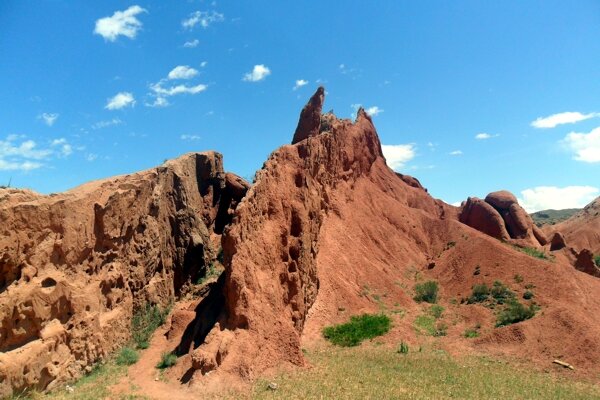
There is still «gold» here in these mountains — and it is not all the yellow precious metal that contributes so much to the local economy.
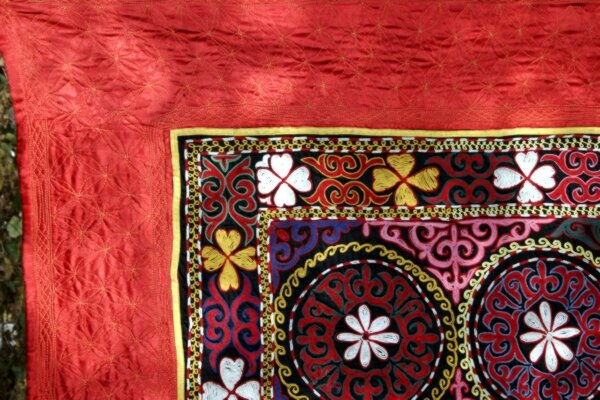
The mountains are still here. The fauna and flora is still an attraction. The sense of history as represented in places like Tash Rabat, or in the petroglyphs of Saimalu Tash and Cholpon Ata are still there. The people are as hospitable as ever. The culture and lifestyle is as interesting as it ever has been.
I am still optimistic — I trust that I am also being realistic.




 Bishkek