Chon Kemin
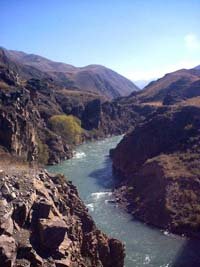
The Chon Kemin River at the entrance to the valley
One hundred and fifty kilometres from Bishkek lies the Chon Kemin valley.
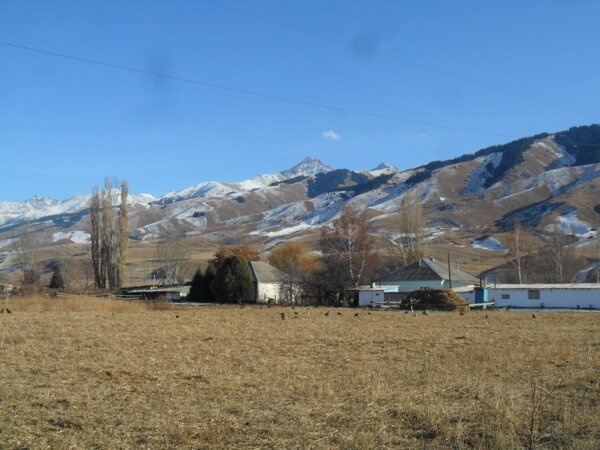
This long valley itself lies at altitudes of between 1400 m and 2800 m above sea level and reaches over 80 km deep into the mountains between the Kingly Ala Too and Zanily ranges, parallel to the Kazakh border. It has verdant pastures, woodland (of Tien Shan firs), mountain lakes (Jamal’s, Kogor, Tor, Almaty and Kichi Kemin amongst them) and spectacular views of the mountains (for example: Kichi Kemin – 4220m; Alisher Novoi – 4170m and Teke Tor – 4190m.
The valley has a rich variety of vegetation, and animal life, and boasts both a Zoological preserve, (with partridges, gold pheasant, hare, wild boar and mountain sheep) and a botanical reserve (Kapchagai – which is home to ephedra – horsetail). The park was founded in 1997 including almost all the forest farms of the Kemin district. The park’s main task is to preserve the unique landscapes with their diversity of fauna and flora. It contains hunting and botanical reserves – and the mausoleum of Shabdan Baatyr. The conifer forests, which line the mountains, which form the sides of the valley are renowned throughout out the country and are home to many varieties of mushrooms, berries and herbs.
There are several ancient barrows (burial mounds) in the valley at Tegirmenchy and Shabdan. Those near the village of Shabdan, date from the 4th and 3rd century BC and archaeologists have discovered the remains of the ancient settlement, dating from between the 6th and 11th centuries AD near the mouth of the valley.
At the eastern part of Chong-Kemin is situated Kok-Oirok jailoo. There are also thermal and mineral springs in the valley.
Driving from Bishkek towards Lake Issyk Kul, you pass through Kemin, the regional administrative centre which used to be called Bestrovka, (and some older locals still call it that).
In 1911 Kemin was the area apparently experienced the strongest earthquake to have occurred in what is now the Kyrgyz Republic, when the strength of the tremors at the epicentre reached a magnitude of 11 on the Richter scale.
There is a statue of Shabdan Baatyr, (a 19th century chieftain of the Sary Bagysh tribe who ruled the region and is highly regarded as a national hero), and a monument to those who died in the Civil War.
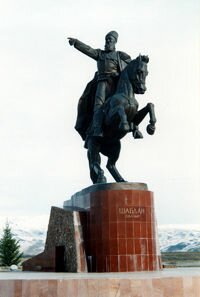
The statue of Shabdan Baatyr in Kemin
For the record: Shabdan Baatyr -born into the “aristocracy of the steppes”. From his childhood he was brought up with the morals inherent to the steppe-nomads of that time: devotion to people; diligence; honour; military courage, and a respect for the natural surroundings in which they lived.
At the age of 11, in 1850, he was held as a hostage by the Khan of Kokand. In his youth he took part in a number of raids on neighbouring tribes. Respected as a soldier he rose in the ranks to the modern equivalent of Lieutenant Colonel, despite the fact that he had no formal education. He was highly decorated.
The Khan of Kokand even appointed him as the “bek” of the city of Azreti-Sultan, but he wasn’t happy with the situation. Having fought against the Kokand Khanate in 1860. he was imprisoned in Pishpek in 1862, but he managed to escape.
He sought to continue the pro Russian policy of his father, Zinantai Karabek uulu, and in 1863 he attended the coronation of Tsar Alexander II in St. Petersburg as a representative of the Kyrgyz people.
Although he is often thought of as a soldier – a strong field commander and a sever governor – he is also held in high regard and respected as a peacemaker, an open hearted, kind, person – sympathetic in the face of human troubles.
Before you reach the entrance to Boom Usheliy, (Shoestring Gorge), you cross the Chui River. Just to the north and West, close to the border with Kazakhstan, is the small hamlet of Kara Bulak which was the birthplace of Abdilas Maldibaev, (whose portrait appeared on the one som banknote), a famous composer and tenor.

Abdilas Moldabaev on the 1 som banknote
For the record: Abdilas Malidibaev – Graduating as a teacher in 1929 he began work in the theatrical school, and combined teaching with appearances on stage as an actor.
He began composing music at the age of 16 and some of his early songs were popular in the Soviet era. He began experimenting with music forms which were not a part of the Kyrgyz traditions, (such as hymns, marches, opera and a symphony). In 1954 he became the director of one of the prestigious musical colleges in Frunze (now Bishkek).
He wrote musical dramas and what was the first Kyrgyz opera – “Aichurek”, which is still occasionally performed in the Bishkek Theatre of Opera and Ballet, which is named in his honour. Other works include “Ajal orduna”, “Altyn-Kyz”, “Toktogul” and “Manas”. In total, he composed some 400 songs and arranged 200 traditional melodies.
A statue of him was erected in the Kemin district in 2004.
The Chon Kemin valley extends into the Kungey Ala Too range, to the North of Issyk Kul, between the lake and the Kazakh border.
The road into the valley passes under a metal archway and through a short narrow gorge cut by the Chon Kemin River. This fast flowing river is a prime spot for fishing and white water rafting, in the appropriate seasons.
This valley is most famous for being the birthplace of Askar Akaev, Kyrgyzstan’s erstwhile “first President”.
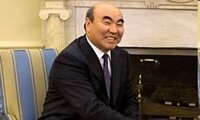
Askar Akaev - Kyrgyzstan's first president
For the record: Askar Akaev was born on November 10, 1944 in the small township of Kyzyl Bairak in the Chon Kemin valley. There were only about 35-40 households in the township at that time.
The Chon Kemin region is famous for its remarkable natural beauty. Many songs and legends have been created about it and the legendary Manas are supposed to have organized horse games in the valley for his followers.
In the 1920’s his father, Akay Tokoev – a descendent of a “wellborn” family, fled to neighbouring Kazakhstan to escape a “war against the bourgeoisie”, where he met Asel, his future wife and the mother of Askar Akaev. The family also suffered later in the period of Stalin’s purges, when Akay was arrested, again because his wellborn ancestry. He spent more than a year in a jail where his health suffered and on returning home, he turned completely blind.
The youngest child in the family, Askar had four brothers. In 1942, Kuchor Akaev, the family’s eldest son, was killed in World War II – The Great Patriotic War – defending Leningrad. The whole burden of raising four sons was mounted on shoulders of the mother – Asel, who worked as a simple collective farm worker and was awarded with government medals and honours, but her children and cares about their education were always the most important thing for her.
Askar Akaev’s father passed away in 1967 and Asel lived for another 30 years and died being just three years short of her hundredth birthday. Her 20 grandchildren and 12 great grand children were her main delight and relief throughout her old age.
According to the family friends, Askar was an intelligent, gentle, and a hardworking boy who never refused to help anyone if asked to do so. Realizing that his father could not see, little Askar guided him to visit with aksakals (old men), who in their leisure time would gather for a cup of tea and a chat. He says that for him those visits with the old men turned out to be a good school. It was from those wise old men that the young Askar says he learned many interesting and useful things.
When a schoolboy he read a lot of books about Alexander the Great, Caesar, Genghis-Khan, Tamerlane, A. Suvorov and Napoleon. Like all his fellow schoolmates he dreamed of becoming a historian. But suddenly everything turned upside-down. He learned about a new subject – physics. Apparently, he became so deeply interested in modeling an amazing toy car and aircraft engines that he decided to become an engineer-designer.
In 1961, Askar Akaev finished his secondary school with a gold medal (distinction). There is a story that at the final examination in chemistry, when Askar demonstrated a lab experiment with acids, one of the board members who was so amazed with the student’s knowledge, said: “Let us give him a gold medal before he blows up the school!”
There used to be a small museum dedicated to him here.
There are several routes, including one up into the valley and over to the Grigorievka valley and another across the Kungey Ala Too to Toru Aigyr and Balykchi at the Western end of Lake Issyk Kul which are suitable for either trekking or horse riding.
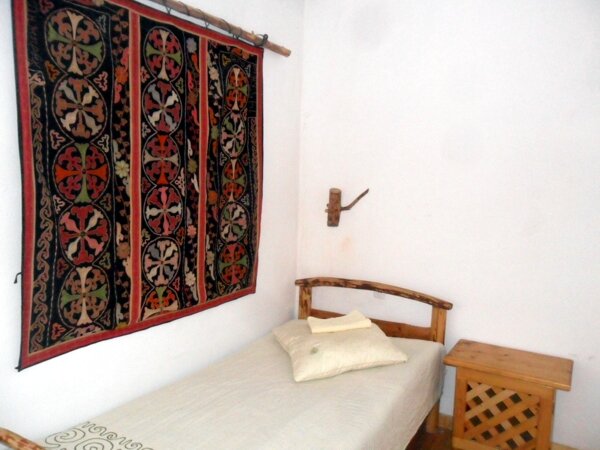
There are several options for accommodation in the valley which makes it ideal for a weekend Break, or for a longer stay:
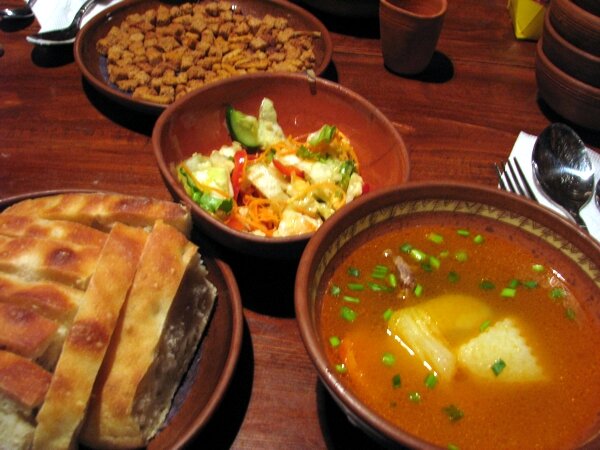
- a CBT group – which not only offers accommodation but can arrange guides and many other services. During the summer they organize a Festival of Kyrgyz Cuisine which features demonstrations of cooking, and tastings of traditional Kyrgyz dishes with explanation of recipes and cooking methods, as well as shows of traditional music and national games.
- The Ashu Guesthouse, a comfortable family run guesthouse in the village of Kalmak Ashuu, which offers a variety of services and has a spacious conference room which is popular with organizations for holding seminars and training courses.
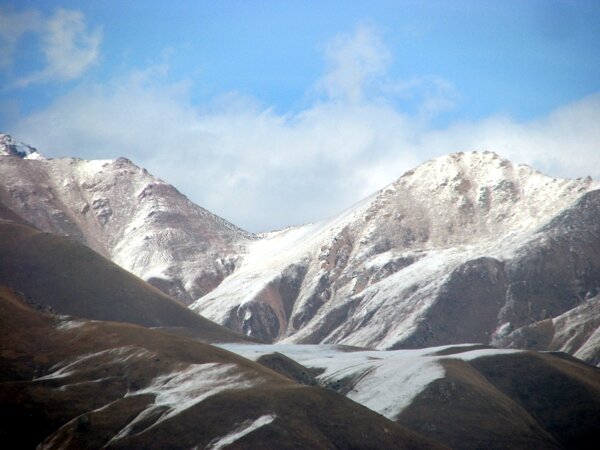
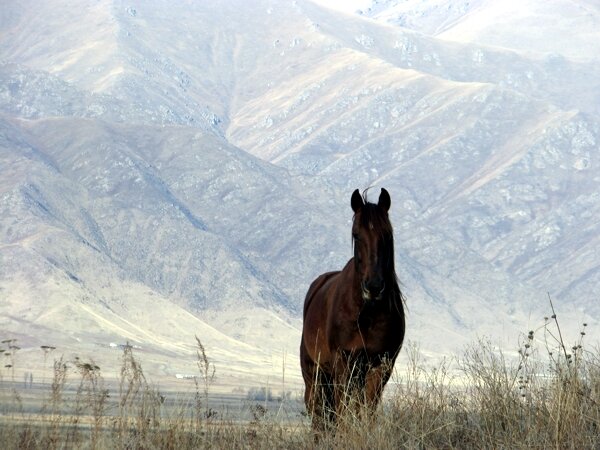
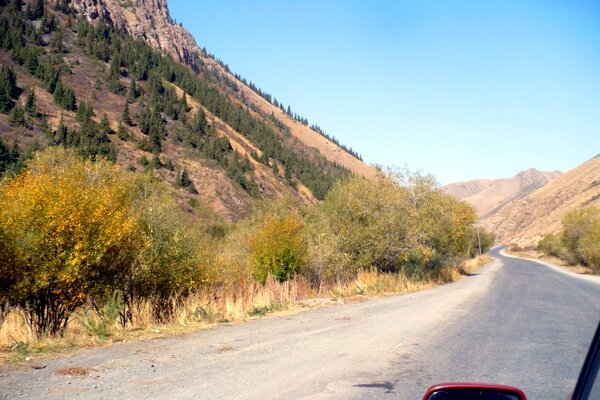
Here are some photographs from a recent Weekend Break we organized in Chon Kemin:










 Bishkek