A milestone for Ma’am
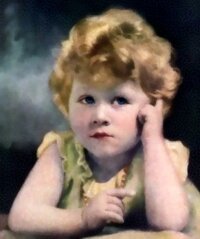
The little three year old girl in the photograph which appeared on the front of Time Magazine in April, 1929, passed a milestone yesterday.
She was Elizabeth Alexandra Mary Windsor, who on 6th February, 1952, succeeded her father, (King George VI), to the throne as Queen Elizabeth the Second of the United Kingdom of Great Britain and Northern Ireland. She was formerly crowned at the coronation service in Westminster Abbey on June 2nd, 1953. As many of the British colonies gained their independence she went on to become their Queen as well, although several have since become Republics. Currently she reigns as the constitutional monarch of sixteen independent sovereign states. That’s just over half of the World’s thirty one constitutional monarchies that currently exist.
That’s not to mention several being the ruler of the Crown Dependencies, (where she is known as the Duke of Normandy and the Lord of Man) and her status as the Head of the Commonwealth.
February 6th, 1952 – that’s a long time ago, 59 years and 96 days, (or 21645 days), to be precise. It was before I was born, indeed it was before most of her subjects were born. We’ve known no other Head of State.
That thought reminded me I had with a young Kyrgyz woman shortly after arriving here. We were talking about the changes that were happening in Kyrgyzstan at that time and she told me a lot about life, growing up in the Soviet Union. Then she brought me up sharp, when she mentioned her reaction to the news that Leonid Brezhnev had died, in 1982. She had cried. “He was the only Head of State I had ever known,” she said, “and it was as if the world as we knew it was coming to an end.”
He had been in office for just 6601 days – less than a third of the time that Elizabeth Alexandra Mary has been our Queen.
I remember that when her younger sister, Princess Margaret, married Anthony Armstrong Jones, my mother made my brother and I sit and watch the ceremony on our recently acquired television, telling us that Royal Weddings “don’t happen very often” and it was “a once in a lifetime experience”. After last month’s grand occasion, not to mention those of Princes Charles, Andrew and Edward (two weddings), and Princess Anne, my mother’s words were correct in that they “don’t happen very often”, but she was a little awry in saying that it was “a once in a lifetime experience”.
It may well be that the coronation might well turn out to be a “once in a lifetime” experience, (at least in my case), however, I was very young at the time, being a babe in arms when it occurred, and obviously have no memory of it.
So, what was the “milestone”?
She is already Britain’s oldest reigning monarch – she passed that particular milestone on 20th December, 2007 … passing Queen Victoria’s 81 years and 243 days. She’s also the world’s oldest reigning monarch, just a year and 228 days older than King Rama IX of Thailand, but he has been on the throne longer than she has, by 5 years and 238 days as he ascended to the throne on June 6th, 1946.
Yesterday, however, she passed King George III as the second longest reigning British monarch. Only her grandmother, Queen Victoria, has reigned longer: some 23226 days or 63 years and 216 days. If the current queen lives until 10th September, 2015, (assuming she doesn’t abdicate), she’ll pass Victoria’s record as well.
For the record, however, she’s got a long way to go, however, to beat King Sobhuza II of Swaziland, who died in 1982, as the world’s longest reigning monarch having ruled for 30204 days, (or 82 years and 254 days). She would have to remain on the throne until 18th October, 2034, to beat his record. (For the record, apparently there are a couple of other monarchs in the ancient world (Egypt and Korea) that could have reigned for over 90 years, but there is uncertainty about these.)
.
Now, you might be excused for surmising from all of this that I am something of a Royalist – but that’s far from the truth. I can see reasons why Monarchy was adopted as system of government in times gone by, but I am not sure that I agree with the idea in principle. I do not see why position and authority should be handed down as a result of genealogy – simply depending on who one’s parents happened to be. I think that leaders need to be respected. Respected in themselves, for the sort of personal that they are and for what they actually do; what they achieve. Although I can see some advantages to a monarchal system, I would probably prefer to see a Republic.
Mind you, Republic’s have their problems too, as seen in the seemingly endless arguments and internecine conflicts about the different forms of government that went on in Ancient Rome:
Republic v Dictatorship v Empire v …
.
Anyway, as I was reflecting on all of these statistics, it occurred to me how Queen Elizabeth has managed to retain her position, the respect and endearment of her subjects, after such a long reign and yet so many rulers “outstay their welcome”. Although there are Republicans in the United Kingdom, there is not much likelihood of any real pressure for change in the foreseeable future.
But that’s not universally true. In many parts of the world throughout history we have seen pressure growing on leaders and governments to quit their offices and make way for new people to take over; for an infusion of “fresh blood”.
President Obama had a campaign slogan that summed this up – No, not the “Yes, we can!” one … the other one: “It’s time for change.”
This year, in particular, we have watched the unfolding of the Arab Spring with protests about leaders who have been in power for 20 or 30 years, many of which are finally forcing the incumbent out of office, although a few are hanging on in the face of opposition.
And it’s not just in the Middle East. We see the same sort of thing happening in present day Uganda where President Musevini is seeking re-election. I heard a very sad comment on a news report when one commentator said that his twenty six years in power had changed Musevini, and that if the man who came to power back in 1985 were to meet the present Musevini, then the two individuals would probably try to kill each other.
Some people say that it all started in Kyrgyzstan last year showing how “people power” could usurp an “unpopular ruler”. That’s a bit strong – there are similarities, but there are also differences between what happened here, and what is still underway in the Middle East … and elsewhere.
Then again, the present trend probably dates back much further than last year’s revolution in Bishkek.
On the eve of the Tulip Revolution, for example, a famous Kyrgyz film director stood up in Bishkek’s Revolution Square, (that’s not the main square – but a pretty big one where a protest meeting was being held), and urged the then President, Askar Akaev, to consider his position … saying that he had been a good president and seen the country through difficult times, but that now … it was time to go … it was time for a change. He had lost the respect of the people.
It is sad that someone who had had the respect of his people and had helped to shape their future should lose it all and, worse, acquire a less than positive legacy in the eyes of history. As Shakespeare puts into the mouth of Marc Anthony, “The good that men do is oft interred with their bones.”
Other leaders may well have rued hanging on the reigns of power … Winston Churchill (his second term as Prime Minister was generally regarded as a disappointment following the glories of his wartime leadership), Margaret Thatcher, and Tony Blair to mention just three. Maybe Harold Wilson got it right when in 1976 when he surprised and astounded all on the British political scene by announcing his resignation.
.
As it happens, I do respect the Queen. Not for her family connections, however, but for her integrity, compassion and hard work. For an eighty-five year old, I think she does do a good job. I was happy to commemorate the occasion and, as tradition has it in the office we enjoyed a cake, (yes, yet another cake!), in honour of the Queen passing this particular milestone.







 Bishkek