Shocking news from Japan
Like, I imagine, most people around the world, I have been watching events in far off Japan and around the coast of the Pacific Rim’s “Ring of Fire” with morbid fascination.
Safely cocooned and beavering away in my office at various mundane tasks, muttering to myself under my breath at each and every one of the interruptions that arose and dragged me away from the task currently at hand, it was only as the afternoon progressed that started to I heard something about a massive earthquake in Japan through tweets on Twitter. To be honest, I didn’t take much notice of the news until later in the evening when I eventually decided that enough was enough, pushed the keyboard back, fed the cats and I climbed the stairs to my flat to make myself a meal and settle down to an evening watching the television.
Unlocking the door, I walked in, removed my shoes (it’s de riggeur here when entering a house or a flat and it’s become a habit), turned on the TV and headed into the kitchen to make a cup of coffee. Whilst the kettle was boiling I returned to the main room intending to go into the bedroom and change into something a little more comfortable. I never made it. The cup of coffee and any thought of a meal were also put on hold as I stood, and eventually collapsed onto the couch, mesmerized by the news coverage. What I saw shocked me. No doubt it shocked many other people around the globe, too.
The shaky images shot inside a supermarket and offices showing people scattering, running for cover; the swaying light fittings and pictures; the rocking furniture and the falling of objects, (books, files and ornaments), to the floor showed power of the quake and I thought of the few small quakes that I have experienced here in Bishkek, instinctively thanking whatever forces govern our destinies that I hadn’t lived through anything like that.
This is an Earthquake zone and the possibility of a serious earthquake is one of my recurring worries. Members of my staff are used to hearing my concerns over fire drills and exits, evacuation routines and emergency procedures, and my repetition of the phrase, “It’s not just fire that worries me, think of a bomb explosion, or an earthquake!”
I subscribe to a news alert from the United States Geological Survey. They send me an email whenever there is an earthquake of magnitude 4 or above anywhere around the world. I originally subscribed in order to get news about earthquakes in this region but there are so many that I have thought about cancelling it. Some weeks I met get 150 such emails. In the last two days I have received over 550!
The video was dramatic, but nothing compared to that which followed of the Tsunami sweeping across farmland, taking all before it that stood in its path: vehicles, boats being washed far inland, even uprooting buildings from their foundations and carrying them like pieces of paper as flotsam and jetsam as it sped inland. It was the sheer speed of the onrush of that tide that shook me first of all.
Much of the commentary seemed mundane, repetitive and shallow but, to be fair, it reflected the thoughts of shock and awe that were running through my brain. It can’t be easy being a newscaster having to respond instantly to events unfolding before you, about which you know little, or nothing, and having to keep talking, to prevent any eerie silence that might heighten and worsen any effect of the scenes unfolding on the screen.
As snippets of information seeped through in the sequence of observations being offered by the various pundits, I was able to suspend my stunned shock and horror and reflect on what I was seeing.
Much of the video should not have been so surprising, I thought to myself, remembering similar clips from the Kobe earthquake and the devastating Indian Ocean Tsunami of 2004. The difference that made it so effective was the immediacy. They had been reports of something that had happened but this was something that was unfolding before our very eyes. True, some of the more dramatic footage was of events that had occurred a short time before, but the constant switching to live coverage from places far afield from each other showing the latest situation brought home the fact that it was not over and a very real human crisis was underway.
This went on to a guilty feeling of vicarious voyeurism. Thanking my lucky stars once more that I wasn’t experiencing the same horror and panic as those I was watching courtesy of CNN and the BBC whose wall to wall coverage of the event had taken over the airways and captured my attention so effectively.
I have known several such incidents in my time where live news coverage has brought my world to a temporary stop whilst I sit enthralled, absorbed in the moment of history through which I am living, such as: The Iranian Embassy siege in London; the sinking of the Herald of Free Enterprise; September 11th 2001, of course; the Tulip Revolution in 2005 and the Easter Revolution of 2011.
They have all been different, of course. The SAS assault which ended the Iranian Embassy siege was dramatic, but short and surrounded by mystery as the existence of this existence and nature of this elite group of Special Forces had to be explained to an incredulous public. The Herald of Free Enterprise happened in the early morning and there was video, but the regular radio programming was suspended as reports came in and were instantly related to an anxious public.
I particularly remember hearing one American commentator saying that this wall to wall coverage with the suspension of normal programming would be almost impossible in the States and had only having ever occurred on a few momentous occasions such as the assignation of JFK. How times have changed.
In the case of 9/11, I didn’t watch most of the coverage. I was working in my office and received a phone call: “Do you remember going to the Twin Towers in New York?”, “Yes.” “A plane has just crashed into the building and it’s on fire. It’s all over the news if you want to watch.” So, I duly went and watched, but just for a few minutes before returning to the office and the reports awaiting completion. Later another call, “A second plane …” led to another few minutes of couch potato behavior. A third phone call led to me seeing the collapse of the towers. I didn’t stay any longer. I found it too upsetting. I have never been fond of either horror, or disaster movies and the scenes unfolding on the small screen before me, although fascinating, brought out this dislike which was intensified by the knowledge that it was “for real”. Those people weren’t actors playing a role and going home when shooting was done. They were real people going through “hell on earth”, panicking, suffering injuries, dying.
It was much closer to home in the case of the two revolutions, of course. Those events were happening on my doorstep – literally – and the news coverage was both welcome and frustrating just as it was fascinating and frightening. Welcome, because I got news of what was happening as events unfolded elsewhere, not just on my doorstep. Frustrating because it was episodic and some of the commentary seemed repetitive and mundane, (and sometimes not exactly fair and accurate, at least as far as I could tell). Fascinating because it was unfolding here and now, playing on that aspect of human nature of curiosity, wanting to know what was going on albeit vicariously, without necessarily being involved. Frightening because of the violence of events and knowing that it was happening not far away, just outside my door in fact.
This was much the same, but more so. Intensified by a factor of … well, many fold.
Eventually, the time came when I realized that I had to eat, I had to sleep, that life goes on. It was nighttime, and the reports were now concentrating on the preparation being made about the Pacific Rim for the expected onslaught of the Tsunami. The drama was over for the turn being. I turned the television off, and did both.
Saturday, a quick review of the latest news and time to reflect further.
Andrei asked what the government was doing. He meant the Japanese government, and I tried to explain that the first thing was to assess the situation, to decide what action was needed … they would be gathering information to know what sort of help was needed, where and on what scale. They would also be trying to “make safe” and rescue people where possible. It would be some time before they begin reconstruction and restoration so that normal life could resume.
As it happens, the Kyrgyz government was considering what they could do as well. An announcement was made by the Ministry of Emergency Situations that they were considering what sort of help they could offer. What can we offer? A good question. The government doesn’t have enough funds in the budget to cover its our expenses and the country has a huge debt to foreign donors. As it happens, ironically, Japan is one of the major supporters of Kyrgyzstan and the country receives considerable aid from Japan.
At the moment it looks like personnel may be sent to help with the rescue and clean up operations, which has raised tentative comments about the cost involved and whether Kyrgyzstan can actually afford this help – especially bearing in mind that we are living on “borrowed money” – not to mention the “ethics” of borrowing from “Peter” in order to repay “Paul”, (or in this case, borrowing, say, USD10000 from Peter in order to send him assistance, spending USD8000 in the process so that he gets help to the value of just USD2000).
I suppose that, for example, if we have any tents or supplies left over following the events in the South last year, and if Japan decides they need them, then maybe these could be redirected there.
In the meantime, some young people have already decided show their sympathy for and empathy with the people of Japan in their time of trouble by organizing a symbolic gathering outside the Japanese embassy here in Bishkek. They laid flowers, signed a letter of condolences and lit candles … the usual sort of activities for such a vigil. It was even the subject of a live broadcast on the internet.
But, what about practical help? Of course, direct help, assistance given to those directly affected, is preferable if at all possible, but if not then support for those who can is the next best option.
If official resources are scant, then it is possible that individuals may be able to do something. In many countries around the world, when there have been catastrophic disasters, special “disaster relief funds” have been set up in order to channel the public’s compassion and concern into raising funds for relief efforts. There is already talk of setting up such a fund here in Kyrgyzstan, but I’m not sure that this is the right approach.
The important thing is for assistance to be given where it is needed, and that it is appropriate to the needs of those who are affected by the events. The people best placed to judge this, to assess the situation and what is needed, are those “on the ground”. The people in Japan, with the training and experience of working in such disaster zones, need to assess the situation and tell the rest of us around the world what is needed. Then, it is necessary to get whatever it is to them. The best way to do this is not to organize small and diverse fund but to use the those with established networks and experience, people like the Red Cross/Red Crescent and the United Nations Disaster Relief agencies.


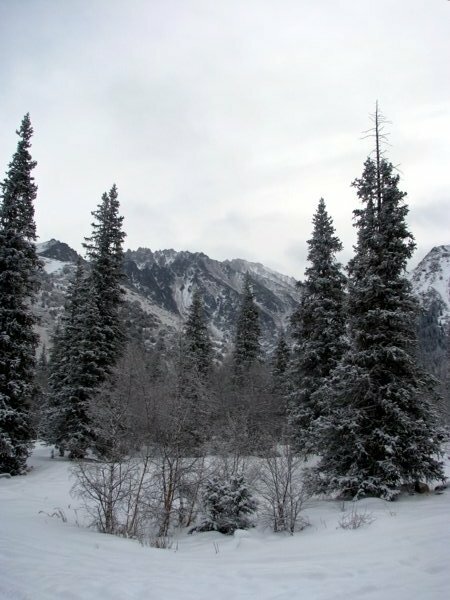



 Bishkek