Blue Monday – the unhappiest day of the year?
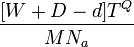
If you a regular visitor to ianbek, then you are probably aware that, as a former Maths teacher, I am fascinated with numbers and that,as a former teacher of statistics, I have a “love-hate” relationship with their “use and abuse”.
As a result you will probably understand my feelings towards “Blue Monday”. Knowing how almost every “special” or “commemorative” day is marked here, I am a bit surprised that no-one has picked on this particular one yet … but maybe they will. I hope not.
“Blue Monday” is the designation given to either the third Monday in January, (or, alternatively, to the Monday of the last full week in the month – that is, today!), as the “unhappiest day of the year”.
Faced with such a descriptor, the pedant in me wants to ask a host of questions, like: What do they mean by the phrase?, how do they define “unhappiness”?, how do they determine that one day is more unhappy than any other day of the year?, Why are there two alternative dates?, Wouldn’t there be cultural differences – or, (as it is claimed that weather was a factor), differences depending on whether you were in the Northern or Southern hemisphere?, … and so on. However, this would all be a waste of time. Despite all the hype and the pseudo mathematical equation used to describe the process of allocating this dubious title to one day or another, it’s all a “scam”, a hoax, a stunt for a PR campaign.
Apparently, someone at a travel firm called Sky Travel, (or their public relations agency, Porter Noevlli – a respectable agency, it seems, with quite an impressive list of clients and campaigns), decided that it would be good whizz in order to encourage sales of holiday packages … what better time to strike a deal for a summer holiday than just as the first pay check of the year arrives and you’ve finally recovered from the excesses of the season of goodwill and well and truly back into your daily routine at the grindstone.
A psychologist who was a part-time lecturer at an institution associated with Cardiff University, (which later distanced themselves from him – and his apparent brainchild), agreed to front the campaign and “devised” an impressive looking formula to back up the claim that this was a particularly unhappy day. The formula united such factors as the weather, debt, the time since Christmas and New Year, (or more specifically, failing to keep our New Year’s Resolutions), low motivational levels, and a feeling of needing to take action. At first glance, it seems reasonable, (almost logical), as these could well be factors affecting one’s feeling of well being, or happiness. However, it doesn’t stand up to closer inspection. One of the terms in the equation, for example, was not defined, nor were the units … and, anyway, what units would you use for some of those variables.
Apparently it is not the only such “formula” that he’s devised. He’s also credited, for example for one to determine the “happiest day of the year” and one for the “perfect long weekend”.
Now, don’t get me wrong … I have no problem with the sales gimmick in itself. Where I do have a problem is with the attempt to sell it off as anymore than a sales gimmick, a joke.
After all, in a way it seems to be tantamount to fraud: passing off a sales gimmick as the result of serious academic research in order to give it a sense of authority and authenticity. There have been many cases where scientists have published work based on phony data, and when they have been found out they have been disgraced and discharged from their posts. In some cases their actions have been guided by the best of motivations and not just commercial gain – I am thinking, for example of Sir Cyril Burt, whose “research” into the heredity nature of intelligence, based on the observations of twins, fed into the tripartite design of the British Educational system following the 1944 Education Act, with its three tiers concentrating on academic, and technical and practical skills. (To be fair, Burt died before his subterfuge was discovered and so escaped the disgrace that others have had to endure, and his reputation in other respects seems to have escaped some of the severity of the devastation that it might have suffered if they had emerged during his lifetime.)
It seems, however, that some people took the idea seriously in that they started looking for ways to investigate whether there are such things as “happy days” or “unhappy days”, “happier” times as opposed to more depressing ones. It seems that there have been something like 30 different studies which have looked at things like suicide rates, or the frequency with which doctors are consulted by patients with depression … and so on. It seems that they haven’t found any conclusive evidence, or even any signs of a particular tendency to support even the idea that there is such a thing, yet alone being able to designate a day as “the unhappiest day of the year.”
Indeed, there may be something serious behind this crazy sales gimmick. After all, it seems that there is research to suggest that light depravation of shorter winter days does have an effect upon our moods.
More prosaically, this episode illustrates something that I have been trying to stress here in Kyrgyzstan for some years. There are specific times of the year when people turn their minds towards thinking about where to take their next holiday. In Europe, the home of Sky Travel, that time is traditionally just after Christmas.
When I was growing up, for example, the advertisements and Travel and Holiday programmes on television traditionally began on Boxing Day. The Sunday papers would publish special supplements full to the brim with adverts and reports about destinations and tour packages. One year, a company which ran “holiday camps” throughout the country broke with tradition and actually ran adverts featuring a children’s party with the Company Chairman in the role of mein host, on Christmas Day itself in order to grab the headlines and beat the rush. I don’t remember if it was successful, but I do remember the heated discussions that it aroused.
Here in Kyrgyzstan, everything is left to the last moment. The meetings about the preparations for the coming tourist season always seem to come in June … just before the high season, (July and August), gets under way. I frequently surprise people by saying that, in terms of marketing, I have already forgotten about this year … I am already thinking about next year … and the year is only three weeks old. The truth of the matter is, however, that Western tourists, (the bulk of our clients), have a lot of choice of potential destinations, a long way to come, a lot of preparations to make, and usually plan well in advance.
Some sections of the market might well have a shorter “lead time” and benefit from “last minute” marketing, special offers and a “bucket shop” approach, but some require much more time to bear fruit.
Now is the time to be concluding the details with clients, not advertising, or thinking of running an advertising campaign, which is something that should have happened some months ago.
.
If this day does turn out to be the “unhappiest day of the year” for someone, then it will be the result of some particular, specific, reason. For example, last year, Blue Monday fell on January 25th, and it was the last time I saw a very good friend of mine. We had been out to a bar for a drink and I left at about ten o’clock to retire for the night. His evening, however, continued with another round of drinks with some friends before going to a birthday party. Later that evening he complained about feeling unwell and went to lie down. He died in his sleep and was discovered the following morning.
Now, that really was an unhappy day – and, yes, it was the unhappiest event in my year, last year.
But I didn’t need a sales gimmick based on phony equations and pseudo mathematics to tell me that.








 Bishkek