Predictions, Prophecies and Forecasts
One morning in October 1987, I woke up at six o'clock as usual, had a bite of breakfast and got into my car to drive to school. As I emerged from the garage, I got a bit of a shock - there was absolute chaos everywhere I looked, high winds, branches of trees all over the place and rubbish blowing everywhere. As I drove to school meandering in and out to avoid the fallen trees lying across the road I wondered what on earth could have led to this mayhem. I turned on the radio in the car and heard for the first time reports about the hurricane force winds that had swept over Southern England and Northern France in what is now referred to as the Great Storm of 1987.
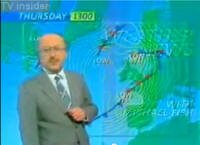
I had slept right through it. Whilst others had apparently been cowering with fright at the howling winds, I had been safely tucked up in bed, sleeping like a baby. I had even missed Michael Fish’s famous unfortunate “blunder”:
Earlier on today, apparently, a woman rang the BBC and said she heard there was a hurricane on the way; well, if you’re watching, don’t worry, there isn’t, but having said that, actually, the weather will become very windy, but most of the strong winds, incidentally, will be down over Spain and across into France.
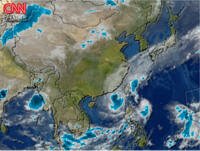
He claims that he was actually referring to the situation in Florida, where a hurricane system had been building up but had yet to make a definitive appearance … which might sound a bit like trying to fudge the issue until you consider his next remarks, which are cut out of the replays and clips on you tube, warning viewers in the UK to “batten down the hatches”, saying it would be “very windy” across the south of England, but predicted that the storm would move further south along the English Channel and the British mainland would escape the worst effects.
This incident came to mind because last weekend the weather forecast for Bishkek had warned that after a few days of fine weather we could expect snow on Thursday. As it turned out, they were correct. Wednesday saw rainstorms and a distinct drop in temperature, and although the day started relatively clear on Thursday, by lunchtime we saw flurries of snow, with large flakes floating to the ground. It didn’t settle, however, although it did turn bitterly cold – so much so, that I even went looking in the chest of drawers for my long johns.
All this made me wonder about how accurate the weather forecasts usually are. Here, in Bishkek, they do seem to be quite accurate most of the time, but I have seen at least two surveys which seem to indicate that weather forecasts are, generally, not as accurate as you might think. Forecasts for the next day turn out to be about be between 50 and 60% accurate – i.e. about half the time they got it wrong. Longer range forecasts are even worse – five day forecasts coming in with an accuracy rate of about 25-35% of the time – i.e. they get it wrong about two days out of three.
Several different forecasting services may vary in their predictions – even thought they are all based on the same basic data. Although there is one Russian service that seems to me to be quite “accurate”, I tend to look at the weather.com site, whilst others at the BBC or CNN forecasts.
In the case of longer range forecasts, the predictions get frequently updated as more information comes to light. A seven day forecast may change some 7 or 8 times in the week, as it becomes a six day forecast, five day forecast, and so on. As one meteorologist has put it: “We have no idea what’s going to happen [in the weather] beyond three days out.”
All this, of course, raises questions about what we mean by “accuracy”, but it helps to create a great admiration for those who managed to predict Thursday’s snow almost a week ahead of time.
Now over the past two weeks we have been facing an ever growing number of predictions, prophecies and forecasts as people watch the unfolding story of the election results. They were supposed to be published by the beginning of the week but, at the time I am writing this, almost two weeks after the election, we still don’t have a set of definitive results – so we don’t know how many seats each party will have in the new parliament and who will occupy them – yet alone which parties will form a coalition to provide the government and who will become Prime Minister. There have been calls for the Election Commission to try and speed things up, but they are taking things very seriously and in the light of the problems and furore, (I am tempted to say debacle), over the definition of the five percent threshold, I can’t say that I blame them.
What’s more, some parties are still campaigning for recounts – mainly by parties who didn’t make the threshold, or for the election results to be declared null and void – mainly by groups opposed to the “nationalistic” Ata Jurt party that managed to garner the largest number of votes and contains many people associated with the former regime of President Bakiev, and even for the election to be re-run – which almost everyone else seems to be agree would be a total disaster.
Some of these calls are accompanied by protest meetings and rallies. Those opposed to Ata Jurt have organized a number of rallies in several places around the country … including here in Bishkek, and supporters of Butun Kyrgyzstan are continuing their protests about the 5% threshold figures being recalculated, including two hunger strikes – although one has been called off. So far, however, everything remains peaceful.
A more mundane rally was held by minibus drivers to complain over the the arbitrariness of Kazakh customs officials at the border – which can lead to several hours delay as inspections are carried out.
Whenever I asked asked for a prognosis about how the tourist season is going – or what will happen next year – I tend to reply: “Ask me at the end of the season and I will tell you how it was … but don’t ask me to predict something that depends on so many variables which are outside my control and that I cannot predict.” That’s how I feel at the moment. I can tell you what has happened – at least as far as I understand the situation, what is happening at the moment – at least as far as I am aware, but I am not going to try and predict what will happen.
After all, many of us were caught unawares by the events in April, May and June; by the successful conduct of a referendum and General election against what seemed to be overwhelming odds for problems disturbing the carefully laid plans; and not to mention by the eventual results of those two plebiscites.
As it happens, as well as trying to prophecy probable, likely, and less likely outcomes about how things will turn out, attention is also turning back to the events of the past. Enquiries and court cases associated in the disturbances have started – although some of the trials have been put off to a later date, including that of Bakiev’s nephew. Unfortunately, these are not without some controversy and recriminations being expressed. Instead of using the retrospection to learn the lessons of history, in order to carve a better future, we we seem to be stuck in the “blame game” and seeking vengeance (in the guise of justice), which tends to lead to vendettas. This has led to attacks on lawyers representing some of the defendants in various cases which has gained widespread attention in the western media covering the region – and hasn’t gone unnoticed here either.
 |
| Bishop: “I’m afraid you’ve got a bad egg, Mr Jones”; Curate: “Oh, no, my Lord, I assure you that parts of it are excellent!” |
| The cartoon, “True Humility“, by George du Maurier, originally published in the magazine Punch in 1895. |
In terms of what is happening now, well … as usual, it’s like the curate’s egg, there are mixed messages – some good some bad.
One of the pieces of “collateral damage” as a result of the events in the South, for example, has been the number of people who have left the region – said to be around 40,000 – and this resulted in a lack of available labour for the gathering of the harvest – especially of cotton.
Then there have a number of announcements made during the week, however, that are not so impressive, not so positive – and indicate that there is still a long way to go – lot of work to be done – before we can say that the situation in the country is really improving.
The Global Competitive Report has identified “corruption” as being the greatest impediment to doing business in Kyrgyzstan, which helped to give the country it’s low ranking – 121st out of 139 countries. I’m not sure when the survey was carried out, but it would be interesting to know if there has been any change since the introduction of a new government which has tried to implement a more open and transparent regime – or if the issue is still endemic.
(Oddly enough – this week also saw the conclusion of a Bribery case heard in the US – when an executive of what claims to be “the world’s second-largest independent leaf tobacco merchant” was given three years probation and a $5,000 fine for payments he made to officials during years he spent as a manager in Kyrgyzstan. It turns out that this was less than he might have expected, because he gave the authorities a lot of assistance in the case and had basically faced a choice of “either you do this or lose your job”. I wonder how many people can use that as a defence?)
Kyrgyzstan was ranked 159th amongst the 178 countries included in the “Press Freedom Index 2010″ compiled by Reporters Sans Frontieres – and it is included in the top three “most dangerous places” in the world to earn your living as a journalist.
Another announcement, this time by the UN, has declared that about a third of the population is still below the “poverty line” in Kyrgyzstan. I am not sure how they defined “poverty line”, (after all “poor” is a relative term and as Jesus remarks – the poor will always be with us), but it seems to me that the local definition of the “living wage” is extremely low – I am not sure how any family can be sustained on it.
Kyrgyzstan joins Cambodia in the bottom place in the rating of transparency in the national budget which has been published by the International Budget Partnership – whoever they are – in the third of its biennial surveys. Having said that, there are signs of improvement! In the last survey, back in 2008, Kyrgyzstan also occupied last place, but have almost doubled their score from 8% to 15% – whatever that means!
Life carries on, however. Roads are still being repaired. Schools and universities are working and receiving equipment and furniture. Special events were held to commemorate Breast Cancer Week. A major art exhibition featuring work by a number of young artists from throughout Central Asia has opened in the Historical Museum. Planes are still operating and flying missions out of Manas Airport – when the airmen aren’t being entertained by visiting performers or participating in local community projects. The Kyrgyz film “Light Thief” is up for awards in international film festivals. Doctors are learning new skills to tackle diseases like raging diarrhea. Renovation and reconstruction of properties in the south is continuing – indeed one report refers to Djalal Abad undergoing a “construction boom”. The water level in the Toktogul reservoir is still rising. A woman saves her daughter from an attack by a wolf. Bishkek sees Kyrgyzstan’s first sex change operation – apparently a case of genuine hermaphroditism, where the patient had genital organs of both sexes rather than a case of “I was born into a body of the wrong sex” … and that is just a selection of news featured in the press during the week.
During the week I have been involved in a number of meetings to consider the likely prognosis for tourism next year, and what we can do to try and make sure that the industry recovers from the numerous setbacks it has suffered this year.
As I said, I try to avoid making predictions, prophecies or forecasts – but it doesn’t stop me wishing that I had the skill of those meteorologists who so accurately predicted Thursday’s snow.
Incidentally, for the record, it’s been pointed out to me that in last week’s postcard, I said that “the five parties that will be represented in the parliament gathered just over 50% of the overall vote” and this was an error. Together the five parties actually got 66% of the votes the votes that were actually cast on election day, according to the figures published on the official website: http://cec.shailoo.gov.kg/i-election.asp?ElectionID=137&DistrictID=- and if we add the sixth party, Butun Kyrgyzstan, together they got 77% of the votes cast.
As an aside:Margaret Thatcher became Prime Minister of the UK in 1979 on 43.9% of the popular vote – 35.6 of the electorate – she got over 40% in the other two elections that she won - so Ata Jurt at 16% is less than half of that … however any government involving three parties will have at least 38% of the vote.




 Bishkek
Many thanks. The paragraph spacing is excessive but the content very interesting! FYI we have only ever had one majority (Labour) govt. in UK since 1945. A real case of rPR introduction to my mind.
I am always glad to see your postcards, especially when you tell that “so far, things remain calm”!
Thanks for writing so long letters every week, it would be hard to understand what is going on without them!
Many thanks for this. I well remember the hurricane of autumn 1987. My mother had just died, I was in a terrible state, and felt it was perhaps good that she hadn’t lasted a bit longer – some of our favourite trees were blown down (and I had to pay £500 to have them taken away).