A look back at the tourist season
Here in Kyrgyzstan it is traditional to think of the tourist season as ending on September 27th, the International Day of Tourism.
In fact, for most of the tourism industry the season is much shorter. The vast majority of tourists who visit the country are usually from Kazakhstan, Uzbekistan and Siberia and they mass on the shores of Lake Issyk Kul during July and August. I always used to talk about the season being three months – thinking of June, July and August, but a couple of years ago I was taken to task by one the director of one the resorts on the northern shore of the lake who said to me: “Ian, why do you talk of three months? We work on a season of forty days!”
Of course, most of the resorts, sanatoria, hotels and pensionats work for more than forty days and, indeed, some work all year round, but the vast majority of visitors arrive in those six weeks, from the middle of July until the end of August. Before then, although the days are clear and warm, the evenings can be distinctly cool … and September sees the start of the school year, the nights draw in and the although the days can still be very pleasant well into October and November, the colder weather starts to return and visitors are few and far between.
In those forty days they basically have to have to earn enough to cover their costs for the whole year …
In May and June, at the start of the season – or before the season according to this reckoning – there are always meetings about getting prepared for the up coming tourist season … are inspections are held and instructions are issued and the Annual Issyk Kul Tourist Fair is held. In October and November there is always a “post mortem” on how the season went … provisional statistics are announced and announcements are made about what needs to be done for next year.
This year the review process seems to have started early.
The analytical television programme, “Open KG” are preparing an edition on the results of this year’s season and sent me a lit of seven questions for an interview to appear on their website, www.open.kg.
Here’s what I wrote in reply:
With your permission I won’t address question separately, but take them altogether, because they are all interrelated and the answer to the first one relies heavily on the answers to the subsequent ones … however, I think I have addressed all the points you raise.
This year has been an interesting year … but I cannot say that it has been a good Tourist Season.
It was always going to be a difficult year, even without the events that have taken place in the country since April.
Those of us who work in tourism, especially with tourists from the “far abroad” face a difficult problem every year, in that there are not many people who return to Kyrgyzstan several times. Most people want to visit new places and so only visit Kyrgyzstan once. As a result, each year we have to attract new clients. Most of the people in the West plan their trips well in advance. So, they who were thinking about where to go for their holidays in 2010 and making their plans last year – in the middle of the Global Economic Crisis. As a result of the economic crisis, many decided against taking long and expensive trips in favour of shorter and cheaper holidays.
The level of enquiries and preliminary bookings was already much lower at the start of the year than it had been in previous years.
Then came the events in April, May and June, which were each in turn followed by cancellations from clients who decided not to come to Kyrgyzstan.
Not everyone cancelled, however, and some tours have taken place. Some had to be rearranged as foreign governments advised their citizens to avoid travelling to Osh, Djalal Abad and the southern parts of the country.
Those who want to travel along the Great Silk Road overland have to, more or less, travel through Kyrgyzstan, so some of these tours have continued. In particular, there have been a number of individual, independent tourists who have travelled through Kyrgyzstan. They tend to make their own arrangements so they have brought little income to tour companies, but they have still spent money in the country, for accommodation, food, souvenirs, etc., but a lot less than in previous years.
We have had about one third the number of tourists that we had last year. Most of them have been travelling the Great Silk Road, (Bishkek and the Chui region, Issyk and Naryn oblasts), but there have also been other clients, for example, who have been interested in Kyrgyz horses.
I am pleased to say that most of them have had a good experience in Kyrgyzstan and will have gone back home to spread the good news about the beautiful unspoiled countryside, the welcoming and hospitable people and the fascinating traditional culture. This is probably worth as much to us in the industry as dollars in the bank account … because it should help us to attract more, new, clients next year – if there are no more upsets.
In my opinion, Issyk Kul has suffered most of all. Although the weekends have been busy, the visitors have mainly been local people. Those establishments that used to be full in the midweek with visitors from Kazakhstan, Uzbekistan and Russia have experienced a huge downturn in business. In some places there have been few visitors in August – even none.
I am pleased to see the increased interest in developing internal or domestic tourism. I think this is important for a number of reasons.
Kyrgyz tourism needs a strong domestic market on which to build a sufficient infrastructure and provide employment for those working in the industry. It is unwise to be wholly or largely dependent on one product, Inbound tourism, which can be vulnerable to a variety of pressures. Uncertainty about the situation within the country, (“political stability”, safety, etc.) is only one of the threats it faces – there is also, for example, competition from rival destinations.
It is not only good for local people to visit other parts of their own country for rest and relaxation, it is also good for social reasons, helping to raise awareness of their surroundings, history, culture and environment. It also means that they will better understand what a tourist is looking for when visiting a new destination. A waiter, for example, who has never eaten as a client in a restaurant has an incomplete idea of what level of service a diner expects when they sit at his table as his client.
Also, it is better to keep money spent on domestic tourism circulating within the country than to have it spent on tourism abroad or on imports.
However, domestic tourism is not a panacea … it will not solve all of our problems. For one thing, it relies on the population having sufficient disposal income to spend on holidays, and an interest to spend it on this rather than other, competing, consumer goods and services.
Although there is undoubtedly a lot of money in the Republic, (for evidence of that just consider at the number of cars that travel our city streets – and not just the number, but also the makes and models … many are not cheap vehicles, either: to buy, to run or to maintain … these vehicles are just one of those demands competing for that disposable income), there is no doubt that it is concentrated and not evenly spread throughout the population.
In terms of developing the Tourism Industry in Kyrgyzstan, it seems to me that the most important question is: “Where are the tourists coming from?” So, in my opinion, marketing is the first priority.
Of course, you have to have something to market, such as facilities and services, and so the next priority would be to develop facilities and services to meet the needs of tourists when they are here. We need to work on these developing them to meet what tourists expect from a destination … and also to explore the possibility of developing new markets.
It also seems to me important when trying to develop new markets to look at how we can spread the benefits, (and burdens), of tourism to new destinations within the country instead of concentrating on places like Issyk Kul, Son Kul and Tash Rabat.
It’s easy to see it as a “chicken and egg” situation. Which comes first, the tourist or the facilities? … but in reality it is more complex and we need to develop both together … Without clients it doesn’t matter if you have a whole host of five star hotels, resorts and other facilities – they will stand idle and lose money for their investors. Without facilities, on the other hand, it will be harder to attract and interest potential visitors in Kyrgyzstan as a destination.
Having attracted the attention and aroused the interest, of potential visitors we need to see what we can do to make it easy for them to get to Kyrgyzstan … consider how we can ease the formalities so that there are as few barriers which they have to confront in keeping with the need to maintain national security … of course, I am thinking of visas and border procedures. For example: What visas do we need? … and why?, and if there are alternative ways of achieving the same results. For example, if we need visas to collect statistics about visitors to the country, then couldn’t we use a system of Migration Cards instead?
There is a lot more that could be said, but these would be my immediate priorities.
You ask about Winter tourism. This is perhaps one “new” product that could be usefully developed. Tourism in Kyrgyzstan, and especially in Issyk Kul, suffers from having a short season and we need to see in what ways we can extend that season. Winter Sports are nothing new to Kyrgyzstan, but we need to develop facilities, activities and services. I’m not a skier, but it seems to me that most, (if not all) the skiing facilities are based on downhill skiing – and there is potential for developing cross country skiing in various places around the country.
However, it needs to be noted that Tourism is a sector of the economy that will take time to develop … it will not necessarily bring quick results. Although a power station such as Karambata Ata II can be built in about a year, and the results and benefits will be obvious in a relatively short time, it can take several years to see the results of investment in tourism – investments of both time and effort as well as financial investments.
The Russian text and responses from several other people can be found at: www.open.kg, (http://www.open.kg/ru/theme/blitz/?theme_id=164&id=1405)


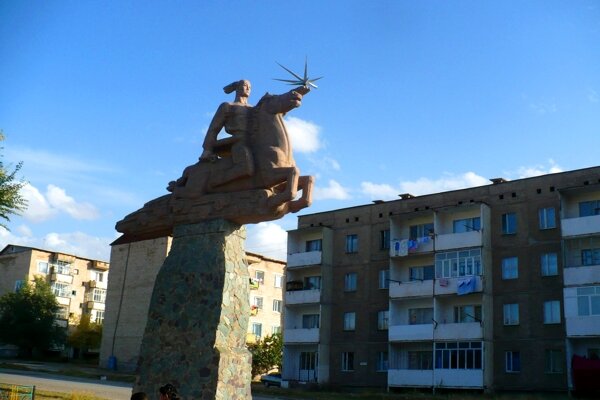


 Bishkek